
XRP Shifts to Ecosystem Strategy Amid Strategic Partnerships and Market Debates
 Aime Summary
Ripple is evolving from a direct SWIFT competitor to a broader XRPXRP-- ecosystem builder, targeting $1 trillion in valuation potential. The XRP Ledger now supports smart contracts and tokenized assets, expanding its role beyond cross-border payments. Strategic partnerships with i-Payout and inclusion in Mastercard's Crypto Partner Program highlight XRP's growing institutional adoption.
Ripple has pivoted from direct competition with traditional financial infrastructure like SWIFT to building a decentralized finance (DeFi) ecosystem. This includes wallets, liquidity providers, and tokenized real-world assets that support broader financial activities. The XRP Ledger now supports smart contracts and tokenization, positioning XRP as a versatile utility asset in the evolving crypto market.
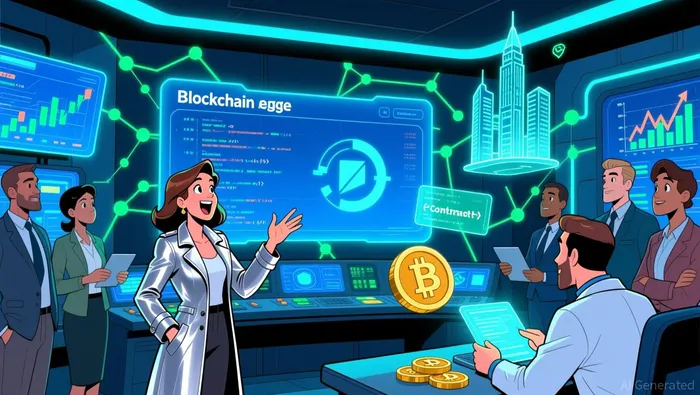
The company's strategic partnerships are expanding XRP's real-world utility. A collaboration with i-Payout enables near-instant cross-border payments into the U.S. and Canada using XRP, reducing the need for institutions to hold multiple foreign currencies. Meanwhile, Ripple's inclusion in Mastercard's Crypto Partner Program emphasizes its role in blockchain-based payment innovation, although XRP is not directly used for settlement in most cases.
Despite its progress, XRP faces a fundamental debate over its primary use case. The token's pre-mined supply, lack of governance rights for holders, and its dual role as a store of value and smart contract platform create uncertainty for investors. As stablecoins gain traction for cross-border transactions, XRP must clarify its position in the market to drive adoption and long-term value.
What Is Ripple's Long-Term Vision for XRP Ecosystem Growth?
Ripple envisions a $1 trillion valuation for the XRP ecosystem by expanding into tokenized assets, DeFi platforms, and institutional partnerships. This includes building liquidity networks and developer tools that enhance the XRP Ledger's practicality for global financial services. RippleRLUSD-- CEO Brad Garlinghouse believes the XRP ecosystem can evolve into the "Internet of Value," facilitating tokenized traditional assets such as stocks, bonds, and real estate.
The company is also exploring tokenization of real-world assets, including bonds and commodities, which could further validate crypto markets. This strategy aims to position XRP as a foundational component of a broader financial infrastructure that supports decentralized exchanges and real-time settlement.
How Do Strategic Partnerships Impact XRP's Market Relevance?
Ripple's partnerships with i-Payout and MastercardMA-- are reinforcing XRP's role in cross-border payments. These initiatives demonstrate growing institutional interest in XRP as a bridge currency and settlement tool, particularly in markets with high transaction costs and delays.
However, XRP's integration into Mastercard's Crypto Partner Program is limited to product development rather than direct settlement. A pilot project involving RLUSD, Ripple's stablecoin, uses the XRP Ledger for credit card payments, but most RLUSD transactions occur on EthereumENS--. For XRP to benefit further, RLUSD activity must shift more prominently onto the XRP Ledger, which remains dependent on regulatory clarity under the CLARITY Act.
What Are the Key Challenges and Limitations for XRP?
XRP faces several structural challenges that influence its market perception and adoption. Unlike proof-of-stake or proof-of-work blockchains, XRP lacks governance rights for holders, and the pre-mined supply gives Ripple Labs control over a significant portion of the token. This model raises questions about decentralization and long-term utility.
Additionally, the emergence of stablecoins has shifted cross-border payment preferences away from XRP, emphasizing the need for the token to differentiate itself through DeFi and tokenization. While Ripple is making strides in building an ecosystem, it must continue to validate its role as a bridge currency and smart contract platform to maintain relevance in a consolidating market.
XRP's future hinges on its ability to clarify its use case, expand its utility, and scale adoption across DeFi and institutional markets. As more institutions explore tokenization and real-time settlement, XRP's potential to facilitate these transactions could determine its long-term success.

Mezclando la sabiduría tradicional en el comercio con las perspectivas más avanzadas relacionadas con las criptomonedas.
Latest Articles
Stay ahead of the market.
Get curated U.S. market news, insights and key dates delivered to your inbox.
AInvest
PRO
AInvest
PRO



Comments
No comments yet