
XRP's Resurgence: How the Gemini Mastercard Partnership is Redefining Digital Asset Utility


 Aime Summary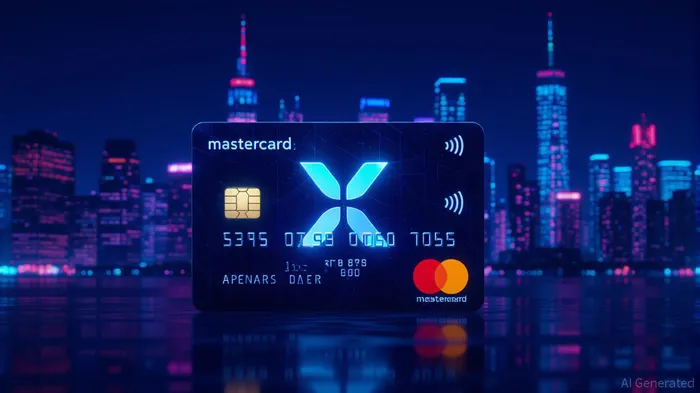
The cryptocurrency landscape is evolving rapidly, but few developments have captured institutional and retail attention as profoundly as the Gemini XRPXRP-- MastercardMA-- partnership with Ripple and WebBank. Announced on August 25, 2025, this initiative marks a pivotal shift in XRP's trajectory—from a speculative token to a functional digital currency with tangible real-world utility. For investors, this partnership represents not just a technical milestone but a strategic catalyst for mass adoption, regulatory legitimacy, and long-term value creation.
Institutional Credibility: A Foundation for Trust
The collaboration between Gemini, Ripple, and WebBank is underpinned by a $75 million joint investment, signaling institutional confidence in XRP's potential. WebBank, a federally chartered institution, issues the card, ensuring compliance with U.S. regulatory standards. This alignment with traditional financial infrastructure addresses a critical barrier for digital assets: trust. By leveraging WebBank's oversight, the XRP Mastercard gains credibility in a market still wary of crypto's volatility and regulatory ambiguity.
For institutional investors, this partnership mitigates risk. Ripple's recent legal victory over the SEC in 2025—resolving a years-long dispute—has cleared the path for XRP to be treated as a commodity rather than a security. This legal clarity, combined with the card's compliance framework, positions XRP as a safer bet for institutional portfolios. JP Morgan's recent analysis further reinforces this, projecting that XRP-based exchange-traded products (ETPs) could generate $4.3 billion to $8.4 billion in their first year. Such figures underscore the token's growing appeal in institutional circles.
Retail Adoption: Bridging the Gap Between Crypto and Daily Life
The XRP Mastercard's 4% cashback feature is a masterstroke in retail adoption. By offering immediate, tangible rewards, it transforms XRP from an abstract investment into a tool for everyday spending. The card's pilot in Thailand—a major tourist destination—targets a high-traffic demographic, leveraging XRP's low transaction fees ($0.0004 per transaction) to make international spending cost-effective. This approach mirrors the success of stablecoin-based cards, which have already demonstrated the viability of crypto in real-world commerce.
Retail investors, often hesitant to engage with crypto due to complexity or volatility, now have a low-friction entry point. The card's simplicity—convert XRP to fiat, spend at millions of Mastercard-accepting merchants, and earn rewards—democratizes access to digital assets. Social media metrics (1.7 million views, 10,000 likes) suggest strong consumer interest, a trend likely to accelerate as the card rolls out globally.
Technical Indicators: A Case for Optimism
Technical analysis paints a cautiously optimistic picture. XRP's RSI has approached oversold levels, while the Average Directional Index (ADX) has dipped below 25, suggesting weakening bearish momentum. If the price rebounds above the $2.74 support level, the Mastercard's launch could act as a catalyst for a reversal. For investors, this creates a compelling risk-reward scenario: a relatively low entry point with the potential for upward movement driven by tangible utility.
Strategic Implications: Beyond the Card
The partnership's impact extends beyond the card itself. Ripple's integration of XRP with global payment systems (e.g., SEPA Instant Credit Transfer, U.K. Faster Payments) and its upcoming Ripple USD (RLUSD) stablecoin in Japan highlight a broader strategy to bridge traditional and digital finance. Gemini's planned IPO further amplifies XRP's scalability, as the exchange's public market presence could attract a new wave of institutional capital.
Investment Advice: Positioning for the Future
For investors, the Gemini XRP Mastercard partnership offers a unique opportunity to capitalize on the convergence of crypto and traditional finance. Here's how to approach it:
1. Long-Term Holders: Allocate a portion of your portfolio to XRP, given its growing utility and institutional backing. The card's success could drive demand, potentially outpacing supply and boosting price.
2. Retail Investors: Consider the card as a gateway to crypto adoption. Its rewards and ease of use make it an attractive option for first-time users.
3. Technical Traders: Monitor the $2.74 support level and RSI/ADX trends. A breakout could signal a short-term buying opportunity.
Conclusion: A New Era for XRP
The Gemini XRP Mastercard is more than a product—it's a paradigm shift. By embedding XRP into daily transactions, the partnership addresses one of crypto's most persistent challenges: utility. For investors, this means a transition from speculation to substance, with institutional credibility and retail adoption working in tandem. As Ripple, Gemini, and WebBank continue to expand XRP's ecosystem, the token's resurgence is not just plausible—it's inevitable.
In a world increasingly defined by borderless transactions, XRP's role as a bridge between digital and traditional finance is poised to redefine value creation. For those who recognize this shift early, the rewards could be substantial.

Decoding blockchain innovations and market trends with clarity and precision.
Latest Articles
Stay ahead of the market.
Get curated U.S. market news, insights and key dates delivered to your inbox.


AInvest
PRO
AInvest
PRO



Comments
No comments yet