
XRP's Real-World Adoption Acceleration: Analyzing the Strategic Impact of the Gemini XRP Credit Card Launch


 Aime Summary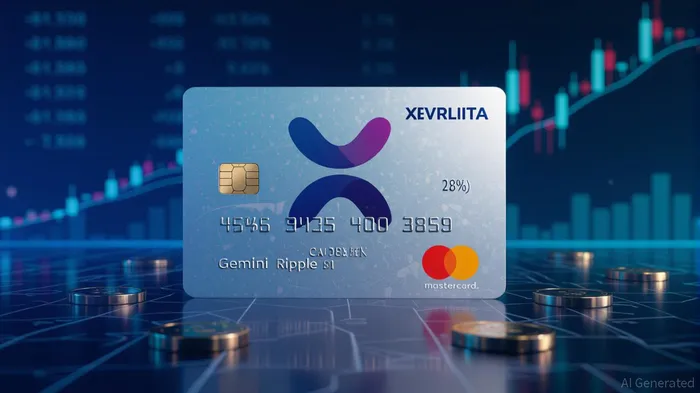
The launch of the Gemini XRPXRPI-- Credit Card on August 25, 2025, represents a pivotal moment in the evolution of XRP's utility and institutional adoption. This collaboration between Gemini, Ripple, and WebBank has introduced a rewards-based financial product that incentivizes everyday spending in XRP, creating a flywheel effect of demand, utility, and price appreciation. For investors, the question is no longer whether XRP can survive as a speculative asset but whether it can thrive as a functional currency in a rapidly digitizing financial ecosystem.
Utility-Driven Adoption: A New Paradigm for XRP
The Gemini XRP Credit Card offers users up to 4% cashback in XRP on purchases such as gas, EV charging, and rideshares, with tiered rewards for dining (3%), groceries (2%), and other categories (1%). These rewards are delivered instantly, with no annual fees, foreign transaction fees, or conversion costs. This structure eliminates friction for everyday users, making XRP a practical tool for spending rather than a speculative token.
The card's success is already evident in early metrics. By July 2025, XRP rewards held for at least one year had surged by 453%, outpacing all other reward currencies on Gemini. This growth underscores XRP's potential as a long-term value holder and utility asset. Furthermore, the integration of Ripple USD (RLUSD), a $680 million stablecoin, into Gemini's platform has created a seamless on- and off-ramp for users to convert between XRP and fiat, addressing volatility concerns and expanding the token's real-world applicability.
Institutional Adoption and Regulatory Tailwinds
The partnership between Gemini and Ripple is not just a consumer-facing product but a strategic move to bridge traditional finance and blockchain. Ripple's $75 million credit facility for the card—expandable to $150 million—signals institutional confidence in XRP's scalability. This financial backing, combined with the SEC's 2025 ruling that XRP is not a security in secondary markets, has removed a major regulatory barrier.
Institutional adoption is accelerating. Over 60 companies now hold XRP reserves, and 10 spot XRP ETF applications are pending. Ripple's partnerships with JPMorganJPM--, BlackRockBLK--, and SBI Holdings further reinforce XRP's role in cross-border payments and settlement systems. The card's launch coincides with a broader trend: XRP is transitioning from a speculative asset to a foundational component of global financial infrastructure.
Price Momentum and Technical Indicators
While XRP experienced a 3.2% dip in the immediate aftermath of the card's launch, technical indicators suggest a potential rebound. The Relative Strength Index (RSI) has moved from oversold levels to the mid-50s, and the MACD histogram is narrowing toward a bullish crossover. Sustained trading above $2.90 could propel XRP toward $3.20–$3.30, while a break below $2.84 may trigger further declines.
Analysts project that if the card attracts 1 million users in its first year, increased demand and token burns from transaction fees could drive XRP toward $4. This trajectory hinges on continued institutional adoption and regulatory clarity. The 84% probability of XRP ETF approval on Polymarket also suggests that institutional capital could soon flow into the market, further bolstering price momentum.
Investment Implications and Strategic Considerations
For investors, the Gemini XRP Credit Card represents more than a product—it is a catalyst for XRP's mainstream adoption. The card's success in driving transaction volume, user growth, and institutional confidence positions XRP as a utility-driven asset with long-term value. Key factors to monitor include:
1. Transaction Volume: Sustained on-chain activity above $2 billion per day.
2. Regulatory Developments: Finalization of XRP ETF applications and global regulatory alignment.
3. Partnership Expansion: Ripple's integration of XRP into corporate treasuries and cross-border payment corridors.
Conclusion: A New Inflection Point for XRP
The Gemini XRP Credit Card has redefined XRP's value proposition. By incentivizing real-world usage, integrating stablecoin solutions, and aligning with institutional-grade infrastructure, the card has positioned XRP as a bridge between traditional finance and blockchain. For investors, this represents a strategic inflection point: XRP is no longer just a speculative token but a functional currency with growing utility, regulatory clarity, and institutional backing.
As the XRP ecosystem continues to expand, the focus should shift from short-term price volatility to long-term adoption metrics. The card's success in Thailand and other high-fee remittance markets will be critical in determining XRP's scalability. For now, the data suggests that XRP is on a trajectory to become a cornerstone of the digital finance landscape—a compelling case for investors seeking exposure to utility-driven crypto innovation.

Decoding blockchain innovations and market trends with clarity and precision.
Latest Articles
Stay ahead of the market.
Get curated U.S. market news, insights and key dates delivered to your inbox.
AInvest
PRO
AInvest
PRO



Comments
No comments yet