
XRP Price: Regulatory Clarity and Institutional Adoption Fuel a Breakout in 2025–2026


 Aime Summary
The cryptocurrency market in 2025 is at a pivotal inflection point, driven by a confluence of regulatory clarity, institutional adoption, and technological innovation. For XRPXRPI--, the native asset of Ripple's XRP Ledger (XRPL), these forces are aligning to create a compelling case for near-term price acceleration. After four years of legal uncertainty, the resolution of the SEC vs. Ripple case in August 2025 has reclassified XRP as a digital commodity in secondary markets, removing a critical overhang and unlocking institutional capital flows. Combined with strategic partnerships, network upgrades, and macroeconomic tailwinds, XRP is positioned to break out as a cornerstone of blockchain-driven finance.
Regulatory Clarity: A Game Changer
The U.S. Securities and Exchange Commission's (SEC) joint dismissal of its appeal with Ripple in August 2025 marked a watershed moment. The court's affirmation that XRP sales on public exchanges are not securities transactions—while institutional sales remain subject to securities laws—has created a clear regulatory framework. This distinction is critical: it allows XRP to function as a utility token in secondary markets, akin to Bitcoin's commodity status, while still permitting institutional investors to engage with the asset under defined rules.
The resolution also signals a broader shift in the SEC's approach under Chairman Paul Atkins, a crypto advocate who launched “Project Crypto” to modernize digital asset regulations. This initiative includes regulatory sandboxes, clearer custody guidelines, and a focus on innovation-friendly policies. For XRP, this means a reduced risk of future enforcement actions and a more predictable environment for institutional investors.
Institutional Adoption: From Banks to ETFs
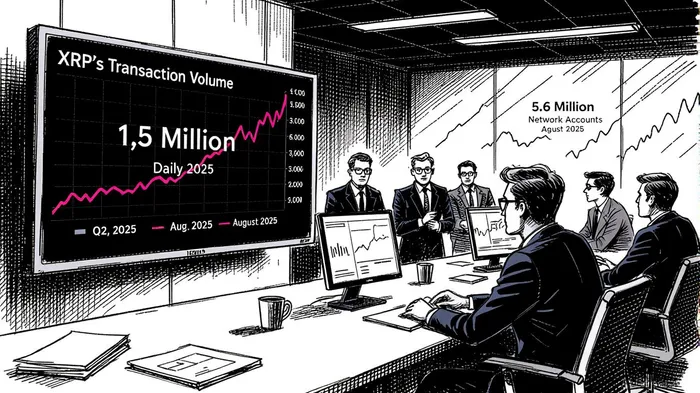
Ripple's strategic partnerships in 2025 have solidified XRP's role in global finance. SantanderSAN--, PNC Bank, and Standard Chartered now use Ripple's On-Demand Liquidity (ODL) platform to process cross-border transactions, with ODL handling $1.3 trillion in Q2 2025 alone. These partnerships demonstrate XRP's utility in reducing liquidity management costs by up to 70% and enabling real-time settlements—a stark contrast to traditional SWIFT transfers.
Institutional confidence has also been bolstered by the launch of the ProShares Ultra XRP ETF (UXRP), which raised $1.2 billion in its first month post-ruling. With 16 additional XRP ETF applications pending, the asset is on track to see $8.4 billion in institutional inflows by year-end. This surge is not speculative but rooted in XRP's real-world use cases: as a bridge currency for cross-border payments, a stablecoin collateral asset, and a tokenized infrastructure component.
Network Upgrades: Building for the Future
The XRP Ledger's 2025 upgrades have enhanced its scalability, security, and institutional readiness. Key developments include:
- EVM Sidechain: Enabling EthereumETH-- developers to deploy dApps on the XRPL, broadening its ecosystem.
- Automated Market Maker (AMM) Stabilization: Reducing slippage and arbitrage risks for liquidity providers.
- Decentralized Identity (DID) Tools: Facilitating KYC/AML compliance for institutional DeFi participation.
- CBDC Integration: Attracting central banks to test the XRPL for digital currency initiatives.
These upgrades position XRP as a hybrid asset—bridging traditional finance and decentralized infrastructure. The ledger's low fees ($0.0002 per transaction) and rapid settlement times (75% under 5 seconds) further cement its appeal for high-volume, low-cost transactions.
Macro Crypto Trends: A Diversifying Market
Bitcoin's market dominance has fallen to 59% in 2025 as institutional capital diversifies into utility-driven altcoins. Ethereum, while resilient, faces structural challenges due to Layer-2 migration and declining protocol revenue. Meanwhile, XRP's reclassification and ETF-driven inflows have positioned it as a top-tier altcoin, capturing 12% of the market cap.
The Altcoin Season Index at 68% reflects a maturing market where projects with real-world applications—like XRP's cross-border use cases—outperform speculative assets. With the Federal Reserve's anticipated September 2025 rate cut, risk-on sentiment could further accelerate XRP's adoption.
Investment Thesis: A Breakout in 2025–2026
For investors, XRP presents a unique opportunity at the intersection of regulatory clarity, institutional adoption, and macroeconomic trends. Key catalysts include:
1. ETF Approvals: The 95% probability of 16 pending XRP ETFs being approved by October 2025.
2. Macro Events: The Fed's rate cut and a dovish monetary policy environment.
3. Network Growth: Continued expansion of ODL, stablecoin integration, and CBDC partnerships.
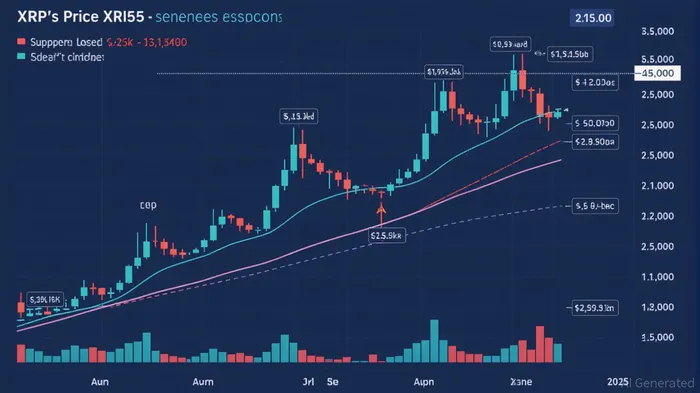
Price-wise, XRP is currently range-bound between $2.77 and $3.10. A breakout above $3.10 could target $5 by year-end, while a breakdown below $2.77 risks a retest of $2.50. Analysts project a 2025 price range of $1.50–$3.50, with optimistic scenarios reaching $7 under favorable conditions.
Conclusion: A New Era for XRP
The resolution of the SEC case, institutional adoption, and network upgrades have transformed XRP from a speculative asset into a foundational component of global finance. As the crypto market evolves, XRP's utility in cross-border payments, stablecoin ecosystems, and tokenized assets positions it to outperform in 2025–2026. For investors, the combination of regulatory clarity and macroeconomic tailwinds makes XRP a compelling long-term play—provided they remain mindful of risks like regulatory delays or macro volatility.

Combinando la sabiduría tradicional en el comercio con las perspectivas de vanguardia relacionadas con las criptomonedas.
Latest Articles
Stay ahead of the market.
Get curated U.S. market news, insights and key dates delivered to your inbox.


AInvest
PRO
AInvest
PRO



Comments
No comments yet