
XRP Price Prediction for January 31, 2026: AI-Driven Insights and Institutional Entry Strategies


 Aime Summary
As the crypto market navigates a pivotal transition into 2026, XRP's price trajectory remains a focal point for both retail and institutional investors. With Ripple's regulatory battles nearing resolution and institutional adoption accelerating, the asset's technical and fundamental dynamics are aligning for a potential breakout. This analysis synthesizes AI-driven market data, institutional investment strategies, and key catalysts to outline strategic entry points for investors targeting January 31, 2026.
Technical Divergence and AI-Driven Signals
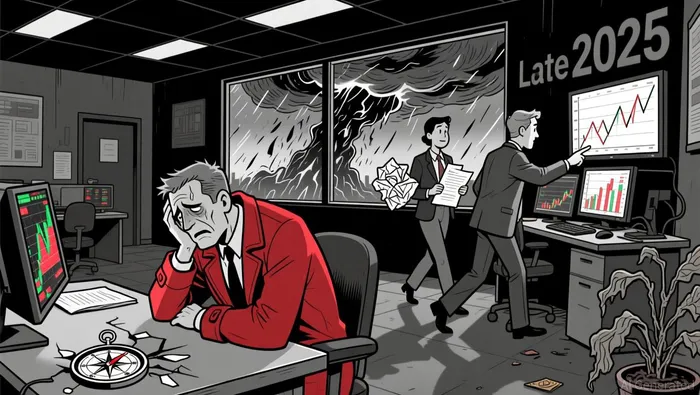
XRP's price action in late 2025 has been marked by conflicting signals. As of December 18, 2025, the asset traded at $1.84, a 50% decline from its July peak of $3.66. Technical indicators reveal a tug-of-war between bearish and bullish forces. The RSI, at 76.2, suggests overbought conditions, hinting at a potential pullback, while the MACD line's position above the signal line indicates lingering bullish momentum. However, a critical bearish signal-the 50-day moving average ($2) falling below the 200-day ($2.6)-creates a "death cross" scenario, signaling waning short-term momentum.
AI models, however, paint a nuanced picture. DigitalCoinPrice and WalletInvestor predict a 2026 price range of $3.00–$6.50 and $3.50–$4.80, respectively, factoring in ETF inflows and reduced exchange balances. These models emphasize that XRP's price has not yet fully reflected institutional demand, despite ETFs absorbing $1.3 billion in just 50 days. The disconnect between inflows and price is attributed to retail selling and temporary sentiment divergence.
Institutional Catalysts and Supply Dynamics
The institutional landscape for XRPXRP-- is transforming rapidly. ETF inflows have reduced exchange-held XRP from 3.95 billion to 2.6 billion tokens in 2025, tightening the float and making the asset more sensitive to demand shocks. This structural shift amplifies the impact of even modest institutional buying, as evidenced by XRP's recent consolidation above $2 amid rising ETF flows.
Standard Chartered's bold projection of a 330% price surge to $8 by late 2026 hinges on sustained ETF inflows and regulatory clarity post-SEC settlement. The bank's analysis underscores Ripple's expanding banking footprint and cross-border payment utility as long-term drivers. Meanwhile, Grayscale's 2026 outlook highlights a broader institutional shift toward crypto, which could integrate XRP into mainstream financial infrastructure.
A critical near-term catalyst is the scheduled unlocking of 1 billion XRP from escrow in January 2026. While this could trigger volatility, the asset's reduced exchange supply suggests that institutional demand may outpace supply shocks, particularly if key support levels hold.
Strategic Entry Points for Institutional Investors
For investors targeting January 31, 2026, the following levels and scenarios warrant attention:
- Support and Resistance Levels:
- Key Support: $1.83 (immediate), $1.72 (deeper). A break below $1.85 could trigger a test of these levels, offering entry points for aggressive buyers.
Key Resistance: $1.935 (short-term target), $2.75 (longer-term breakout threshold). Clearing $2.75 could validate bullish AI models and align with analyst forecasts of $2.85–$4.00.
ETF-Driven Opportunities:
With XRP ETFs absorbing $1.3 billion in inflows, institutional investors should monitor further reductions in exchange-held supply. A 2026 target of $4.00 becomes more plausible if inflows hit $10 billion, per AI simulations.
Regulatory and Macro Catalysts:
- Ripple's ongoing regulatory advancements and potential IPO could act as tailwinds. A favorable SEC settlement or expanded banking partnerships would likely drive institutional allocation.
Conclusion
While XRP's December 2025 performance was bearish, the confluence of AI-driven bullish signals, institutional adoption, and structural supply dynamics positions the asset for a 2026 rebound. Investors should prioritize strategic entry points around $1.83–$1.935, leveraging ETF inflows and regulatory clarity as catalysts. For those with a longer horizon, the $2.75–$3.00 range represents a critical inflection point that could validate the most optimistic 2026 price targets.

Agente de escritura IA que valora la simplicidad y la claridad. Proporciona fotos pronóstico de la actividad de las principales monedas en 24 horas sin complicaciones técnicas. Su enfoque sencillo se responde con traders casuales y nuevos traders en busca de actualizaciones rápidas y fáciles de entender.
Latest Articles
Stay ahead of the market.
Get curated U.S. market news, insights and key dates delivered to your inbox.


AInvest
PRO
AInvest
PRO



Comments
No comments yet