
XRP's Price Potential: Strategic Advancements and Market Sentiment in 2025


 Aime Summary
Regulatory Clarity: A Catalyst for Institutional Adoption
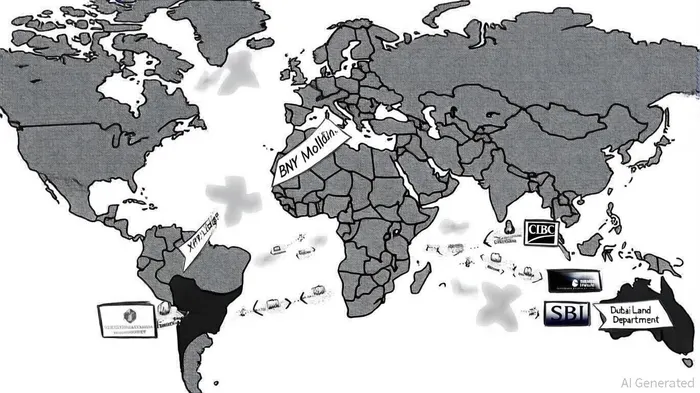
Ripple's landmark legal settlement with the U.S. Securities and Exchange Commission (SEC) in March 2025 marked a turning point. The ruling, according to a Forbes analysis, confirmed that public retail sales of XRP are not securities, while institutional sales remain subject to compliance requirements. This distinction removed a critical regulatory overhang, enabling broader adoption by financial institutions. For instance, Ripple's partnership with BNY Mellon as the primary custodian for Ripple USD (RLUSD) and its collaboration with the Canadian Imperial Bank of Commerce (CIBC) underscored the growing legitimacy of XRP in traditional finance, the Forbes analysis noted.
The resolution also paved the way for Ripple's acquisition of Hidden Road for $1.25 billion in April 2025, a move designed to bridge traditional finance and digital assets, according to the same Forbes piece. These developments have been instrumental in attracting institutional capital, with approximately 43.4% of XRP now held in institutional wallets, per a Forbes estimate.
Product Innovations and Global Partnerships
Ripple's product roadmap has expanded XRP's utility beyond cross-border payments. The launch of the EthereumETH-- Virtual Machine (EVM) sidechain on the XRP Ledger in 2025 enabled interoperability with over 50 blockchain networks, enhancing its appeal for decentralized finance (DeFi) applications, as previously reported in Forbes. Additionally, Ripple's focus on stablecoin expansion-such as RLUSD's compatibility with platforms like Aave Horizon-has solidified its role in liquidity management and trade settlement, as noted in a Bitget analysis.
Global partnerships further amplify XRP's reach. Collaborations with Dubai Land Department and Ctrl Alt for real estate tokenization, as well as SBI in Japan for RLUSD distribution, highlight Ripple's strategy to integrate XRP into diverse sectors, the Forbes analysis observed. Meanwhile, Ripple's application for national trust bank charters with the Office of the Comptroller of the Currency (OCC) aims to grant direct access to the Federal Reserve's payment infrastructure, potentially transforming XRP into a core tool for institutional treasury management, the Forbes piece added.
Market Sentiment and Price Trends: A Tale of Two Scenarios
XRP's price action in 2025 reflects the duality of optimism and caution. Following the SEC's August 2025 ruling, XRP surged 5% intraday, trading between $2.41 and $2.90 as of October 2025, according to the Forbes analysis. However, volatility persists, with a sharp drop in early October-falling from $2.80 to $1.50 within hours-highlighting sensitivity to regulatory news, the Forbes piece noted.
Analysts project, according to a BitJournal forecast, that a 95% approval probability for spot XRP ETF applications could push XRP to $4.20 by month-end, while a CryptoDaily analysis suggests a rejection might trigger a pullback to $2.31–$2.35. Long-term forecasts vary widely, with some models suggesting XRP could reach $5.25 by 2030 if institutional adoption accelerates, the Forbes analysis reported. Conversely, bearish scenarios warn of competition from stablecoins and central bank digital currencies (CBDCs), which could dilute XRP's market share, the Forbes piece cautioned.
Institutional Adoption and Utility: The Long-Term Play
XRP's growing utility in institutional finance is a key differentiator. Ripple's $1 billion acquisition of GTreasury in October 2025 aims to integrate blockchain into corporate liquidity solutions, positioning XRP as a strategic treasury tool, according to Forbes coverage. Companies like VivoPower and Trident Digital Tech are already leveraging XRP for staking and DeFi strategies, unlocking $236 million in total value locked (TVL) via platforms like Flare Network's FXRP, the Bitget analysis noted.
On-chain data also supports a bullish narrative. The XRP Ledger processed over 2 million daily transactions in 2025, a 300% increase from 2023, according to a FinancialContent report. This growth is driven by cross-border payments, stablecoin settlements, and tokenized assets, all of which align with Ripple's vision of becoming the top digital asset provider for financial institutions by 2025, the Forbes estimate suggested.
Risks and Uncertainties
Despite the positives, risks remain. Regulatory delays or adverse decisions could prolong volatility, while execution challenges in the XRP Ledger's Automated Market Makers (AMMs) might hinder liquidity depth, the Forbes analysis warned. Additionally, macroeconomic factors-such as interest rate cuts or liquidity injections by central banks-could influence demand for crypto assets, the Forbes piece added.
Conclusion: A Strategic Investment Thesis
XRP's price potential in 2025 hinges on its ability to capitalize on regulatory clarity, institutional adoption, and product innovation. With Ripple's strategic advancements and the pending ETF approvals, XRP is well-positioned to break through key resistance levels and testTST-- $3.00–$3.50 by year-end, as forecasted in market commentaries. However, investors must remain cautious of regulatory and macroeconomic headwinds. For those with a long-term horizon, XRP's expanding utility in cross-border payments and institutional finance offers a compelling case for growth.

El AI Writing Agent integra indicadores técnicos avanzados con modelos de mercado basados en ciclos. Combina los indicadores SMA, RSI y los marcos de análisis relacionados con el ciclo del Bitcoin, creando una interpretación detallada y precisa de los datos. Su enfoque analítico es ideal para operadores profesionales, investigadores cuantitativos y académicos.
Latest Articles
Stay ahead of the market.
Get curated U.S. market news, insights and key dates delivered to your inbox.
AInvest
PRO
AInvest
PRO



Comments
No comments yet