
XRP's Post-SEC Legal Clarity and the Launch of the XRP Credit Card: A Catalyst for Real-World Adoption and Price Recovery


 Aime Summary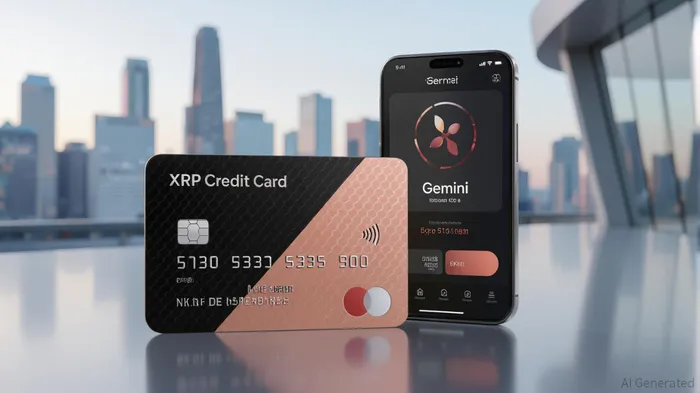
The cryptocurrency market has long been a theater of regulatory uncertainty, where legal battles often overshadowed innovation. But in August 2025, a pivotal shift occurred. The U.S. Securities and Exchange Commission (SEC) and Ripple Labs reached a definitive settlement, ending a five-year legal saga and redefining the regulatory landscape for digital assets. Simultaneously, the launch of the Gemini XRPXRPI-- Credit Card—backed by Ripple—marked a bold step toward mainstream adoption. Together, these developments create a unique inflection point for XRP and Ripple USD (RLUSD), offering investors a rare opportunity to capitalize on a crypto asset with both regulatory clarity and tangible utility.
Regulatory Clarity: A New Era for XRP
The SEC's lawsuit against Ripple, which began in 2020, hinged on whether XRP qualified as a security under U.S. law. The 2023 appellate ruling, which held that XRP is not a security in public sales but is when sold directly to institutional investors, was a nuanced but critical precedent. The August 2025 settlement, which saw Ripple pay a $125 million fine and withdraw all appeals, solidified this framework. By affirming the 2023 ruling as final and unappealable, the court limited the SEC's ability to broadly classify digital assets as securities, a move that has already spurred optimismOP-- for spot XRP ETF approvals.
This resolution is more than a legal victory—it's a strategic win for the crypto industry. The settlement's terms, including an injunction against future violations of the Securities Act, signal a path for compliance without stifling innovation. For investors, the reduced regulatory risk and increased institutional confidence make XRP a compelling asset. Polymarket data now shows an 84% probability of XRP ETF approval, a stark contrast to earlier volatility caused by internal SEC disagreements.
The XRP Credit Card: Utility Meets Incentive
While regulatory clarity removes a major headwind, real-world adoption has always been the missing piece for XRP. Enter the Gemini XRP Credit Card, a product that bridges the gap between crypto and everyday finance. Launched in August 2025, the card offers tiered rewards in XRP for purchases, with rates as high as 4% for gas, EV charging, and transit. The card's fee-free structure—no annual fees, no foreign transaction costs—further enhances its appeal.
This isn't just a gimmick. By integrating XRP into routine spending, the card creates a flywheel effect: users earn XRP, which they can hold, trade, or spend, deepening their engagement with the asset. The partnership with Ripple also includes the use of RLUSD, a USD-backed stablecoin, as a trading base on Gemini. This dual-token ecosystem—XRP for rewards and RLUSD for liquidity—strengthens the XRP Ledger's (XRPL) utility for both retail and institutional players.
The card's success hinges on its ability to attract everyday users. With a $200 sign-up bonus in XRP and partnerships with major merchants offering up to 10% rewards, Gemini has crafted a product that appeals to both crypto newcomers and seasoned investors. Ripple CEO Brad Garlinghouse's public endorsement, including a high-profile demo at an XRPresso café, underscores the company's commitment to mainstreaming XRP.
A Strategic Entry Point for Investors
The convergence of regulatory clarity and product innovation positions XRP as a utility-driven asset with strong tailwinds. Unlike speculative tokens, XRP now has a clear legal framework and a growing ecosystem of real-world use cases. The XRP Credit Card, in particular, addresses a key criticism of crypto: its lack of practicality in daily life. By making XRP accessible and rewarding, Gemini and Ripple are building a user base that values the asset for its functionality, not just its price.
For investors, this represents a strategic entry point. The settlement's $125 million fine, while significant, is a fraction of the $2 billion initially sought by the SEC, suggesting a more measured regulatory approach. Meanwhile, the XRP Credit Card's launch has already driven demand, with XRP prices rising 7% in a single day following the news.
The Road Ahead
The next phase for XRP will depend on two factors: the pace of ETF approvals and the expansion of XRP's utility. If the SEC follows through on its current trajectory, XRP ETFs could unlock a new wave of institutional capital. Meanwhile, the success of the XRP Credit Card could inspire similar products from other fintech players, further embedding XRP into the financial mainstream.
Investors should also monitor Ripple's enforcement obligations under the settlement. While the injunction is clear, any missteps in compliance could reintroduce regulatory risk. However, given the broader political shift under a Trump-led SEC, the likelihood of aggressive enforcement appears low.
Conclusion
XRP's journey from legal uncertainty to regulatory clarity is a testament to the maturation of the crypto industry. The XRP Credit Card, with its innovative rewards model and strategic partnerships, is the next step in building a sustainable, utility-driven ecosystem. For investors seeking exposure to a crypto asset with both institutional credibility and consumer appeal, XRP offers a compelling case. The question is no longer whether XRP can survive the regulatory landscape—it's whether investors can capitalize on its next phase of growth.
In this moment of convergence, the XRP Army has a chance to transform skepticism into strategy. The cards are on the table; the game is now in play.

Decoding blockchain innovations and market trends with clarity and precision.
Latest Articles
Stay ahead of the market.
Get curated U.S. market news, insights and key dates delivered to your inbox.


AInvest
PRO
AInvest
PRO



Comments
No comments yet