
XRP News Today: XRP Created 13 Years Ago by Arthur Britto
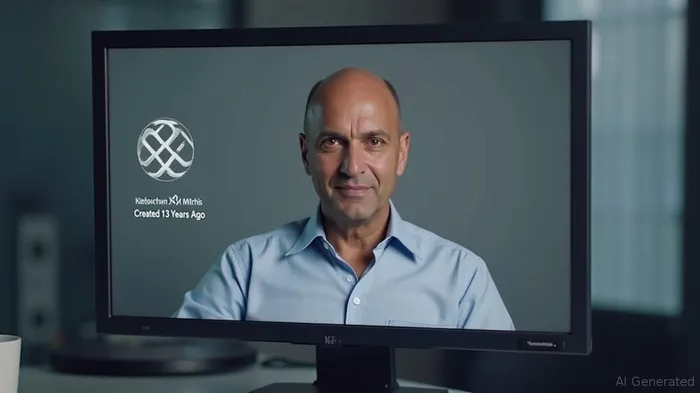
Thirteen years ago, on June 2, 2012, a significant milestone in the history of cryptocurrency was achieved when Arthur Britto, a key architect behind the Ripple project, committed the code that officially created the supply of 100 billion XRP. This event, highlighted by a respected XRP Ledger validator, marked the birth of an ecosystem aimed at revolutionizing global paymentsGPN--. The creation of XRP was not just a technical achievement but a foundational moment that set the stage for what is now one of the most prominent digital assets in the world.
The vision behind XRP was to address the inefficiencies in traditional financial systems, particularly in cross-border payments. Unlike Bitcoin, which focused on decentralized peer-to-peer electronic cash, XRP was designed to act as a universal bridge currency, enabling instant, low-cost transfers across currencies, banks, and borders. The fixed, finite, and pre-mined supply of 100 billion XRP was a deliberate design choice intended to ensure predictability, efficiency, and scalability. This approach allowed Ripple to distribute XRP strategically to support network growth and adoption, despite criticism from advocates of proof-of-work systems.
Arthur Britto, alongside David Schwartz and Jed McCaleb, played a crucial role in the early development of XRP. Britto's contributions, including the fateful code commit, laid the groundwork for Ripple’s goal of building an “Internet of Value,” where money moves as seamlessly as information does today. Although Britto is known for his private nature, his technical foresight continues to shape the evolution of digital finance, particularly through his work at PolySign, a company focused on institutional-grade digital asset custody.
Since its creation, XRP has experienced both triumphs and challenges. It became one of the top cryptocurrencies by market capitalization, achieving major exchange listings and becoming a pillar of RippleNet, Ripple’s enterprise blockchain payment platform. At its peak, XRP’s price soared to over $3 in early 2018, making early adopters and supporters hopeful of an even greater breakthrough. However, regulatory scrutiny, particularly from the U.S. Securities and Exchange Commission (SEC), has posed significant challenges. Despite these legal hurdles, XRP has maintained a loyal global community and continues to see active development, with Ripple expanding its services in central bank digital currency (CBDC) initiatives, cross-border remittances, and tokenization projects.
The legacy of Arthur Britto’s code commit on June 2, 2012, is a powerful reminder of how one act can shape an entire technological and financial movement. The creation of XRP set in motion a vision of financial interoperability that continues to inspire innovation today. As Ripple pushes forward through legal victories, technological advancements, and new partnerships, the foundational act that took place thirteen years ago remains central. It is a testament to the power of vision, code, and collaboration, and to the enduring ambition of building a financial system fit for the digital age.

Stay ahead of the market.
Get curated U.S. market news, insights and key dates delivered to your inbox.


AInvest
PRO
AInvest
PRO



Comments
No comments yet