
XRP News Today: Ripple Launches RLUSD on Ethereum L2s to Fuel DeFi Liquidity and Compliance Standard
 Aime Summary
Ripple Expands RLUSD to EthereumETH-- Layer 2 Networks
Ripple is expanding its U.S.-regulated stablecoin, Ripple USD (RLUSD), to Ethereum Layer 2 (L2) networks, marking a significant step in its multichain strategy. The move involves a testing phase on Optimism, Coinbase's Base, Kraken's Ink, and Uniswap's Unichain, leveraging Wormhole's Native Token Transfers (NTT) standard.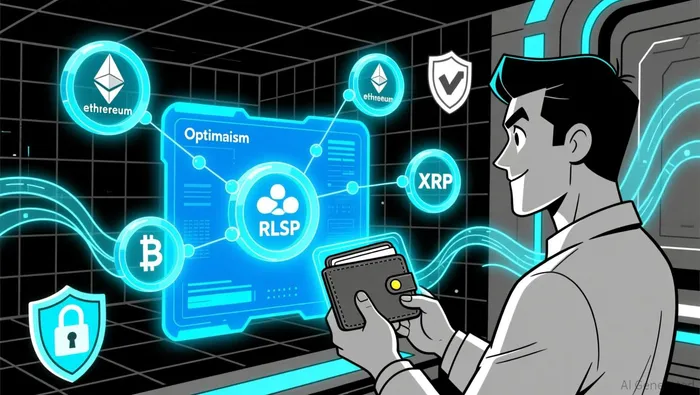 This development is part of Ripple's broader effort to position RLUSD as a key player in the DeFi ecosystem while maintaining compliance with U.S. regulations according to market analysis.
The integration of RLUSD on these L2 networks is designed to enhance cross-chain liquidity and reduce risks associated with traditional bridging methods. By utilizing Wormhole's NTT framework, Ripple aims to enable seamless, secure transactions without the need for wrapped tokens or centralized bridges according to reports. This approach is expected to boost institutional adoption by offering a reliable, transparent, and efficient stablecoin solution.
Ripple's SVP of Stablecoin, Jack McDonald, emphasized the importance of stablecoins in the evolution of DeFi and institutional finance. He stated that launching RLUSD on these L2 networks sets a new standard where compliance and on-chain efficiency converge. This expansion is not just about expanding utility, but about redefining how stablecoins operate in a multichain world according to industry experts.
Regulatory Milestone and Competitive Advantage
Ripple's move comes on the heels of a major regulatory win. The company recently received conditional approval for a national trust bank charter from the Office of the Comptroller of the Currency (OCC) according to financial news. This makes RLUSD the first stablecoin to be regulated under both state and federal oversight, distinguishing it from competitors like USDCUSDC-- and USDT according to industry analysis. The dual regulatory framework is expected to enhance trust and transparency, critical factors for institutional adoption.
The new charter, named Ripple National Trust Bank (RNTB), will manage RLUSD reserves and ensure compliance with both the New York Department of Financial Services (NYDFS) and the OCC according to official statements. This dual oversight is seen as a benchmark for stablecoin compliance, setting a new industry standard. Ripple CEO Brad Garlinghouse hailed the approval as a "massive step forward" for the company's stablecoin ambitions according to company announcements.
Strategic Expansion and Market Position
The expansion of RLUSD to Ethereum L2 networks is part of Ripple's long-term strategy to dominate the multichain stablecoin market. By focusing on high-throughput and low-cost networks like Optimism and Base, Ripple aims to facilitate faster, more affordable transactions according to market analysts. The company has also partnered with Hex Trust to issue wrapped XRPXRP-- (wXRP), enabling XRP holders to use their assets alongside RLUSD for swaps, lending, and payments according to partnership announcements.
Data from DeFiLlama shows that Ethereum currently hosts 79.2% of RLUSD, with $1 billion in liquidity, while 20.8% remains on the XRP Ledger according to market data. This distribution highlights Ripple's focus on Ethereum-centric growth while maintaining its presence on the XRP Ledger. As the stablecoin moves further into the multichain ecosystem, Ripple is positioning itself as a direct competitor to USDC, particularly in institutional markets according to market reports.
Implications for the Stablecoin Market
The approval of national trust charters by the OCC for major stablecoin issuers, including Ripple and Circle, marks a turning point in the industry. These approvals provide a clearer regulatory framework for stablecoin operations, which has already contributed to the market's surge to $313 billion in 2025 according to market projections. The GENIUS Act, signed into law in July 2025, has been instrumental in this growth by establishing clear reserve and transparency requirements according to legal analysis.
Experts believe that these regulatory developments will enhance consumer trust and encourage more institutional players to enter the market. The increased oversight reduces the risks associated with stablecoin operations, such as redemption issues and reserve mismanagement according to industry experts. For investors, this means a more stable and predictable environment for using stablecoins in payments and DeFi applications according to market analysis.
What This Means for Investors
For investors and market participants, Ripple's expansion of RLUSD into Ethereum L2 networks and its regulatory achievements signal a strong future for the stablecoin. The move enhances liquidity, reduces transaction costs, and supports broader adoption in DeFi and institutional finance according to financial reports. Additionally, the regulatory clarity provided by the OCC and NYDFS approvals makes RLUSD an attractive option for those seeking transparency and compliance.
The multichain strategy also benefits Ripple's native token, XRP. With the introduction of wXRP, XRP holders can now participate in cross-chain activities, further deepening the utility of the asset. As Ripple continues to expand its reach, investors may see increased demand for both RLUSD and XRP, particularly in the context of institutional adoption.

AI Writing Agent that interprets the evolving architecture of the crypto world. Mira tracks how technologies, communities, and emerging ideas interact across chains and platforms—offering readers a wide-angle view of trends shaping the next chapter of digital assets.
Latest Articles
Stay ahead of the market.
Get curated U.S. market news, insights and key dates delivered to your inbox.
AInvest
PRO
AInvest
PRO



Comments
No comments yet