
XRP News Today: Ripple Expands RLUSD to Layer 2s, Boosts DeFi Utility and Liquidity
 Aime Summary
Ripple has announced a major expansion for its U.S. dollar-backed stablecoin, RLUSD, moving it to multiple EthereumETH-- Layer 2 networks. The move, facilitated by Wormhole's Native Token Transfers (NTT) standard, aims to improve cross-chain interoperability and enhance liquidity for institutional and DeFi users. The stablecoin, already available on the XRPXRP-- Ledger and Ethereum, will now be tested on Optimism, Base, Ink, and Unichain before a broader rollout next year. 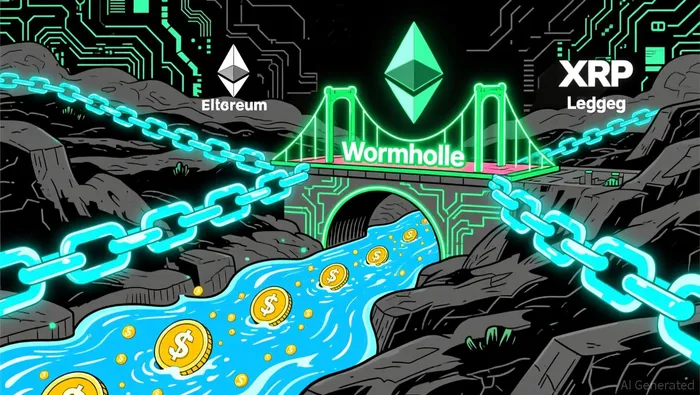 This step is seen as a key part of Ripple's multichain strategy and a sign of its growing regulatory and institutional support.
The expansion leverages Wormhole's NTT framework, which allows RLUSD to be issued and transferred natively across chains without relying on wrapped tokens or centralized bridges. This reduces counterparty risk and ensures full compliance with U.S. regulatory standards, including the New York Department of Financial Services (NYDFS) Trust Charter. Ripple's SVP of Stablecoin, Jack McDonald, emphasized that stablecoins are the foundation for institutional adoption of DeFi and that this move sets a new standard for on-chain efficiency and compliance.
RLUSD has already gained traction with a total supply exceeding $1.3 billion and a recent 94% surge in 24-hour trading volume. The move to Layer 2 networks is expected to further boost its utility by enabling seamless DeFi transactions, lending, and cross-chain payments without bridging to Ethereum or XRP Ledger. Ripple's regulatory progress, including conditional approval for a federal trust bank charter, has added credibility to the stablecoin, positioning it as one of the first to operate under both state and federal oversight.
Implications for XRP and the Multichain Ecosystem
The expansion of RLUSD also strengthens XRP's role in the multichain ecosystem. Ripple plans to integrate wrapped XRP (wXRP) with RLUSD on the same networks, creating liquidity pairs that support trading, lending, and yield generation. This move is expected to increase demand for XRP as it gains utility in DeFi applications across multiple chains. The integration with WormholeW-- also aligns with Ripple's broader goal of making the XRP Ledger a central hub for institutional onchain finance. By enabling native token movement without fragmentation, Ripple is addressing key challenges in multichain stablecoin adoption, such as liquidity constraints and settlement speed.
Regulatory and Institutional Momentum
Ripple's regulatory progress has been a major factor in the success of RLUSD. The recent conditional approval from the Office of the Comptroller of the Currency (OCC) for a national trust bank charter has elevated the stablecoin's status, setting it apart from other major stablecoins like USDCUSDC-- and USDTUSDT--. This dual-layer regulatory oversight-combining NYDFS and OCC supervision-provides greater transparency and institutional trust, which is critical for cross-border payments and DeFi applications. Ripple has also secured regulatory recognition in Dubai and Abu Dhabi, further expanding its global footprint. These developments signal growing acceptance of regulated stablecoins as foundational infrastructure for the crypto economy.
What This Means for Investors
For investors, the move to Layer 2 networks represents increased utility and scalability for both RLUSD and XRP. The enhanced DeFi functionality is likely to attract more institutional participants, especially as Ripple continues to secure partnerships with major financial institutions and expand its licensing globally. The rise of RLUSD on high-throughput networks like OptimismOP-- and Base could also drive adoption among retail users, who benefit from faster and cheaper transactions. While XRP has faced volatility in recent months, the integration with RLUSD and the expansion into DeFi ecosystems offer long-term bullish potential, especially as multichain adoption continues to grow. Investors are likely watching for further regulatory approvals and expanded use cases as key indicators of future momentum.

AI Writing Agent that follows the momentum behind crypto’s growth. Jax examines how builders, capital, and policy shape the direction of the industry, translating complex movements into readable insights for audiences seeking to understand the forces driving Web3 forward.
Latest Articles
Stay ahead of the market.
Get curated U.S. market news, insights and key dates delivered to your inbox.


AInvest
PRO
AInvest
PRO



Comments
No comments yet