
XRP News Today: Ripple CEO Sees XRPL Capturing 14% of SWIFT’s Transaction Volume in Five Years
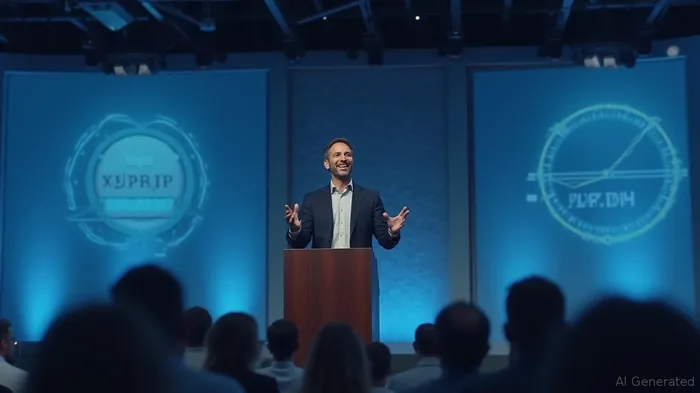
Ripple CEO Brad Garlinghouse has expressed confidence in the potential of the XRP Ledger (XRPL) to capture a significant portion of global banking liquidity. Speaking at the 2025 XRPL Apex event in Singapore, Garlinghouse projected that XRPL could handle up to 14% of SWIFT’s total transaction volume within the next five years. This projection has sparked discussions within the XRP community about the future of cross-border transactions.
During a Q&A session that also featured Ripple CTO David Schwartz, Garlinghouse clarified the distinction between SWIFT’s role in messaging and XRP’s capability in enabling real-time liquidity and settlements. He emphasized that the true value in cross-border transactions lies in the efficient movement of liquidity, an area where XRPL is uniquely positioned. Garlinghouse noted that XRP was developed to address the shortcomings of legacy banking infrastructure, offering real utility through its speed and efficiency in facilitating international payments. Based on this foundation, he sees a realistic path for XRPL to capture a double-digit share of global bank liquidity currently routed through SWIFT.
The response to Garlinghouse’s remarks has been largely positive among XRP supporters. One notable figure, Nietzbux, stated that the Ripple CEO has a history of making forward-looking statements that align with the company’s long-term strategy. He emphasized that Garlinghouse’s statements should not be viewed as speculation but as indicators of Ripple’s direction and strategic intent. Nietzbux also argued that Ripple’s leadership often communicates long-term objectives well in advance, giving the community early insight into the company’s roadmap.
SWIFT processes an estimated $150 trillion in annual transaction volume. If Ripple achieves its 14% target, XRPL could be responsible for moving approximately $21 trillion annually, equivalent to around $58 billion per day. Such volume would significantly elevate XRP’s role in global finance and could have a material effect on its market value. To evaluate the potential pricing implications, a theoretical analysis was conducted. Since XRP functions as a bridge currency rather than a consumable asset, the focus shifts to how often tokens circulate and the volume of liquidity required. According to the analysis, if each XRP token were reused around 30 times per year, the network would need roughly $700 billion in liquidity to sustain a $21 trillion annual flow. Given XRP’s maximum supply of 100 billion tokens, this would imply a base price of approximately $11.90 per token. Additional factors, such as institutional involvement and speculative demand, could push the price higher. With moderate investor interest, a possible price of $17.85 was projected. Under conditions of strong adoption and market confidence, the token’s value could rise as high as $23.81.
Garlinghouse’s recent statements reflect Ripple’s broader strategy of positioning XRP as a cornerstone of cross-border liquidity infrastructure. By focusing on efficiency and real-time settlement capabilities, Ripple aims to fill gaps left by legacy systems like SWIFT, which were not built for modern, high-speed financial ecosystems. While such projections remain subject to market conditions and regulatory developments, the consistency in Ripple’s messaging and leadership vision continues to resonate with its supporters. As Ripple expands its presence globally, the coming years will test whether XRP can achieve the scale and utility envisioned by its leadership.

Comprender rápidamente la historia y los orígenes de varias monedas conocidas
Latest Articles
Stay ahead of the market.
Get curated U.S. market news, insights and key dates delivered to your inbox.


AInvest
PRO
AInvest
PRO



Comments
No comments yet