
XRP News Today: Raoul Pal Labels XRP the Moron Trade Amid Retail Investor Psychology Debate
 Aime Summary
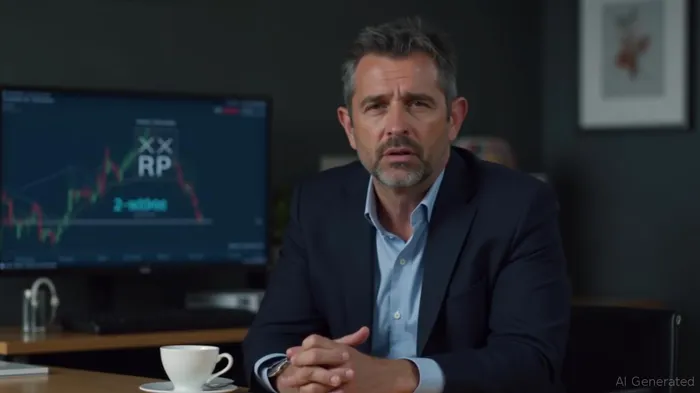
Raoul Pal, a macro investor known for his commentary on digital assets, has drawn attention for referring to XRPXRP-- as an example of the “moron trade,” a term he uses to describe predictable retail investor behavior. The concept centers on new investors selecting the cheapest and most recognizable tokens in the top ten crypto rankings, often bypassing high-priced assets like BitcoinBTC-- or EthereumETH--. Pal highlighted how this approach is influenced by psychological factors such as price anchoring and the affordance effect, where investors assume lower prices equate to higher potential returns due to the ability to purchase more units with the same capital [1].
According to Pal, the appeal of tokens like XRP or DogecoinDOGE-- lies in their affordability and brand recognition, which can drive retail demand even when adoption or usage metrics do not justify the price movement. He contrasted this with larger, more established Layer 1 blockchains like SolanaSOL-- and SuiSUI--, which are gaining traction through real-world adoption and infrastructure development. These projects, Pal argues, offer stronger long-term potential with relatively lower risk compared to the more speculative nature of the “moron trade” [1].
Pal emphasized that the term does not imply criticism of the assets themselves, but rather of the buying behavior of retail investors who rely on price signals over fundamentals. This approach, he noted, can result in sharp price increases during bull markets, driven by narrative and hype rather than underlying performance [1].
The comments sparked a mixed reaction within the XRP community. Some supporters rejected the label, pointing to XRP’s role in facilitating cross-border payments as evidence of its real-world utility. Others viewed Pal’s remarks as a reflection of the retail-driven nature of crypto markets, where sentiment and brand recognition can override technical analysis [1].
Critics also speculated that Pal’s comments might be influenced by a lack of access to early venture capital allocations in XRP, a theory that gained traction among XRP advocates. While this claim remains unverified, it highlights the emotional and sometimes contentious nature of investor discourse in the crypto space [1].
Ultimately, Pal’s remarks reinforce a broader truth about the crypto market: short-term price movements are often driven by psychology and narrative, rather than fundamentals. Retail investors, in particular, can exert significant influence, but without proper due diligence and risk management, these decisions can lead to substantial losses. For long-term investors, the focus should remain on measurable adoption, developer activity, and sustainable use cases [1].
Source: [1] Raoul Pal: XRP is the Moron Trade. Here’s What It Means (https://timestabloid.com/raoul-pal-xrp-is-the-moron-trade-heres-what-it-means/)

Conoce rápidamente la historia y el origen de distintas monedas bien conocidas
Latest Articles
Stay ahead of the market.
Get curated U.S. market news, insights and key dates delivered to your inbox.


AInvest
PRO
AInvest
PRO



Comments
No comments yet