
XRP News Today: Crypto's Crossroads: Can Growth Coexist With Accountability?


 Aime Summary
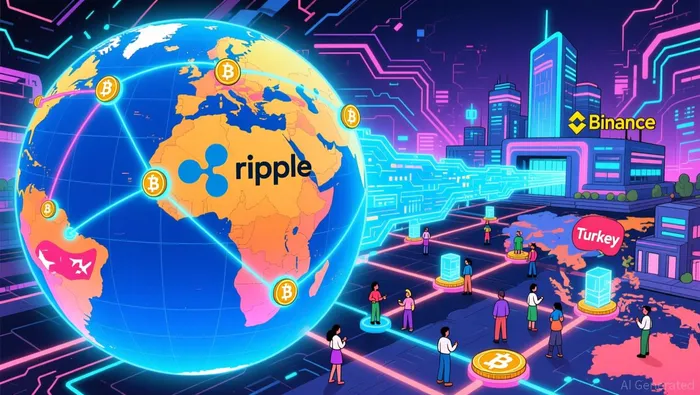
Ripple's growing influence in Africa and Turkey is part of a broader trend in cryptocurrency adoption, as global players expand into emerging markets. Meanwhile, Binance has introduced a tailored service for ultra-high-net-worth crypto investors, with monthly spot and derivatives trading volumes surging to over $1.1 billion and $4 billion, respectively, in March 2025. This move underscores the platform's focus on institutional clients, a strategy that aligns with the increasing demand for sophisticated crypto tools in regions like Africa, where Ripple has seen significant traction.
In Latin America, crypto payments firm Truther is pushing boundaries with a non-custodial USDTUSDT-- Visa card in El Salvador, a country where bitcoinBTC-- holds legal tender status. The card, part of Truther's expansion beyond Brazil, leverages QR code-based transactions and local payment systems like PIX to enable real-time settlements. The firm's Swapix API is set to roll out in Argentina, Mexico, Colombia, and Russia, emphasizing infrastructure readiness as a key driver for adoption. Truther's self-custody wallet, which supports BTCBTC-- and USDT, also aims to reduce transaction costs for users, a feature likely to resonate in markets with limited banking access.
However, the crypto sector faces regulatory headwinds. Binance is now under scrutiny following a lawsuit from victims of the October 7 Hamas attack, who allege the exchange failed to report transactions involving sanctioned entities. While Binance admitted to compliance shortcomings in a prior DOJ settlement, blockchain analytics firms like Chainalysis and Elliptic caution that attributed funds to Hamas are often overstated, with confirmed amounts in the low millions. This case highlights the ongoing tension between crypto's decentralized ethos and the need for robust anti-money-laundering frameworks, particularly as traditional financial institutions increasingly enter the space.
Market dynamics also reflect volatility and innovation. Hyperliquid's token (HYPE) dropped 54% during the October market crash but rebounded swiftly, showcasing resilience in a sector prone to swings. Meanwhile, Grayscale's filing for a Zcash ETF in the U.S. signals growing institutional interest in altcoins, especially as Zcash's price surged 1,000% in 2025. Such developments could further diversify crypto portfolios, though they also raise questions about market stability.
Corporate governance issues are complicating the landscape. StoneBridge Acquisition II Corp (APAC) faced a significant sale of shares by Mizuho Securities USA LLC, a 10% owner, totaling $5.29 million. Analysts are assessing the stock's fair value using models like discounted cash flow, but the transaction underscores the fragility of investor confidence in volatile markets. Similarly, Trump-linked Alt5 Sigma underwent a leadership shakeup after its CEO was suspended, with co-founder Eric Trump joining the board. These events reflect the sector's susceptibility to internal disruptions, even as external growth opportunities emerge.
As the crypto ecosystem evolves, the interplay between innovation, regulation, and market forces will shape its trajectory. While Ripple's success in Africa and Turkey highlights the potential for cross-border adoption, broader challenges-ranging from legal disputes to governance risks-remain critical hurdles. The coming months will test whether the industry can balance growth with accountability, a balance that investors and regulators alike are keenly watching.

Stay ahead of the market.
Get curated U.S. market news, insights and key dates delivered to your inbox.


AInvest
PRO
AInvest
PRO



Comments
No comments yet