
XRP News Today: "U.S. Crypto Clampdown vs. Global Innovation Surge"


 Aime Summary
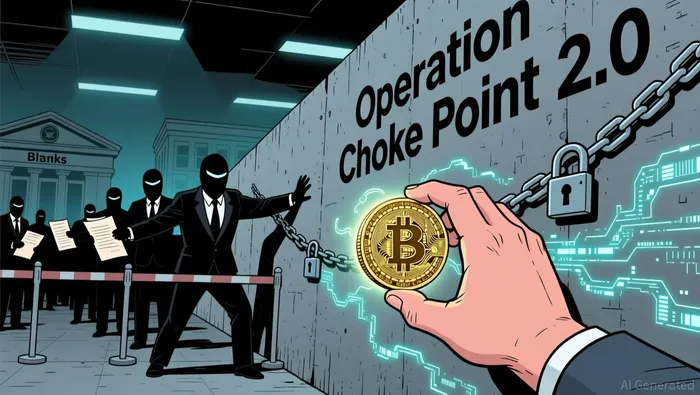
The U.S. government has faced allegations of systematically stifling the cryptocurrency industry through a series of regulatory actions dubbed "Operation Choke Point 2.0," according to a report released by the House Financial Services Committee. Republican Chairman French Hill and Oversight Subcommittee Chair Dan Meuser detailed how federal agencies, including the Securities and Exchange Commission (SEC) and Federal Reserve, allegedly used "vague rules, excessive discretion, and aggressive enforcement" to pressure banks into cutting ties with crypto firms and executives. The report, which draws parallels to the controversial 2010s-era "Choke Point" policy targeting high-risk industries, frames the Biden administration's approach as a coordinated effort to hinder digital asset innovation.
The report highlights systemic "debanking" of crypto entities, where financial institutions withdrew services due to regulatory uncertainty. Lawmakers argue this has stifled growth and innovation, with some crypto firms reporting abrupt account closures or restrictions. Hill and Meuser propose legislative solutions, including the CLARITY Act to establish clear rules for digital assets and prevent future regulatory overreach. The bill aims to reverse what they describe as the SEC's "regulation by enforcement" strategy, which they claim has left market participants in a legal gray area.
While the U.S. grapples with regulatory friction, other jurisdictions are advancing crypto-friendly frameworks. Singapore's Monetary Authority of Singapore (MAS) recently expanded Ripple's Major Payment Institution license, allowing the company to offer broader crypto payment services using XRPXRP-- and its stablecoin RLUSD. This approval underscores Singapore's emergence as a hub for regulated blockchain innovation, with Ripple emphasizing the city-state's role in global cross-border payments according to reports. Similarly, the United Arab Emirates introduced a sweeping central bank law in December 2025, bringing crypto, decentralized finance (DeFi), and tokenized assets under centralized oversight while aiming to position the UAE as a global crypto leader.
Internationally, regulatory approaches vary. The United Kingdom expanded its Cryptoasset Reporting Framework (CARF) to cover domestic transactions in 2026, giving tax authorities access to both local and cross-border data to combat evasion. Meanwhile, South Korea extended its "travel rule" to all virtual asset transactions, including those under 1 million won, requiring identity verification for even small trades. These moves reflect a global trend toward tighter crypto oversight, balancing innovation with compliance.
The U.S. report has reignited debates over regulatory clarity. Critics argue that the allegations against the Biden administration oversimplify complex enforcement actions, while proponents of the CLARITY Act stress the need for a unified framework to prevent regulatory arbitrage. With the Senate Banking Committee planning to finalize market structure legislation by early 2026 according to reports, the path forward remains contentious.
As governments worldwide refine their crypto strategies, the U.S. faces a critical juncture. The clash between regulatory caution and industry growth could shape the sector's trajectory, with ripple effects (pun intended) on global markets.

Stay ahead of the market.
Get curated U.S. market news, insights and key dates delivered to your inbox.


AInvest
PRO
AInvest
PRO



Comments
No comments yet