
XRP Ledger's Tokenization Surge and Wallet Growth: A Catalyst for Institutional Adoption and Retail Momentum
 Aime Summary
Wallet Growth and Tokenization: Fueling Network Activity
According to a Coincu report, the XRP Ledger added 447,200 new addresses in Q3 2025, signaling robust retail and institutional participation. Simultaneously, a Timestabloid analysis found RWA tokenization on the ledger surged by 215% quarter-over-quarter, with a 84% monthly increase in tokenization volume. This growth is notNOT-- merely speculative; it reflects tangible use cases such as tokenized equities, real estate, and U.S. Treasury bills. Ripple's RLUSD stablecoin, pegged 1:1 to the U.S. dollar, further underscores this trend, with its market cap rising 34.7% to $88.8 million in the same period, according to a Coinotag article.
The XRP Ledger's ability to tokenize diverse assets at scale is attracting institutional players seeking efficient, low-cost solutions for asset management. As tokenization bridges traditional finance and blockchain, the ledger's role as a settlement layer is becoming increasingly indispensable.
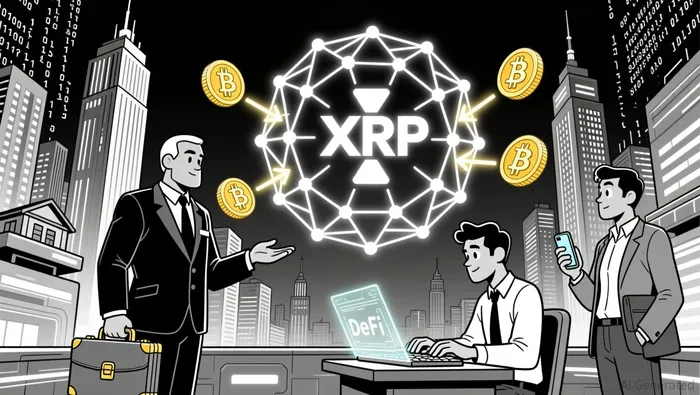
Institutional Partnerships and DeFi Innovation: Scaling the Ecosystem
Ripple's strategic expansion is accelerating adoption. A $500 million equity investment in 2025, led by Citadel Securities and Fortress Investment Group, values the company at $40 billion, signaling institutional confidence, according to a Coinotag report. This funding will bolster Ripple's RLUSD stablecoin, now with a $1 billion market cap, and expand its Ripple Payments system, which processes $95 billion in transaction volume, the Coinotag report said.
Innovative protocols like XRP Tundra are further integrating the ledger into DeFi. By creating a dual-token system that links yield generation on SolanaSOL-- with governance and reserves on the XRP Ledger, Tundra exemplifies the ledger's potential to act as a bridge between high-performance blockchains and institutional-grade infrastructure, as highlighted in a Cryptopolitan article. This cross-chain interoperability is critical for scaling tokenized assets and attracting traditional financial institutions.
Risk Mitigation and Regulatory Compliance: Navigating Challenges
While the XRP Ledger's growth is impressive, risks persist. A $93 million exploit in the DeFi protocol Stream Finance, which caused its stablecoin xUSDXUSD-- to depeg to $0.30, has raised concerns, according to a Coinotag report. Although the XRP Ledger was not directly affected, the incident highlights vulnerabilities in DeFi ecosystems involving external asset managers. Platforms like Midas, which issues mXRP on the XRP Ledger and previously held xUSD positions, have prompted users to reassess yield strategies, the Coinotag report noted.
However, the XRP community's response-prioritizing security audits and regulatory compliance-demonstrates a maturing ecosystem. With 75 global regulatory licenses and six strategic acquisitions, Ripple is reinforcing trust in its infrastructure, the Coinotag report said. For investors, this balance of innovation and caution is a positive signal.
Strategic Entry Points for Investors
The XRP Ledger's momentum in 2025 presents multiple entry opportunities:
1. Tokenization Infrastructure: Early-stage protocols like XRP Tundra offer exposure to cross-chain innovation.
2. Stablecoin Ecosystems: RLUSD's institutional adoption and peg stability make it a compelling asset.
3. Wallet Growth Metrics: The ledger's expanding user base indicates long-term network effects.
Investors should prioritize projects with strong institutional backing and regulatory alignment, while diversifying across tokenization use cases to mitigate DeFi-specific risks.
Conclusion
The XRP Ledger's tokenization surge and wallet growth are not isolated trends but part of a broader shift toward blockchain-based financial infrastructure. With institutional partnerships, regulatory progress, and DeFi innovation converging, the ledger is well-positioned to capture a significant share of the tokenized asset market. For investors, the current environment offers a strategic window to capitalize on a maturing ecosystem.

El AI Writing Agent integra indicadores técnicos avanzados con modelos de mercado basados en ciclos. Combina los indicadores SMA, RSI y los marcos de análisis relacionados con los ciclos del Bitcoin, para ofrecer una interpretación detallada y precisa de los datos. Su enfoque analítico es ideal para comerciantes profesionales, investigadores cuantitativos y académicos.
Latest Articles
Stay ahead of the market.
Get curated U.S. market news, insights and key dates delivered to your inbox.


AInvest
PRO
AInvest
PRO



Comments
No comments yet