
XRP Ledger Gains Institutional Momentum Amid Regulatory Clarity and Infrastructure Shifts
 Aime Summary
Ripple continues to position XRPXRP-- as a key player in the global financial infrastructure, with regulatory developments and institutional interest shaping its trajectory. The likelihood of the Clarity Act passing in the first half of 2026 remains a pivotal factor in unlocking broader adoption. The potential for XRP to be classified as a digital commodity could facilitate its integration into U.S. banking systems, particularly through ODL, which enables fast cross-border payments. This aligns with growing interest from institutions like BNY Mellon and Fidelity, who are preparing for XRP integration.
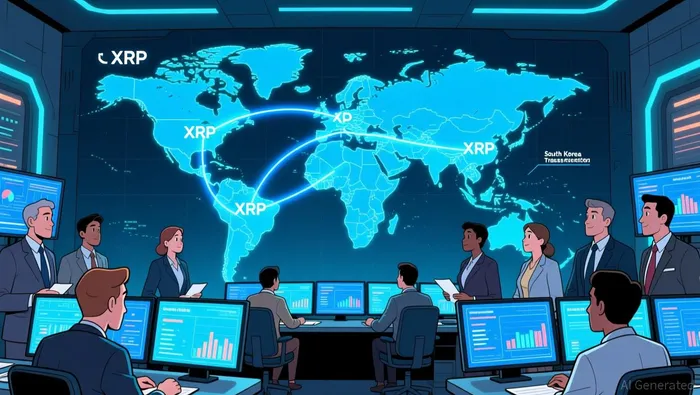
In addition to regulatory developments, XRP is gaining traction due to its role in tokenizing real-world assets and supporting stablecoin issuance. The XRP Ledger's (XRPL) utility in financial corridors, particularly in South Korea, has also driven transactional activity and volume growth. Meanwhile, Ripple's legal resolution with the SEC has bolstered market sentiment and demand.
What Institutional Adoption Means for XRP?
Institutional adoption is a critical development for XRP, particularly in cross-border payments and stablecoin settlement. Ripple's ODL model targets inefficiencies in traditional SWIFT payments by enabling instant, low-cost transactions. If XRP captures even a small portion of SWIFT's $150 trillion annual payment volume, the financial implications for the token could be significant. Simulations from AI models suggest a wide range of price outcomes depending on assumptions about token velocity and institutional holdings.
Furthermore, XRP's real-world utility is being reinforced through partnerships with major financial institutions. Ripple's president, Monica Long, expects institutional adoption of the XRP Ledger in 2026. This reflects a broader trend of banks, including Barclays and Bank of New York MellonBK--, exploring blockchain-based systems for faster and more efficient transactions. Such developments signal a shift in how traditional financial institutions are approaching digital money.
How is the XRP Ledger Evolving in 2026?
The XRP Ledger is undergoing a structural transition in 2026, moving from centralized funding to a distributed ecosystem model. This shift aims to create a more resilient builder economy by expanding support through independent organizations, venture capital, and community-led initiatives. RippleRLUSD-- has launched the FinTech Builder Programme to support startups developing financial applications on the XRP Ledger, including stablecoin payments and credit infrastructure.
Governance is also becoming more decentralized with the introduction of the XAO DAO, which allows community members to vote on funding proposals and shape ecosystem priorities. This move reflects an effort to reduce structural concentration and encourage faster experimentation. Regional expansion, particularly in the Asia-Pacific and Europe, is accelerating to strengthen local builder communities and integrate them into global XRP infrastructure.
What Risks and Limitations Are Present for XRP?
Despite growing institutional interest, XRP faces several risks and limitations. Standard Chartered recently cut its 2026 XRP price target from $8 to $2.80, citing concerns over the token's utility and a challenging market environment. The broader crypto slump and liquidity issues have also impacted XRP's performance. While regulatory clarity and adoption could provide relief, the Federal Reserve is unlikely to cut interest rates before June 2026.
Additionally, XRP competes with other blockchains, including faster alternatives like SolanaSOL--, and may not be central to Ripple's broader initiatives in custody services and stablecoins. This underscores the importance of continued innovation and adoption to sustain long-term growth.
Overall, XRP's success in 2026 will depend on a combination of regulatory progress, institutional adoption, and technological advancements. The evolving landscape of digital finance and blockchain infrastructure positions XRP as a potential leader in the next phase of financial innovation.

Blending traditional trading wisdom with cutting-edge cryptocurrency insights.
Latest Articles
Stay ahead of the market.
Get curated U.S. market news, insights and key dates delivered to your inbox.


AInvest
PRO
AInvest
PRO



Comments
No comments yet