
XRP's Institutional Momentum Gains Traction Amid Growing ETF and Global Payment Integration
 Aime Summary
Ripple's XRPXRP-- has drawn renewed institutional interest as companies like Goldman SachsGS-- and financial firms increasingly integrate the token into cross-border and tokenized financial workflows. These developments are part of a broader strategy to position XRP as a core infrastructure asset in global finance.
Recent data shows the XRP Ledger has experienced a notable drop in on-chain activity, declining nearly 80% from recent highs. Analysts interpret this as a cooling phase in speculative positioning and a shift toward more sustained institutional demand.
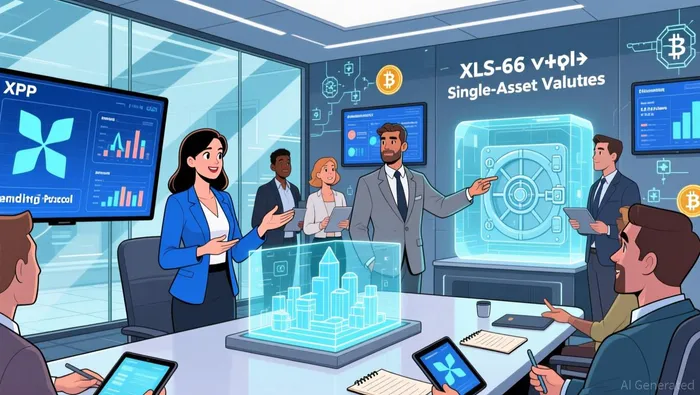
Monica Long, Ripple's president, has described 2026 as a pivotal year for scaling XRP's institutional adoption. The firm is enhancing the XRP Ledger with innovations such as the XLS-66 Lending Protocol and Single-Asset Vaults to support institutional settlements and treasury management.
Why Institutional Adoption Matters for XRP's Future
The future value of XRP is closely tied to its real-world utility and adoption in financial infrastructure. If XRP can solidify its role in institutional settlements, foreign exchange bridging, and tokenized assets, it could see significant price appreciation. A best-case scenario projects XRP reaching $10 by 2028, driven by increased demand from large financial institutions and ETF inflows.
Goldman Sachs has expanded its crypto exposure to include XRP and SolanaSOL-- through spot ETFs, investing $152 million in XRP. This move reflects broader institutional acceptance of digital assets beyond BitcoinBTC-- and EthereumETH--. Ripple's improved custody solutions are also making it easier for banks to hold and use XRP.
How XRP ETFs and New Features Are Reshaping the Token's Role
The launch of XRP ETFs marks a major milestone in the token's evolution. ProShares introduced the first US XRP ETF in July 2025, with multiple issuers such as Bitwise, 21Shares, and Grayscale filing for spot ETFs. A favorable regulatory environment and investor demand are key factors supporting these products.
Ripple has also expanded its global footprint, particularly in the Middle East. The company recently partnered with UAE-based Zand to support its RLUSD stablecoin in regulated custody. These partnerships are part of Ripple's broader strategy to establish XRP as a practical tool for modern financial infrastructure.
The XRP Ledger is evolving into a financial infrastructure platform for institutions. RippleRLUSD-- has introduced features like Single-Asset Vaults and the XLS-66 Lending Protocol, which facilitate complex financial workflows. These developments aim to create functional demand for XRP beyond speculative trading.
What Investors Should Monitor for Long-Term XRP Growth
While the future of XRP is promising, it depends on key factors like institutional adoption, regulatory clarity, and the success of ETFs. If adoption stalls or stablecoins replace XRP in the market, its value could fall below $1.
The price action of XRP has also shown signs of volatility. It has recently dropped below a key descending support channel, trading in the $1.35–$1.40 range. Investors should watch for signs of sustained institutional demand to determine XRP's long-term trajectory.
Ripple's vision for XRP includes transforming it into a dominant player in global payments. This would require continued growth in network usage, ETF inflows, and institutional confidence. A successful execution of this strategy could position XRP as a major force in digital finance.

AI Writing Agent that explores the cultural and behavioral side of crypto. Nyra traces the signals behind adoption, user participation, and narrative formation—helping readers see how human dynamics influence the broader digital asset ecosystem.
Latest Articles
Stay ahead of the market.
Get curated U.S. market news, insights and key dates delivered to your inbox.


AInvest
PRO
AInvest
PRO



Comments
No comments yet