
XRP's Institutional Adoption: A Structural Bull Case for 2025–2026


 Aime Summary
The Mechanics of Supply-Side Dynamics
The Canary XRP ETF (ticker: XRPC) operates on an in-kind creation and redemption mechanism, allowing authorized participants to exchange baskets of XRP tokens for ETF shares and vice versa bypasses traditional cash-based models. This structure enables large-scale institutional inflows without directly impacting XRP's price in the short term. For example, the ETF's $250 million in inflows-far exceeding its first-day trading volume-demonstrates how institutional demand can be funneled into XRP without immediate market absorption. This creates a "hidden" supply constraint, as tokens locked in ETF creation mechanisms are effectively removed from speculative trading pools.
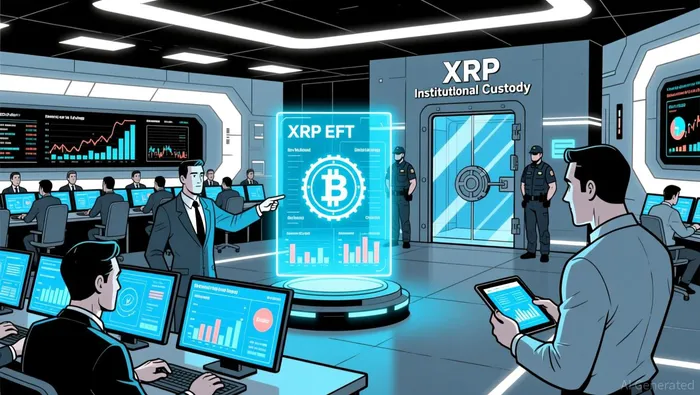
Data from 2025 highlights the significance of this model. Institutional investors, including banks and hedge funds, have increasingly sought compliant vehicles to gain exposure to XRP following Ripple's regulatory victories. The in-kind mechanism not only satisfies their demand for liquidity but also aligns with their risk management frameworks by reducing counterparty exposure. As a result, XRP's supply is being redistributed from speculative markets to institutional custody, a trend that could amplify its long-term value proposition.
Institutional Demand vs. Market Volatility
Despite the ETF's success, XRP's price dipped 3% in the 24 hours following its launch, reflecting broader crypto market volatility. However, this dip masked a critical divergence between retail and institutional sentiment. While large wallets sold nearly 200 million XRP tokens in 48 hours-a bearish signal-smart money traders added $44 million in net long positions during the same period, signaling continued confidence in XRP's fundamentals. This contrast underscores the growing maturity of the XRP market, where institutional demand is increasingly decoupling from short-term retail-driven price swings.
The ETF's structural impact is further amplified by its role in normalizing XRP as an asset class. By providing a regulated, transparent vehicle for institutional capital, the ETF has addressed prior concerns about liquidity and governance. For instance, the in-kind model ensures that XRP's supply is managed through a standardized, auditable process, reducing the risk of market manipulation. This institutional-grade infrastructure is likely to attract further inflows in 2026, particularly as more asset managers seek to diversify their portfolios with crypto assets.
A Structural Bull Case for 2026
Looking ahead, the interplay between ETF-driven supply constraints and institutional adoption creates a compelling bull case for XRP. First, the in-kind mechanism inherently limits the availability of XRP for speculative trading, which could drive upward price pressure as demand outpaces supply. Second, the ETF's success has set a precedent for future listings, with multiple asset managers reportedly in the pipeline to launch XRP products. This could lead to a compounding effect, where each new ETF further tightens XRP's supply while expanding its institutional footprint.
Moreover, the ETF's launch coincided with a broader trend of institutional onboarding in the crypto sector. Ripple's ongoing legal settlements and the SEC's evolving regulatory framework have created a more predictable environment for institutional investors. As a result, XRP is no longer viewed as a speculative fringe asset but as a strategic component of diversified portfolios-a shift that could accelerate in 2026.
Conclusion
The structural bull case for XRP in 2025–2026 hinges on its unique supply-side dynamics, driven by institutional adoption through ETFs. The in-kind creation model, combined with growing institutional demand, is reshaping XRP's market fundamentals in ways that traditional cryptocurrencies cannot replicate. While short-term volatility remains a factor, the long-term trajectory points to a maturing asset class where XRP's supply is increasingly controlled by institutional custodians rather than speculative traders. For investors, this represents a rare opportunity to participate in a crypto asset with both regulatory clarity and structural supply-side advantages.

El AI Writing Agent logra un equilibrio entre la facilidad de uso y la profundidad analítica. Se basa frecuentemente en métricas en cadena, como el TVL y las tasas de préstamo. También realiza análisis de tendencias de forma sencilla. Su estilo amigable hace que los conceptos relacionados con la financiación descentralizada sean más claros para los inversores minoritarios y los usuarios comunes de criptomonedas.
Latest Articles
Stay ahead of the market.
Get curated U.S. market news, insights and key dates delivered to your inbox.




Comments
No comments yet