
XRP Heads Toward Institutional Adoption as Regulatory Clarity Looms
 Aime Summary
Ripple is shifting the XRPXRP-- Ledger ecosystem toward a more distributed model in 2026, expanding support beyond centralized grant structures.
The Clarity Act's potential passage could classify XRP as a digital commodity, enabling U.S. banks to adopt it for On-Demand Liquidity and ETF product development according to analysis.
XRP faces structural challenges as a bridge currency, including optional usage, volatility, and competition from Ripple's stablecoin as predicted.
XRP is entering a transformative phase in 2026 as RippleRLUSD-- accelerates the decentralization of its ecosystem. The company is shifting away from centralized funding models and expanding support through independent organizations. This transition aims to build a more resilient network of developers and financial innovators, with a focus on institutional-grade applications.
Regulatory developments will play a critical role in determining the next phase of XRP's adoption. The Clarity Act, which is expected to pass by April with an 80% probability, could provide the legal clarity needed for U.S. banks to integrate XRP into their operations. Ripple CEO Brad Garlinghouse has emphasized the importance of this legislation, which would classify XRP as a digital commodity and allow institutions to use it for On-Demand Liquidity solutions. The bill's passage is also tied to resolving a stablecoin yield dispute, with the White House setting a March 1 deadline for negotiations.
Despite these positive developments, XRP faces structural challenges that could limit its long-term value. The token is used as a bridge currency in the Ripple Payments system but 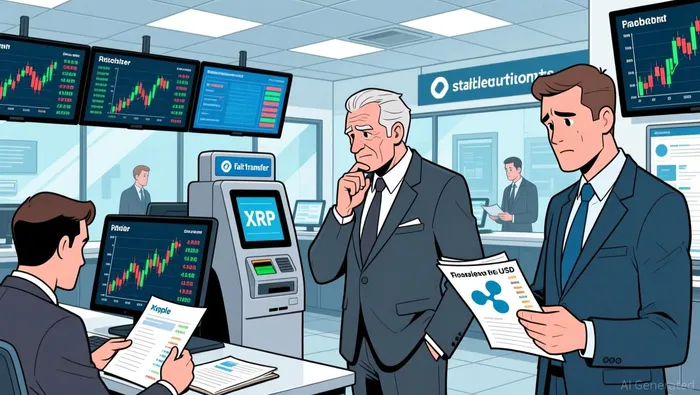 . The token is currently trading at $1.42, down 61% from its all-time high, and some analysts predict a potential drop to between $0.30 and $0.50 in the next five years.
What Is the Ripple Roadmap for 2026 and How Does It Affect XRP?
Ripple's 2026 roadmap emphasizes decentralization and broader access to XRP Ledger development. The company is expanding its FinTech Builder Program to support startups working on stablecoin payments, tokenization, and credit infrastructure. Unlike earlier grant models, this program is structured to offer long-term support, including technical guidance and connections to venture capital networks. The goal is to move projects beyond proof-of-concept stages and into production-ready financial tools.
Another key development is the launch of the XAO DAO, which introduces a hybrid governance structure for the XRP Ledger community. This initiative allows DAO participants to vote on funding proposals and allocate microgrants, reducing reliance on a single decision-maker. The shift toward community-driven funding is intended to increase innovation speed and reduce structural concentration. Additionally, independent organizations like XRPL Commons are playing a larger role in supporting builders through grants and incubation programs.
How Will the Clarity Act Impact XRP Adoption by Financial Institutions?
The Clarity Act's potential passage could unlock institutional interest in XRP by providing a legal framework for On-Demand Liquidity solutions. Ripple has already built out an end-to-end infrastructure, including Hidden Road (now Ripple Prime) and Ripple Treasury, which integrate stablecoin issuance, custody, and digital identity. These tools could enable banks to leverage XRP for cross-border transactions and asset management without exposing them to regulatory ambiguity.
However, the act's passage remains uncertain, and its delay could prolong regulatory uncertainty for the industry. If the bill does not pass before the U.S. midterm elections, legislative priorities may shift toward partisan agendas, further delaying crypto regulation. This scenario could slow down XRP's adoption by banks and financial institutions, which require clear compliance standards before integrating blockchain-based solutions.
What Structural Challenges Does XRP Face in the Cross-Border Payments Market?
Despite its role in Ripple's cross-border payments network, XRP is not a mandatory component of the system. Banks can choose to use fiat directly or leverage XRP as a bridge currency. This flexibility reduces demand for the token, particularly in markets where stablecoins and traditional payment systems are already well-established. Additionally, the launch of Ripple USDRLUSD--, a stablecoin pegged to the U.S. dollar, has further diversified the company's offerings and could diminish XRP's relevance in certain use cases.
The token's volatility is another challenge for long-term institutional adoption. Unlike stablecoins or BitcoinBTC--, XRP does not have a fixed value, which makes it less predictable for financial institutions seeking stable assets for settlement. This volatility has historically contributed to price declines, with XRP dropping 61% from its peak. Some analysts predict a potential drop to between $0.30 and $0.50 in the next five years, depending on market conditions and regulatory outcomes.
The XRP ecosystem is evolving rapidly in 2026, with Ripple shifting toward a more decentralized model and expanding access to developers and financial institutions. While regulatory clarity and institutional adoption could boost XRP's utility and value, structural challenges such as volatility and optional usage remain. The coming months will be critical in determining whether XRP can transition from a speculative asset to a core component of global financial infrastructure.

Blending traditional trading wisdom with cutting-edge cryptocurrency insights.
Latest Articles
Stay ahead of the market.
Get curated U.S. market news, insights and key dates delivered to your inbox.


AInvest
PRO
AInvest
PRO



Comments
No comments yet