
XRP Gains Momentum as Ripple Payments Network Offers Real-World Utility
 Aime Summary
- XRP is designed to reduce cross-border transaction costs in Ripple's real-world payments infrastructure.
- Recent regulatory settlements and a favorable environment have improved XRP's prospects for institutional adoption.
- XRP's low transaction cost and functional use as a bridge currency differentiate it from most speculative cryptocurrencies.
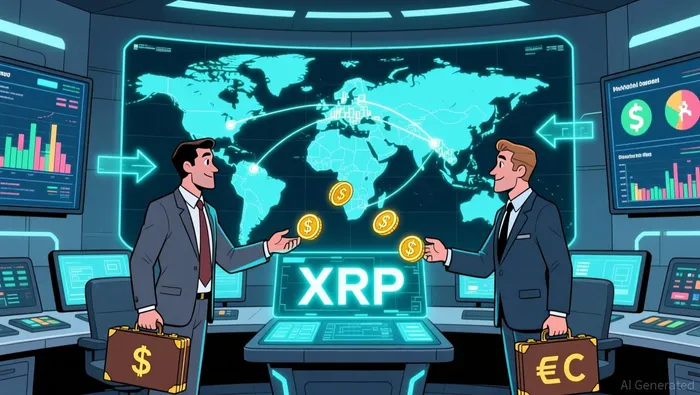
Ripple introduced XRPXRP-- as a key component of its RippleRLUSD-- Payments network, enabling global banks to send money instantly while reducing costs. XRP acts as a bridge currency, allowing banks to avoid foreign exchange fees by using XRP instead of traditional fiat. The cost of sending XRP is extremely low, making it efficient for cross-border transactions.
Unlike many cryptocurrencies that are primarily speculative, XRP has a defined utility within Ripple's financial infrastructure. It is designed to facilitate real-world transactions rather than serve as a store of value or speculative asset. This functional use case positions XRP differently in the market.
Ripple's legal issues with the SEC previously hampered XRP's adoption, but a settlement with the SEC has improved its outlook. This development, along with the regulatory environment under the Trump administration that has favored cryptocurrencies, has contributed to XRP's improved prospects for institutional adoption through spot ETFs.
What Role Does XRP Play in Ripple's Payments Network?
XRP's primary role in Ripple's payments network is to act as a bridge currency. This allows banks to bypass the complexities and costs associated with traditional foreign exchange processes. Instead of converting fiat currencies for cross-border transactions, banks can use XRP to settle payments more efficiently.
By leveraging XRP, Ripple's network enables instant transactions while significantly lowering the costs traditionally associated with cross-border payments. This makes XRP a critical component of Ripple's infrastructure, offering tangible benefits to financial institutions.
How Does XRP Compare to Other Cryptocurrencies in Terms of Utility?
Compared to most cryptocurrencies, XRP has a clearly defined use case within a real-world financial infrastructure. While many digital assets serve primarily as speculative investments, XRP is designed for functional use in global payments. This differentiation highlights XRP's potential to gain broader institutional acceptance.
XRP's efficiency in processing transactions at a low cost makes it an attractive alternative to traditional cross-border payment methods. Financial institutions seeking to reduce transaction costs and increase processing speed may find XRP to be a more practical solution than many other digital assets.
What Regulatory Developments Impact XRP's Future?
Regulatory developments have played a significant role in XRP's trajectory. Ripple's settlement with the SEC resolved a major legal hurdle that had previously limited XRP's adoption. This resolution has opened the door for renewed institutional interest and potential inclusion in spot ETFs.
The regulatory environment under the Trump administration has been supportive of cryptocurrencies, further contributing to XRP's improved outlook. However, ongoing regulatory developments will continue to shape the landscape for XRP and other digital assets.
The regulatory clarity and favorable policies have created a more stable environment for Ripple to expand its network and for institutions to consider XRP as a viable asset. This has created a more stable environment for Ripple to expand its network and for institutions to consider XRP as a viable asset.
XRP's position as a bridge currency within Ripple's network provides a clear functional use case that sets it apart from many other cryptocurrencies. While it faces challenges related to regulatory uncertainty and competition, the recent developments have improved its outlook. As the regulatory environment continues to evolve, XRP's role in financial infrastructure could become increasingly significant. Financial institutions evaluating digital assets for cross-border transactions may find XRP's low costs and real-world utility compelling. The ongoing development of Ripple's network and the broader adoption of digital assets by institutional investors could further enhance XRP's relevance in the market.

Blending traditional trading wisdom with cutting-edge cryptocurrency insights.
Latest Articles
Stay ahead of the market.
Get curated U.S. market news, insights and key dates delivered to your inbox.


AInvest
PRO
AInvest
PRO



Comments
No comments yet