
XRP Gains Momentum Through Ripple's Aggressive Expansion and Regulatory Progress
 Aime Summary
Ripple has continued its aggressive acquisition strategy in 2026, acquiring companies like Solvexia and BC Payments. These deals provide RippleRLUSD-- with automation and regulated payment licenses in Australia, supporting its global expansion. The company has transformed from a cross-border payments startup to a firm with custody, prime brokerage, treasury management, and stablecoin settlement capabilities.
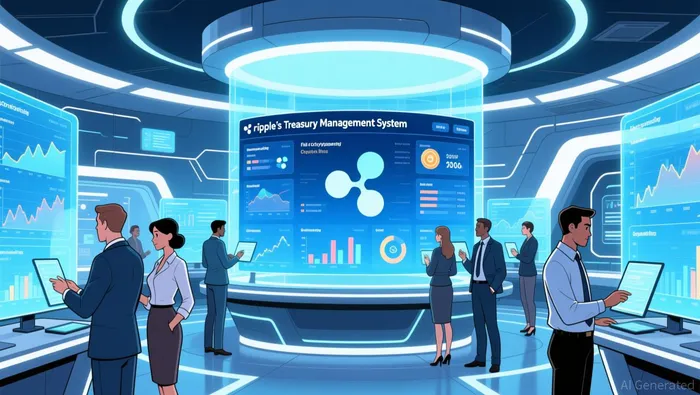
Ripple Treasury has launched Digital Asset Accounts and Unified Treasury, offering CFOs and treasury teams the ability to hold, view, receive, and manage both fiat and digital liquidity across bank and custody providers in a single system. These features eliminate the need for external platforms and provide real-time visibility across all digital and fiat liquidity positions.
Ripple has been conditionally approved for a national trust bank charter since December 2025, and with the OCC's rule change effective April 1, it can now operate under a framework that includes digital asset custody. This shift expands the scope of national trust banks to include non-fiduciary services, which is crucial for institutional clients seeking regulated custody solutions.
Why Institutional Adoption Matters for XRP?
Although over 100 banks test Ripple's cross-border payment technology, only a small subset actively use XRP. This highlights a gap between institutional interest and actual capital flows, which is a key factor in XRP's price stagnation. While a large number of banks are involved in testing Ripple's cross-border payment technology, only around 18 use On-Demand Liquidity, which requires XRPXRP-- as a bridge asset.
How Regulatory Developments Impact Ripple's Ecosystem?
Ripple's conditional national trust bank charter allows it to operate under a framework that includes digital asset custody. This shift expands the scope of national trust banks to include non-fiduciary services, which is crucial for institutional clients seeking regulated custody solutions. Ripple's National Trust Bank will manage RLUSD reserves and custody institutional digital assets under dual federal (OCC) and state (NYDFS) oversight.
What Are the Limitations in Ripple's Expansion Strategy?
Despite a promise to slow down in 2026, Ripple has continued its aggressive acquisition strategy. The company still lacks direct compliance tools for clients, and expansion into new geographic markets remains a key focus. While Ripple has transformed into a firm with custody, prime brokerage, treasury management, and stablecoin settlement capabilities, the company is not yet a fully operational national trust bank and must satisfy additional conditions before opening.
Ripple's National Trust Bank is still not fully operational and must satisfy additional conditions before opening. Ripple is not the only crypto firm to benefit from this rule; others like BitGo, Fidelity Digital Assets, and Paxos have also received conditional approvals.
Ripple Prime has integrated gold, silver, and oil perpetuals with Hyperliquid, allowing institutions to trade these commodities around the clock. This move enables cross-margin trading using RLUSD as collateral, linking XRP positions with commodity exposure in one margin framework.
Ripple spent over $4 billion on acquisitions in 2025 and closed two more deals in early 2026. These acquisitions help Ripple build a comprehensive financial infrastructure for institutions and corporations. Ripple's strategy includes integrating traditional finance businesses into its XRP-based ecosystem, enabling services like prime brokerage, treasury management, and stablecoin settlement.
Ripple currently holds 75 regulatory licenses globally and aims to become a one-stop solution for digital asset operations. Despite its growth, XRP's price is not yet significantly affected by these developments unless XRP becomes integral to settlement processes.
Ripple's strategy includes integrating traditional finance businesses into its XRP-based ecosystem, enabling services like prime brokerage, treasury management, and stablecoin settlement. Ripple currently holds 75 regulatory licenses globally and aims to become a one-stop solution for digital asset operations.
Despite its growth, XRP's price is not yet significantly affected by these developments unless XRP becomes integral to settlement processes. If Ripple migrates post-trade settlement onto the XRP Ledger, this could generate real demand for XRP based on the volume of commodity trading. However, this depends on regulatory changes like the CLARITY Act and technical execution by Ripple.

Blending traditional trading wisdom with cutting-edge cryptocurrency insights.
Latest Articles
Stay ahead of the market.
Get curated U.S. market news, insights and key dates delivered to your inbox.


AInvest
PRO
AInvest
PRO



Comments
No comments yet