
XRP Gains Momentum Amid Regulatory Clarity and Ecosystem Expansion
 Aime Summary
- XRP has declined by approximately 25% over the past three months amid broader crypto market challenges in 2026 according to analysis.
- Despite this downturn, XRPXRP-- remains positioned for long-term growth due to favorable macroeconomic conditions, regulatory clarity, and a strengthening ecosystem as reported.
- Ripple has taken steps to decentralize the XRP Ledger and support a more distributed development model, aiming to reduce its influence over the network according to Reuters.
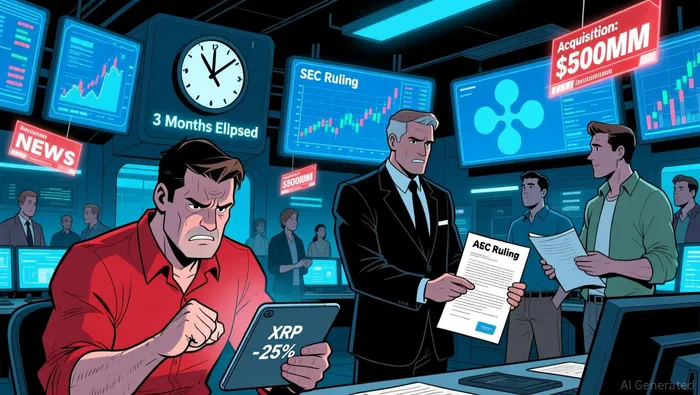
XRP is currently navigating a short-term downturn, with a 25% drop in value over the past three months as of 2026. This decline reflects broader market pressures in the cryptocurrency space, driven by macroeconomic volatility and regulatory uncertainty. However, recent developments suggest XRP is gaining momentum in several key areas that could support a long-term recovery.
Ripple has achieved a significant regulatory milestone with the SEC concluding that XRP sales to retail investors are not classified as securities. This regulatory clarity has been a major factor in encouraging institutional adoption and supports the potential approval of XRP-based ETFs according to analysis. Ripple's ongoing ecosystem expansion includes launching Ripple USDRLUSD--, a dollar-pegged stablecoin, and acquiring Rail, a stablecoin platform, to deepen XRP's integration into mainstream finance as reported.
The XRP Ledger has also been strengthening its compliance tools and privacy features. Confidential transfers, which allow institutions to conduct transactions while maintaining privacy, are now available on the XRP Ledger. These features are critical for attracting regulated financial actors and expanding the tokenization of real-world assets according to analysis. Additionally, the ledger supports the movement of XRP and tokens between blockchains using cross-chain bridges, enabling secure and efficient transfers through locking and issuing chains as detailed.
What Is the Long-Term Outlook for XRP?
The long-term growth potential of XRP is supported by macroeconomic conditions and a developing ecosystem. Ripple's acquisition of Palisade and Rail has enabled the end-to-end management of stablecoin transactions, including custody, virtual accounts, and liquidity management according to Business Wire. RippleRLUSD-- has also expanded its Ripple Payments platform to support both fiat and digital asset transactions, positioning itself as a key infrastructure provider in global finance.
A key driver of XRP's future value may be staking. If a significant portion of the circulating supply becomes illiquid, this could create a scarcity effect, potentially leading to higher prices according to analysis. According to analysis, if 30% of the XRP supply is staked, prices could reach $7.50 to $11.00. This dynamic is based on liquidity premiums and historical precedent for how reduced supply can influence market pricing as detailed.
What Risks or Limitations Should Investors Be Aware Of?
Despite XRP's positive momentum, there are risks to consider. The DeFi ecosystem on the XRP Ledger has faced challenges, with deposit volumes declining significantly. Ripple has taken steps to decentralize development funding and support startups building on the XRP Ledger, but progress may take time according to Reuters. Additionally, the effectiveness of XRP's staking and lending initiatives will depend on adoption and demand for cross-border transactions.
Another consideration is the ongoing decentralization efforts by Ripple. While these aim to reduce Ripple's influence, the company still controls a large portion of the XRP supply, which could affect long-term market dynamics according to Reuters. Furthermore, macroeconomic shifts or regulatory changes could impact the broader crypto market and, by extension, XRP's price trajectory.
What Developments Are Shaping XRP's Ecosystem?
The XRP Ledger continues to evolve with initiatives aimed at enhancing its utility and accessibility. The integration between Flare and Xaman, for example, allows XRP holders to access DeFi vaults through a single transaction, eliminating the need for multiple wallets or manual bridging according to MEXC. This development is expected to improve capital efficiency on the XRP Ledger by enabling more productive use cases for XRP liquidity.
Ripple is also focusing on expanding compliance and privacy features to meet the needs of regulated financial institutions. These features will allow institutions to conduct business while maintaining the confidentiality of their transactions as reported. By balancing privacy with regulatory requirements, Ripple is positioning XRP as a viable option for institutional investors and financial intermediaries.
The recent expansion of Ripple Payments to support both fiat and digital assets is another key development. The platform now allows businesses to collect, hold, exchange, and payout in both fiat and stablecoins, with automated conversion and settlement features. This infrastructure is attracting fintechs and financial institutions globally, with more than $100 billion in processed volume reported according to Business Wire.
The XRP ecosystem is also benefiting from initiatives like the FinTech Builder Programme, which supports startups building financial apps on the XRP Ledger according to Reuters. These efforts are complemented by community-driven funding through the XAO DAO and regional initiatives like XRP Asia. Ripple's partnerships with venture capital firms and universities are also contributing to the development of the XRP Ledger ecosystem.
In summary, XRP is navigating a short-term downturn but remains positioned for long-term growth. Regulatory clarity, ecosystem expansion, and technological advancements are key drivers of its potential. While challenges remain, particularly in the DeFi sector, ongoing developments suggest a path toward renewed market confidence and adoption.

Blending traditional trading wisdom with cutting-edge cryptocurrency insights.
Latest Articles
Stay ahead of the market.
Get curated U.S. market news, insights and key dates delivered to your inbox.


AInvest
PRO
AInvest
PRO



Comments
No comments yet