
XRP Falls Over 60% Despite Ripple's Institutional Growth and Partnerships
 Aime Summary
Ripple has made considerable progress in expanding its payment solutions and has launched a stablecoin, RLUSD, which can replace XRPXRP-- in many of its liquidity solutions. This shift allows institutions to use RLUSD instead of XRP, contributing to XRP's declining value.
Despite Ripple's recent achievements, XRP's price has not reflected the company's progress. The token's decline is attributed to the lack of direct XRP usage in most of Ripple's products, including RippleNet, which functions as a messaging platform and does not require banks to use XRP. According to analysis, this disconnect has significantly impacted XRP's market perception.
The XRP Ledger has hit a milestone of 3 million daily transactions, potentially driving a supply squeeze and bullish price pressure. However, stablecoin activity on the XRP Ledger is slowing, raising questions about the ledger's ability to drive on-chain growth and support a price reversal.
Is XRP's Value Decoupled from Ripple's Success?
XRP's price has fallen despite Ripple's business expansion and strategic partnerships. This disconnect is partly due to the fact that most of Ripple's products do not require XRP. Instead, institutions can opt for Ripple's stablecoin, RLUSD, which serves as an alternative in liquidity solutions. According to reports, this shift has become a key factor in XRP's market dynamics.
Ripple's liquidity feature, ODL, was the main use case for XRP. However, with the introduction of RLUSD, institutions have more options that do not involve XRP. This shift reduces XRP's demand and highlights the broader challenge of linking the token's value to Ripple's business growth. Market analysis indicates that this transition is fundamentally altering XRP's demand profile.
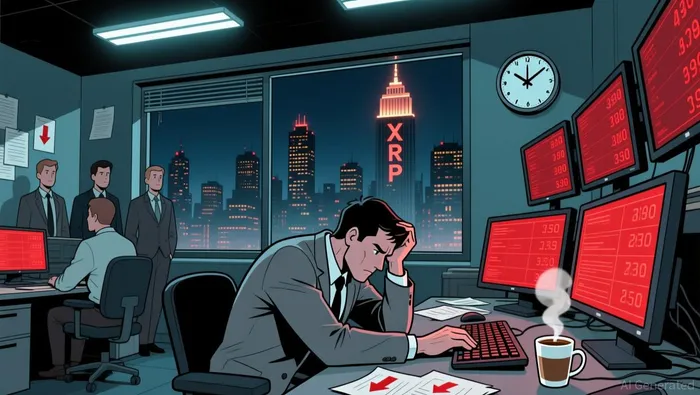
The XRP Ledger's ability to support tokenized real-world assets is growing, but this progress has not translated into higher XRP prices. Instead, the market is focusing on the limitations of the XRP Ledger in the DeFi space, particularly the slowing momentum of stablecoin activity.
What Are the Implications for XRP's Future Performance?
XRP's performance is influenced by macroeconomic factors, regulatory developments, and market sentiment. For instance, the potential passage of the CLARITY Act could classify XRP as a digital commodity, which might allow banks to use it for settlement and increase demand. As regulatory analysis suggests, this could create new demand channels for XRP.
Despite the challenges, XRP has a smaller market cap than BitcoinBTC--, which means it can offer larger percentage returns if the market turns. However, it also carries more risk due to its higher volatility. XRP ETFs have recorded significant inflows, but this trend has slowed in recent months.
The market is also reacting to broader macroeconomic conditions, such as the Federal Reserve's policy decisions. Bitcoin's performance is closely tied to these conditions, while XRP's success depends on a combination of macroeconomic factors, regulatory clarity, and continued adoption of Ripple's services. Market observers note that this makes XRP's path to value recovery particularly uncertain.
Can Ripple's Partnerships Drive XRP's Price Recovery?
Ripple's partnerships with traditional financial institutions and its push to integrate the XRP Ledger into DeFi could drive on-chain growth. By linking with banks, RippleRLUSD-- is bridging the gap between traditional finance and DeFi, using the XRP Ledger as a key infrastructure. According to industry analysis, these partnerships are creating new use cases for the ledger.
However, the XRP Ledger's ability to support DeFi activity is limited, particularly in terms of stablecoin usage. As stablecoins play a crucial role in liquidity and transaction volume, a slowdown in their growth could hinder XRP's potential to drive a price recovery.
The market is also evaluating whether Ripple's partnerships can effectively boost XRP's on-chain growth. A supply squeeze scenario, where increased transaction volume leads to lower circulating supply, could potentially drive price appreciation. However, this scenario depends on the XRP Ledger's ability to maintain and grow its transaction volume. Market data suggests that this remains a significant challenge.
Despite these uncertainties, XRP's technical weakness does not necessarily mean it is undervalued. The market is becoming more aware of the limitations of the XRP Ledger in the DeFi space, which could affect the token's price action. A 2022-style price reversal for XRP is unlikely unless the XRP Ledger can demonstrate sustained growth in transaction volume and DeFi adoption.
Conclusion
XRP's price has fallen significantly despite Ripple's business growth and strategic partnerships. The disconnect between Ripple's achievements and XRP's value is largely due to the fact that most of the company's products do not require XRP. Instead, institutions can use alternatives like RLUSD, which reduces the token's demand and value.
While the XRP Ledger has achieved a milestone in daily transactions, its ability to drive on-chain growth and support a price recovery is limited. The market is also evaluating the broader implications of Ripple's partnerships and the potential for a supply squeeze to drive price appreciation.
Ultimately, XRP's future performance will depend on a combination of macroeconomic conditions, regulatory developments, and continued adoption of Ripple's services. The market remains cautious about the token's ability to recover, particularly in the context of the broader crypto market's volatility and regulatory uncertainties.

Blending traditional trading wisdom with cutting-edge cryptocurrency insights.
Latest Articles
Stay ahead of the market.
Get curated U.S. market news, insights and key dates delivered to your inbox.


AInvest
PRO
AInvest
PRO



Comments
No comments yet