
XRP Faces Structural Challenges in Institutional Adoption and Market Dynamics
 Aime Summary
- Major banks using Ripple's technology often bypass XRPXRP--, limiting its institutional demand.
- Standard Chartered recently reduced its 2026 price target for XRP by 65%.
- XRP is used as a bridge asset but faces issues like volatility and competition from stablecoins according to analysis.
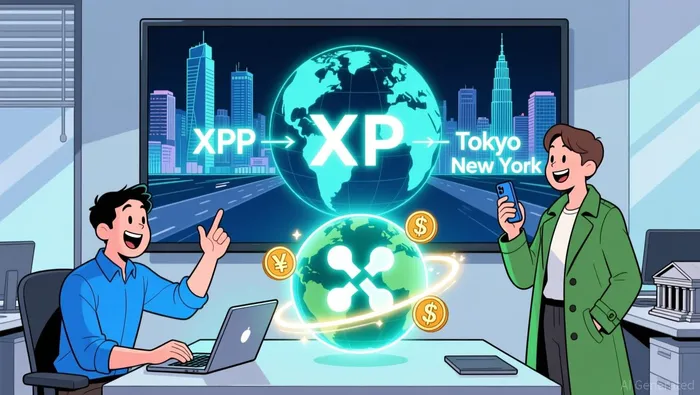
XRP remains a central component of Ripple's cross-border payment network, where it serves as a bridge asset for low-cost, fast international transfers as reported. Despite its foundational role, major banks often use Ripple's technology without directly engaging with XRP, undermining its institutional demand narrative. This dynamic has led to a situation where XRP is frequently traded in and out of within the same transaction, generating volume but not sustained buy pressure.
The token's structural challenges include optional usage in the RippleRLUSD-- network, price volatility, and the emergence of Ripple USDRLUSD-- (RLUSD) as a stable alternative according to industry analysis. These factors raise questions about XRP's long-term utility and market relevance. In January 2026, Barclays, a major financial institution, invested in Ubyx, a stablecoin settlement company, highlighting a broader industry shift toward blockchain solutions that may not rely on XRP.
Recent developments have further cast doubt on XRP's valuation potential. Standard Chartered slashed its 2026 price target for XRP by 65%, from $8 to $2.80, signaling a more cautious institutional outlook. This adjustment reflects evolving market dynamics and a reassessment of XRP's role in the global payments landscape.
What Are the Structural Limitations of XRP's Use Case?
XRP is designed to facilitate cross-border transfers at a fraction of the cost of traditional methods, with each transfer requiring just 0.00001 XRP. However, the token is not mandatory for the Ripple network, which can also process transfers using fiat currency. This optional adoption model creates a disconnect between network usage and XRP demand. Banks, in particular, tend to avoid holding volatile assets like XRP, further limiting the token's utility in institutional settings.
The introduction of Ripple's stablecoin, RLUSD, has added another layer of complexity to XRP's future. With a stable value of $1, RLUSD offers a more predictable and less risky alternative for cross-border transfers. As a result, XRP's role in the payments ecosystem could be gradually diminished by this new offering.
How Is Institutional Interest in XRP Evolving?
Institutional sentiment toward XRP has shifted in recent months, with major banks exploring alternative blockchain-based solutions that may not rely on the token. Barclays, for instance, has been investing in stablecoin settlement infrastructure and is evaluating partnerships to build a blockchain-powered digital payments system. This move aligns with broader industry trends where institutions are prioritizing efficiency, speed, and stability in their financial operations.
While XRP's real-world use case as a bridge currency remains intact, its future value is closely tied to broader market conditions and the strategic direction of Ripple and its partners according to market analysis. The token's price movements are currently driven by speculative trading rather than fundamental demand, making it a more volatile investment compared to stablecoins or other digital assets.
What Are the Technical Foundations of the XRP Ledger?
The XRP Ledger operates using a canonical binary format for transactions and data, ensuring consistency in digital signatures and peer-to-peer communications, and is essential for maintaining the integrity of the XRP Ledger system. Developers can serialize and deserialize data using multiple programming languages, making the protocol accessible for integration into various applications.
An account in the XRP Ledger includes an address, XRP balance, sequence number, and transaction history. These accounts require XRP for reserve requirements, and the sequence number ensures transactions are processed in the correct order. Despite these technical advantages, the token's utility depends on its adoption by financial institutions, which remain cautious about its volatility and optional usage according to market analysis.

Blending traditional trading wisdom with cutting-edge cryptocurrency insights.
Latest Articles
Stay ahead of the market.
Get curated U.S. market news, insights and key dates delivered to your inbox.


AInvest
PRO
AInvest
PRO



Comments
No comments yet