
XRP Faces New Pressures Amid Global Supply Chain Disruptions and Strategic Mineral Developments
 Aime Summary
- Global supply chain disruptions are impacting the availability of sulfuric acid, a key material for agriculture and industrial sectors according to industry reports.
- Rare earth elements and platinum-group elements face supply challenges, increasing input costs and environmental risks for agriculture and energy sectors as research shows.
- Strategic developments in North America and Japan are reshaping rare earth supply chains, aiming to reduce reliance on Chinese sources according to market analysis.
Sulfuric acid is a critical component for both the fertilizer and metal industries. As its availability dwindles, production costs rise, and supply chains become more vulnerable to disruption. This has knock-on effects across agricultural and manufacturing sectors, which rely on these materials for essential processes like phosphate processing and metal refining as industry data indicates.
Rare earth elements are becoming a focal point for global supply chain security. Their scarcity affects multiple industries, from agriculture to renewable energy. The rising demand for these elements, combined with geopolitical concerns, is pushing countries to develop alternative sources and sustainable mining practices according to market reports.
North America is emerging as a key player in rare earth supply chain development. Companies like REalloysALOY-- are positioning themselves to meet U.S. defense and manufacturing needs by establishing non-Chinese processing facilities. These developments are supported by significant financial backing and aim to secure supply before potential import bans according to industry analysis. Japan, too, is diversifying its rare earth sources by expanding partnerships with companies like Lynas Rare Earths, bringing in additional elements such as samarium and lutetium as reported.
How are supply chain pressures impacting global markets today?
Supply chain pressures are increasingly evident in the form of higher raw material costs and production delays. Sulfuric acid shortages are creating ripple effects in agriculture and metal production. At the same time, geopolitical tensions and logistical disruptions—such as those in the Strait of Hormuz—are compounding these issues by limiting fertilizer shipments and driving up prices according to market analysis.
In the digital infrastructure space, these supply chain issues could indirectly influence demand for digital assets used in supply chain management and logistics tracking. As firms seek more resilient systems, they may look to blockchain-based solutions to enhance transparency and efficiency according to industry reports.
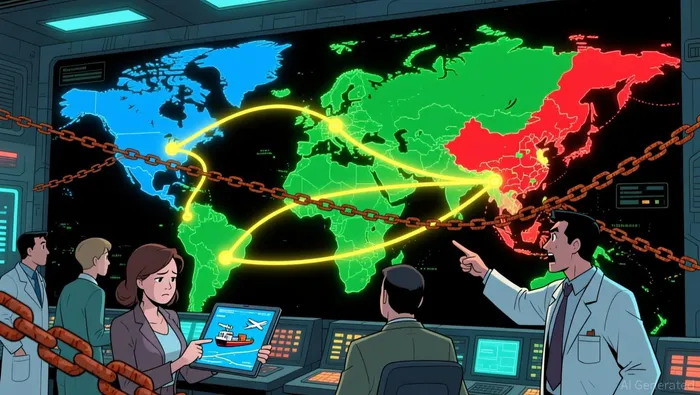
What developments are reshaping rare earth supply chains in North America and Japan?
Rare earth supply chains are undergoing significant changes. In North America, companies like REalloys are leading the charge in developing non-Chinese sources of rare earth elements. The company is projected to scale up production significantly by 2028, supported by $200 million in funding from the Export-Import Bank according to market commentary.
Japan is also taking steps to diversify its rare earth imports. Through a partnership with Lynas Rare Earths, the country is securing new sources of medium and heavy rare earths. These developments are part of a broader strategy to reduce dependency on China and enhance supply chain stability according to company reports.
What is the potential impact of domestic mining in Missouri on U.S. supply chain resilience?
Missouri's mineral deposits are being re-evaluated as a potential domestic source of critical minerals. These include cobalt, copper, and rare earth elements, which are essential for modern technology and energy systems according to industry analysis. The state's potential to produce these minerals could reduce reliance on foreign sources and provide a more secure supply chain as market data shows.
Developing Missouri's mining industry comes with both opportunities and challenges. While it has the potential to create economic growth and jobs, it must also navigate strict U.S. environmental regulations. The redevelopment of the Pea Ridge mine by Caldera Holdings is a key example of how companies are seeking to extract value from historical mining operations while minimizing environmental impact according to local reports.
Overall, the potential development of processing facilities in Missouri could not only stabilize the supply of critical minerals but also contribute to the broader goal of strengthening U.S. industrial and technological independence according to industry analysis.

Blending traditional trading wisdom with cutting-edge cryptocurrency insights.
Latest Articles
Stay ahead of the market.
Get curated U.S. market news, insights and key dates delivered to your inbox.


AInvest
PRO
AInvest
PRO



Comments
No comments yet