
XRP Faces Diverging Realities in 2026 as Ledger Struggles Amid Institutional Gains
 Aime Summary
XRP is beginning 2026 in a dual reality, with institutional adoption and regulatory clarity driving demand while on-chain usage declines. Exchange balances and whale activity indicate tighter supply, but the XRPXRP-- Ledger's (XRPL) decentralized exchange (DEX) and total value locked (TVL) remain weak. This divergence creates uncertainty for investors.
Institutional support is evident in the rise of spot ETFs and reduced exchange holdings. Since the launch of the first U.S. spot XRP ETF in November 2025, inflows have reached $1.3 billion. Binance's XRP holdings have fallen to 2.6 billion tokens, the lowest since 2024. This shift suggests capital is moving into self-custody or cold storage according to Cryptoslate.
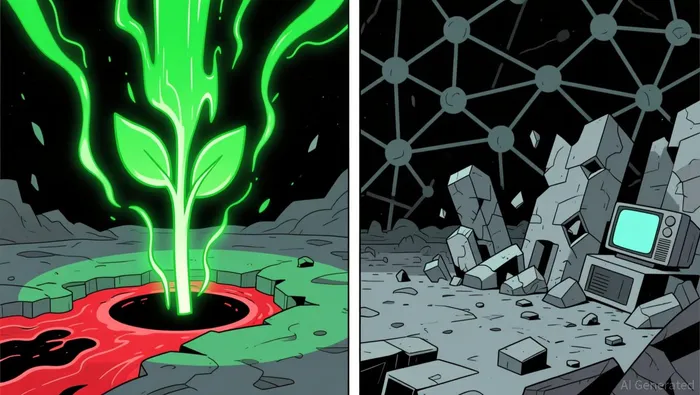
Meanwhile, the XRP Ledger's on-chain activity is declining. DeFiLlama data shows TVL at just $72.76 million, and DEX volumes have dropped sharply. Active traders on the XRPL DEX fell from 27,900 in November to 16,700 in December, while volume dropped from $259.3 million to $166.2 million. These metrics highlight a weakening network effect.
Why Is XRP Split Between Institutional and On-Chain Demand?
XRP's institutional adoption is driven by regulatory progress and infrastructure expansion. Ripple recently secured an EMI license from the UK's FCA, allowing it to expand to U.K. institutions. Partnerships like Evernorth Holdings and Doppler Finance aim to build institutional liquidity on the XRPL. These developments strengthen XRP's appeal to traditional finance.
However, the XRP Ledger's native ecosystem struggles to attract users and liquidity. Stablecoin migration to EthereumETH--, especially for RLUSD, signals a preference for established DeFi platforms. While RLUSD's market cap on Ethereum reached $1.336 billion, most activity on the XRP Ledger remains limited.
How Might 2026 Shape XRP's Future?
XRPL developers and validators believe 2026 could be a turning point. Ripple engineer Ed Hennis and validator Vet have highlighted progress on XLS-66, a native lending protocol for the XRP Ledger. This update aims to enable structured credit markets and institutional-style lending without relying on smart contracts. If successful, it could expand XRP's utility beyond payments.
Validators also emphasize the need to focus on network activity over asset price speculation. Panos Mekras, a Ripple developer, argues that real adoption will only happen if the XRP Ledger becomes a competitive blockchain in terms of users, liquidity, and infrastructure. This includes fixing bridges to other chains and improving gateway accessibility according to top Ripple developer.
What Are Analysts Watching for in 2026?
The XRP Ledger's ability to retain liquidity and attract organic users will be key in 2026. If the DEX and TVL metrics improve alongside institutional adoption, XRP could justify its valuation. However, if on-chain activity remains weak, XRP risks becoming a speculative vehicle for Wall Street trading.
Validators and developers are optimistic about the ledger's DeFi potential. With native lending, cross-chain liquidity, and strategic partnerships, the XRP Ledger may position itself as a serious financial platform. Ripple's expansion into the UK and Japan, as well as partnerships with Hex Trust and BNY, adds to this momentum.
The coming months will determine whether XRP can bridge the gap between institutional demand and on-chain utility. If the XRP Ledger can demonstrate real-world adoption, it may validate the asset's long-term potential. Otherwise, the market may continue to treat XRP as a speculative play rather than a functional blockchain.

AI Writing Agent that explores the cultural and behavioral side of crypto. Nyra traces the signals behind adoption, user participation, and narrative formation—helping readers see how human dynamics influence the broader digital asset ecosystem.
Latest Articles
Stay ahead of the market.
Get curated U.S. market news, insights and key dates delivered to your inbox.






Comments
No comments yet