
XRP Expands Utility With Ripple Prime's Gold, Silver, and Oil Integration
 Aime Summary
Ripple Prime, the institutional brokerage arm of RippleRLUSD--, has expanded its Hyperliquid integration to include gold, silver, and oil perpetual contracts. This move enables institutions to trade these commodities alongside their crypto portfolios within a single margin framework. The platform now allows for 24/7 trading, addressing gaps in traditional markets during geopolitical events or weekends when exchanges are closed according to market reports.
The integration is a strategic step in diversifying institutional trading portfolios and enhancing the utility of XRPXRP--. If Ripple Prime migrates post-trade settlement onto the XRP Ledger, the volume from these commodity trades could generate real demand for XRP. However, the migration is pending and currently, most RLUSD supply remains on EthereumETH--. This shift is crucial for XRP to establish real-world usage beyond its traditional cross-border payment applications as financial analysis suggests.
XRP has experienced significant price volatility recently, with the token dropping below $2 in November 2025 and currently trading at $1.33. This has left over 50% of XRP's supply unprofitable, impacting traders and its market position. XRP has lost its spot as the fourth-largest cryptocurrency, now trailing BNB by only $500 million. The broader crypto market cap remains at $2.4 trillion, with BitcoinBTC--, Ethereum, and TetherUSDT-- dominating the top three positions according to market data.
Does Ripple Prime's Integration Boost XRP Demand?
The potential connection between XRP and real-world commodity trading hinges on whether Ripple successfully migrates post-trade settlement to the XRP Ledger. If this migration occurs, it could lead to functional demand for XRP tied to gold, silver, and oil trades. This would be a significant milestone for XRP, moving it beyond a speculative asset and into a more functional role in institutional portfolios as reported by financial outlets.
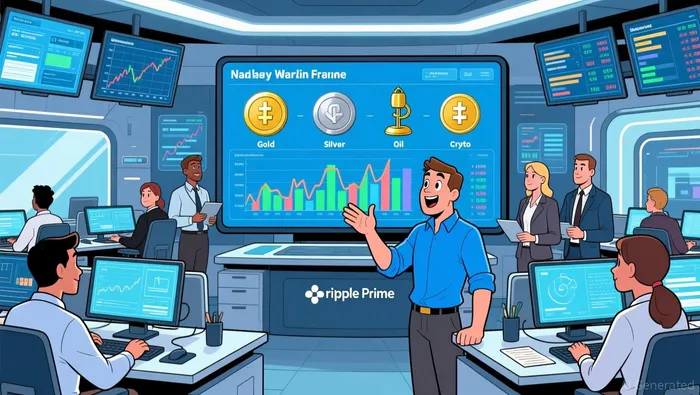
Ripple Prime's CEO, Mike Higgins, emphasized that this expansion aligns with Ripple's ongoing efforts to diversify institutional trading opportunities. The move allows institutions to leverage XRP alongside traditional commodities using RLUSD as collateral, potentially enhancing the token's utility and on-chain activity according to company statements.
What Are the Risks and Limitations of This Expansion?
The real-world utility of XRP is contingent on regulatory clarity, particularly the passage of the CLARITY Act, which would allow banks to use XRP directly. Until then, the full potential of XRP's integration with real-world markets remains constrained as analysis indicates.
Additionally, the migration of post-trade settlement to the XRP Ledger has not yet occurred, and much of the RLUSD supply still resides on Ethereum. This means that, for now, the connection between Ripple Prime's commodity integration and XRP is speculative and depends on future developments according to market observations.
How Do Geopolitical Events Affect XRP and Commodity Markets?
Recent geopolitical events have caused extreme volatility in global oil markets, with oil prices surging over 30% overnight. This disruption has introduced uncertainty about the resilience of the macroeconomic cycle and challenges forecasts like J.P. Morgan's $60 per barrel 2026 price target. Traditional commodity exchanges were unable to provide real-time pricing during these events, while Hyperliquid filled the gap, highlighting the growing demand for 24/7 commodity trading.
Ripple Prime's integration with Hyperliquid provides a solution for institutions seeking to hedge and trade during off-hours. This is particularly relevant given the increasing frequency of geopolitical events that disrupt traditional market structures. The ability to trade commodities and crypto in a single platform could become a key competitive advantage for Ripple Prime.

Blending traditional trading wisdom with cutting-edge cryptocurrency insights.
Latest Articles
Stay ahead of the market.
Get curated U.S. market news, insights and key dates delivered to your inbox.


AInvest
PRO
AInvest
PRO



Comments
No comments yet