
XRP Expands Institutional Adoption with New Lending Protocol and Stablecoin Partnerships
 Aime Summary
Société Générale's EUR CoinVertible (EURCV) stablecoin, compliant with MiCA regulations, has expanded to the XRPXRP-- Ledger, signaling growing institutional trust in XRPL.
XRP has seen growing institutional interest through recent developments on the XRP Ledger (XRPL). A new lending protocol (XLS-66d) is under validator voting, introducing structured credit mechanisms for institutional borrowers. This feature supports fixed-term loans and isolated vaults, aiming to make XRP more attractive for institutional capital deployment. The protocol's unique design—governed directly by the ledger—differentiates it from typical DeFi approaches, offering predictable returns and on-chain transparency.
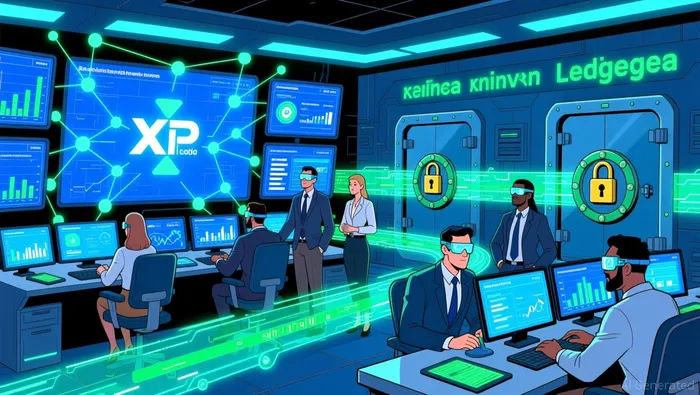
On the institutional side, Société Générale's digital arm, SG-FORGE, launched its MiCA-compliant stablecoin, EURCV, on the XRP Ledger. EURCV is backed 1:1 by bank deposits or high-quality securities, with daily reserve reports published for transparency. The deployment of EURCV on XRPL underscores the ledger's efficiency and compliance-friendly infrastructure, with settlement speeds of just 3–5 seconds compared to Ethereum's 12–13 minutes.
The integration of EURCV and other institutional-grade features like XLS-66d could impact XRP's price dynamics. If the lending protocol gains traction and vault total value locked (TVL) exceeds $500 million, XRP could reach $3.50–$5.00 by late 2026. Analyst Austin noted that if XRP closes within the $1.20–$1.60 range this month, it might trigger a new price discovery phase.
What is the significance of XRP Ledger's lending protocol?
The XLS-66d amendment introduces a new use case for XRP by enabling institutional-grade lending directly on the XRP Ledger. Fixed-term loans, transparent repayment schedules, and isolated vault structures are designed to appeal to institutional investors who require predictable returns and risk management. Unlike DeFi models, which often involve pooled collateral, the isolated vault approach ensures that defaults in one vault do not affect others. This structure aligns with traditional credit mechanisms, making it easier for institutions to integrate blockchain-based lending into their portfolios.
The lending protocol also supports Single Asset Vaults, which allow lenders to fund loans in specific assets, such as XRP or RLUSDRLUSD--. These vaults offer both public and private access, giving institutions flexibility in managing compliance and yield exposure. For XRP holders, this means they can now earn returns by lending their holdings rather than simply holding or trading them.
How does EURCV's deployment on XRPL reflect broader market trends?
Société Générale's EURCV expansion to the XRP Ledger highlights a growing trend among institutions to adopt blockchain infrastructure for settlement efficiency and compliance. EURCV, which is already live on EthereumETH-- and SolanaSOL--, now joins XRPL to serve diverse institutional needs. SG-FORGE emphasized XRPL's speed and cost advantages, with settlement times significantly faster than Ethereum. This multi-chain strategy allows EURCV to serve different market segments—from DeFi liquidity to institutional settlement—without locking clients into a single network.
EURCV's integration also signals the growing legitimacy of the XRP Ledger as a viable platform for institutional-grade applications. The ledger's 30-day RWA growth ranked second at 15.37%, showing increasing real-world adoption. While XRP's price remains at $1.40, the continued integration of institutional-grade features like EURCV and XLS-66d could drive token demand over time.
What are the potential price implications of XRP's institutional adoption?
Analysts suggest that institutional adoption on the XRP Ledger could have a direct impact on XRP's price, especially if key metrics like vault TVL surpass $500 million. XRP's historical price action has shown that it often struggles to close within the $1.20–$1.60 range, creating unresolved gaps and volatility. If the monthly candle closes within that range, it could trigger a breakout phase, potentially leading to parabolic growth.
Additionally, the Stochastic RSI (SRSI) for XRP has been at historically low levels, similar to previous bear market bottoms. This technical pattern could indicate a potential reversal, especially if institutional activity continues to accelerate. However, macroeconomic conditions and regulatory developments could also influence the trajectory, particularly if validators delay approval of the XLS-66d amendment or institutions pause due to competing opportunities.
Flare and Xaman have further expanded XRP's utility with a one-click DeFi integration, allowing XRP holders to access yield vaults and increase participation in decentralized finance. This development could broaden the appeal of XRP, especially among retail investors seeking passive income from their holdings.
Overall, XRP is at an inflection point, with institutional adoption, regulatory compliance, and innovative features like XLS-66d and EURCV positioning it for broader market acceptance. However, the direct link between network adoption and token price remains to be seen, with outcomes dependent on macroeconomic and regulatory variables.

Blending traditional trading wisdom with cutting-edge cryptocurrency insights.
Latest Articles
Stay ahead of the market.
Get curated U.S. market news, insights and key dates delivered to your inbox.


AInvest
PRO
AInvest
PRO



Comments
No comments yet