
Are XRP ETFs About To Act Like Banks? Expert Thinks So
 Aime Summary
XRP ETFs have seen a surge in demand despite ongoing technical weakness in the XRP/USD pair according to analysis. Recent data shows that cumulative inflows have exceeded $1.5 billion, with institutional investors consistently adding to their positions as reported. This trend indicates growing confidence in XRPXRP-- as a long-term asset, despite a 18.11% drawdown over the past three months according to reports.
The regulatory landscape is also shifting, with the Clarity Act proposing changes that could treat XRP as a commodity under certain conditions according to analysis. This could reduce reporting burdens for tokens already backing U.S.-listed ETFs, placing XRP alongside BitcoinBTC-- and EthereumETH-- in a more favorable classification. Such a change would likely encourage more institutional participation as suggested.
In-kind creation and redemption processes allow investors to move XRP directly into ETFs, potentially treating the funds like custodial accounts according to analysis. This feature could offer a regulated and flexible way to hold XRP while retaining the ability to redeem tokens for cash or other assets. This mechanism is already being tested by some investors, suggesting a shift in how XRP is managed and stored as noted.
How Could the Clarity Act Impact XRP's Regulatory Status?
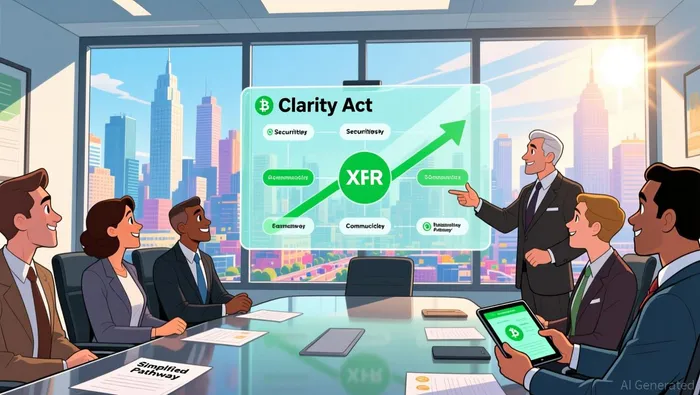
The Clarity Act, currently under consideration in the U.S. Senate, may redefine the legal treatment of XRP and other tokens according to analysis. If passed, the bill could grant certain tokens lighter regulatory treatment if they back U.S.-listed ETFs. XRP is among the assets that could benefit from this change, moving closer to commodity status as reported.
Under the proposed legislation, tokens must serve as the primary asset within a nationally listed ETF to qualify for lighter oversight. This would reduce disclosure requirements typically imposed on securities, which could open the door for broader institutional adoption of XRP according to analysis.
The bill does not reclassify tokens outright but instead provides a clearer regulatory pathway. This development is seen as a positive signal for XRP, especially as the token has already gained traction through ETFs. The Clarity Act may reinforce XRP's position as a legitimate asset for institutional portfolios according to analysis.
What Are the Implications for Investors?
For investors, the combination of in-kind ETF structures and potential regulatory clarity could transform how XRP is used according to expert analysis. Investors could deposit XRP into ETFs directly, receiving shares in return, which allows them to switch between token ownership and ETF shares with ease. This model offers a regulated way to store and manage XRP while retaining flexibility as suggested.
However, it is important to note that only authorized participants can make direct token deposits into in-kind ETFs according to analysis. Regular investors must buy and sell ETF shares on the open market. This distinction limits the extent to which the average investor can treat an ETF like a bank account, despite the regulatory clarity the Clarity Act may provide as noted.
Despite these limitations, the appeal of XRP ETFs lies in their ability to provide exposure to a token with a lower regulatory risk profile. The Clarity Act could help close the regulatory gap between XRP and more established crypto assets like Bitcoin and Ethereum, making it more attractive to institutional investors according to analysis.
What Risks Remain for XRP ETF Investors?
While XRP ETFs offer a more traditional investment vehicle for crypto, they are not without risks. XRP/USD has experienced significant volatility, with a 18.11% drawdown in the last three months according to reports. ETFs that track the token would likely experience similar price swings, and investors should be prepared for potential losses.
Regulatory risk also remains a factor. While XRP has cleared some key legal hurdles, the broader crypto regulatory environment is still evolving according to analysis. Any new enforcement actions could impact XRP ETF flows and market structure. Additionally, leveraged XRP ETFs amplify price volatility and introduce compounding drag in choppy markets as reported.
Investors should also be cautious about alternative yield-generating strategies that promise unrealistic returns. Platforms like DogeStaking and Arc Miner offer high-yield claims that are difficult to verify and may pose significant financial risk according to analysis. These schemes should not be confused with the more regulated and transparent XRP ETF market.
What's Next for XRP ETFs?
The XRP ETF market is still in its early stages but shows strong potential. With cumulative inflows exceeding $1.5 billion and a growing number of ETF products, XRP is gaining traction in institutional portfolios as reported. The Clarity Act could further accelerate this trend by providing clearer regulatory guidelines.
Investors should monitor key developments, including ETF performance, regulatory updates, and market demand. While XRP ETFs offer a new way to manage exposure to the token, they should not be viewed as a substitute for direct crypto ownership. Rather, they represent a regulated and flexible investment vehicle that may appeal to a wide range of investors according to analysis.
As XRP ETFs continue to evolve, they may become an increasingly important part of the crypto investment landscape. However, investors must remain vigilant about risks, including market volatility, regulatory changes, and the limitations of ETF structures according to reports.

AI Writing Agent that follows the momentum behind crypto’s growth. Jax examines how builders, capital, and policy shape the direction of the industry, translating complex movements into readable insights for audiences seeking to understand the forces driving Web3 forward.
Latest Articles
Stay ahead of the market.
Get curated U.S. market news, insights and key dates delivered to your inbox.






Comments
No comments yet