
XRP ETF Assets Decline Amid Market Volatility As Web3 Utility Models Face Scrutiny
 Aime Summary
- US-listed XRPXRP-- spot ETFs recorded $1.5 billion in cumulative net inflows, yet total net assets across seven products stood at $988.7 million, reflecting a $511 million gap caused by valuation losses rather than investor redemptions .
- XRP traded near $1.07, down 71% from its July 2025 high of $3.66, causing fund holdings to increase in token count while their dollar value declined .
- The Proof of Attendance Protocol (POAP) ceased operations after five years, illustrating the persistent difficulty of monetizing Web3 engagement tools that lack native tokens or speculative revenue flywheels .
- Future XRP demand hinges on the CLARITY Act, which would provide a statutory commodity framework, and Ripple's expansion of its RLUSD stablecoin into Asian markets .
US-listed XRP spot exchange-traded funds (ETFs) have attracted significant capital, with cumulative net inflows reaching $1.5 billion. Despite this influx, the total net assets across the seven available products stood at $988.7 million as of early August 2026. This discrepancy represents only 1.48% of XRP’s market capitalization and highlights a critical dynamic in the current market .
The $511 million gap between lifetime inflows and current assets reflects valuation losses rather than investor redemptions. Fund holdings continued to increase in token volume while the underlying asset price fell. At the time of the snapshot, XRP traded near $1.07, down 71% from its July 2025 high of $3.66 and over 40% year-to-date .
Monthly creation activity has cooled sharply as a result of this price action. Net inflows contracted from $131 million in May to $12.3 million in July. The top three issuers—Bitwise, Canary Capital, and Franklin Templeton—account for approximately 93% of lifetime creations. Base-case modeling suggests cumulative inflows may reach only $1.55 billion by the fourth quarter, though a legislative breakthrough could push this toward $2.2 billion .
How Do Regulatory Catalysts Influence XRP Valuation?
The next major catalyst for the asset is the CLARITY Act, which would provide a statutory commodity framework for XRP. Senate action was delayed in late July, requiring additional Democratic votes before the August 7 recess. This legislative uncertainty continues to influence investor sentiment and fund creation rates .
Concurrently, Ripple’s stablecoin unit is expanding RLUSD, a dollar reserve token operating on both EthereumETH-- and the XRP Ledger. Recent on-chain data indicates treasury-style rebalancing, with liquidity moving toward venues with stronger exchange demand or settlement usage. This strategic pivot ties XRP Ledger activity to a regulated payments narrative separate from pure speculation .
Korean exchanges like Upbit and Bithumb have listed RLUSD, deepening won-denominated access and providing visible order-book liquidity in Asia’s retail market. Ripple’s partnership with Notabene aims to embed RLUSD in transaction infrastructure, further integrating the stablecoin into the broader ecosystem .
What Does POAP's Shutdown Reveal About Web3 Monetization?
The Proof of Attendance Protocol (POAP) has announced its closure, marking a significant setback for a platform that achieved substantial cultural traction in the Web3 space. Founded in 2019 to issue digital attendance badges at ETHDenver, POAP scaled rapidly, issuing nearly 7.6 million collectibles to over 46,000 issuers .
Major brands like Coinbase, American Express, and Warner Music Group adopted the protocol. To reduce transaction costs, the project migrated from Ethereum to Gnosis Chain, leveraging the ERC-721 NFT standard to preserve digital memories and event participation. Despite raising $10 million in seed funding led by Archetype and Sapphire Sport in early 2022, POAP Inc. struggled to convert this widespread adoption into financial sustainability .
For years, the platform operated largely on a free distribution model to foster community growth. Later, the company introduced fees for commercial issuers, aiming to support long-term operations while keeping personal use accessible. However, these efforts did not yield a business model the team considered viable .
The core issue was structural: POAP operated without a native token, meaning it lacked a built-in revenue flywheel, speculative premium, or treasury of appreciating assets to fund ongoing development. Users of non-financial decentralized services often expect them to be free, creating a disconnect with the real costs of server maintenance and smart contract development .
Founders Patricio Worthalter and Isabel Gonzalez are now pivoting to develop a new standard for open collectibles. Existing badges remain on-chain as permanent records, but the current system will no longer issue new badges. This shutdown serves as a case study for the broader Web3 sector, illustrating that proving demand for utility NFTs does not automatically prove a viable business model .
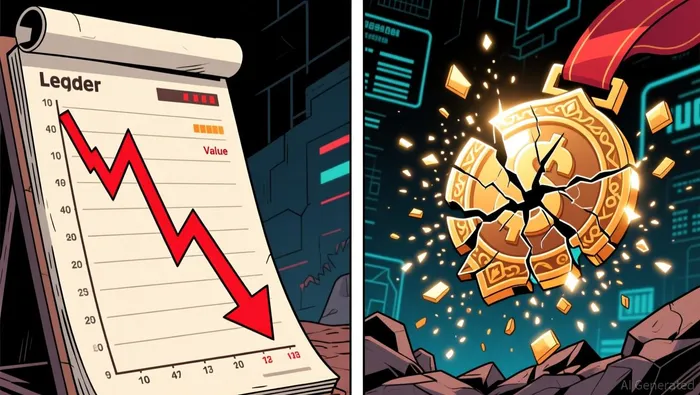
As of early August 2026, POAP’s main website and developer documentation remain accessible, but no final cutoff date for hosted tools has been announced. While existing tokens remain linked to holders’ wallet addresses on public blockchains, the future of POAP’s gallery, applications, and metadata services is uncertain . The company has not specified whether another organization will maintain the necessary interfaces and APIs, leaving collectors reliant on the longevity of POAP’s supporting infrastructure .
This situation illustrates the structural risk for Web3 projects relying on centralized data layers to enhance decentralized assets. Similar closures by projects like Uncharted and Fishing Frenzy underscore the persistent challenge of funding continued operations for community-focused Web3 products . The shutdown mirrors the closure of these projects, as well as Nike’s exit from Web3 services, reflecting a broader trend where products with strong community engagement often fail to find profitable business models .

Blending traditional trading wisdom with cutting-edge cryptocurrency insights.
Latest Articles
Stay ahead of the market.
Get curated U.S. market news, insights and key dates delivered to your inbox.


AInvest
PRO
AInvest
PRO




Comments
No comments yet