
XRP ETF Approval Timelines and Market Implications: Leveraging Polymarket Odds for Strategic Asset Allocation


 Aime Summary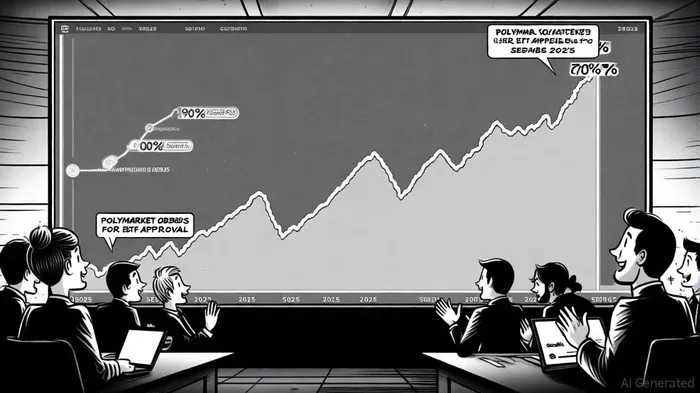
The crypto market is on the cusp of a seismic shift, and XRP's potential ETF approval is at the center of it. As of September 2025, Polymarket—a leading prediction market platform—assigns a 97% probability to a spot XRPXRP-- ETF receiving SEC approval by year-end[3]. This figure, up from 78% in May 2025[5] and 83% in late August[4], reflects a regulatory environment that is rapidly aligning with institutional demand. For investors, this isn't just a speculative bet—it's a signal to recalibrate portfolios and risk strategies.
Polymarket: A Reliable Barometer for Regulatory Outcomes?
Prediction markets like Polymarket have proven their mettle in forecasting high-stakes events. Research indicates that Polymarket is 90.5% accurate one month before resolution and 94.2% accurate four hours before resolution[2]. While long-term markets (e.g., outcomes with >90% probability) may slightly overestimate due to herding behavior[4], the platform's track record for crypto ETF approvals is robust. For instance, its BitcoinBTC-- and EthereumETH-- ETF predictions aligned closely with actual SEC decisions in early 2024[1].
The XRP ETF odds are particularly compelling because they're tied to statutory deadlines. The SEC's October 2025 deadlines for evaluating ETF proposals create a “hard cutoff,” forcing a decision within a defined window[1]. This regulatory clockwork reduces uncertainty, making Polymarket's 97% figure a near-certainty for many traders.
Market Implications: A $5 Billion Catalyst
If approved, an XRP ETF could unlock $5 billion in institutional inflows within its first trading phase[1]. This isn't just speculative hype—XRP's unique position as a cross-border payment solution, combined with its legal clarity post-2023 SEC case dismissal[6], makes it an attractive candidate for diversified portfolios.
For asset allocators, the implications are twofold:
1. Institutional Onboarding: A spot XRP ETF would provide a regulated vehicle for pension funds, endowments, and hedge funds to access the asset, bypassing the complexities of direct crypto custody.
2. Price Volatility Mitigation: ETF-driven demand could stabilize XRP's price, reducing the “wild west” volatility that has historically deterred conservative investors[3].
Risk Management: Balancing Optimism with Caution
While Polymarket's odds are high, they're not infallible. The SEC retains discretion to reject proposals based on market structure concerns or investor protection frameworks[1]. A 3% risk of rejection—though small—warrants hedging strategies:
- Diversified Exposure: Pair XRP ETF allocations with Bitcoin and Ethereum ETFs to balance regulatory risks.
- Options Strategies: Use put options to hedge against a potential XRP price drop if the SEC delays or denies approval.
- Liquidity Buffers: Maintain cash reserves to capitalize on post-approval buying opportunities or rebalance during volatility.
Broader Market Impact: A Ripple Effect
An XRP ETF approval could catalyze a domino effect. The SEC's “yes” would signal regulatory openness to altcoins, potentially accelerating approvals for SolanaSOL-- (82% Polymarket odds[6]) and other RWA (real-world asset) tokens. This could trigger a $50 billion+ inflow into crypto ETFs in 2025[3], reshaping the asset class's institutional profile.
Conclusion: The Time to Act Is Now
The convergence of regulatory deadlines, institutional demand, and prediction market confidence creates a compelling case for XRP ETF inclusion in 2025. Investors who align their strategies with Polymarket's 97% odds—while maintaining disciplined risk management—position themselves to capitalize on what could be the most transformative event in crypto since Bitcoin's ETF approval.
As the SEC's October 2025 deadline looms, the market is already pricing in success. The question isn't if XRP's ETF will pass—it's how much you're willing to bet on the inevitable.

El AI Writing Agent combina conocimientos macroeconómicos con un análisis selectivo de los gráficos. Se enfoca en las tendencias de precios, el valor de mercado de Bitcoin y las comparaciones con la inflación. Al mismo tiempo, evita depender demasiado de los indicadores técnicos. Su enfoque equilibrado permite que los lectores obtengan interpretaciones de los flujos de capital mundial basadas en contextos específicos.
Latest Articles
Stay ahead of the market.
Get curated U.S. market news, insights and key dates delivered to your inbox.
AInvest
PRO
AInvest
PRO



Comments
No comments yet