
XRP ETF Approval Prospects and Fee Competitiveness: Strategic Implications of Bitwise's Final Filing Updates


 Aime Summary
Bitwise's Strategic Moves and Regulatory Timelines
Bitwise's XRP ETF filing, now finalized with a 0.34% fee and a listing on the NYSE, represents a calculated effort to expedite approval. According to Bloomberg ETF analyst , these updates are the "last boxes to check" before launch, , per the report. This aggressive timeline is bolstered by the precedent set by the success, .
of Bloomberg Intelligence further notes that Bitwise's concise filing strategy-avoiding unnecessary amendments-reduces regulatory friction, a critical advantage in a market where speed to launch can determine competitive positioning. The firm's decision to list on the NYSE, a traditional venue with established liquidity, also signals a strategic alignment with institutional investor expectations.
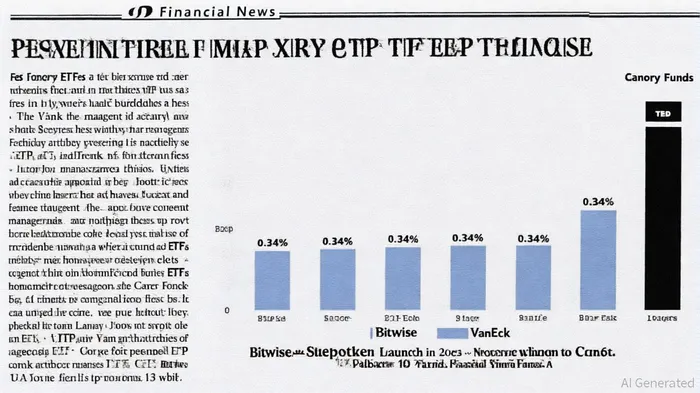
Fee Competitiveness: Bitwise vs. VanEck and Canary Funds
The 0.34% management fee proposed by Bitwise is a pivotal factor in its market appeal. , creating a direct pricing parity in a sector where cost efficiency is a key driver for retail and institutional adoption. Canary Funds, another major contender, has not explicitly disclosed its fee structure in recent filings, but its streamlined S-1 update. Analysts suggest that Canary's focus on auto-effective SEC rules (Section 8(a) of the Securities Act of 1933) could allow it to bypass traditional approval delays, though its fee remains a wildcard in the competitive equation, according to a CryptoNewsLand report.
The broader XRP ETF landscape is marked by over 20 applications under SEC review, reflecting robust demand for regulated exposure to the asset. However, the government shutdown has paused evaluations, pushing deadlines to late November or December. This delay, while temporary, underscores the importance of fee competitiveness in retaining investor interest during regulatory limbo.
Strategic Implications for Market Entry and Investor Returns
The fee structure of XRP ETFs directly impacts investor returns, particularly in a market where even minor cost differentials can compound over time. Bitwise's 0.34% fee aligns with industry benchmarks for altcoin ETFs, such as the REX-Osprey XRP ETF (XRPR), which has already surpassed $100 million in assets under management, per Yahoo Finance. This suggests that investors are prioritizing cost efficiency and regulatory clarity, two areas where Bitwise and its competitors are now neck-and-neck.
, a prominent crypto analyst, argues that XRP's inherent complexity-its unique consensus mechanism and regulatory challenges-creates a "protective moat" against casual competitors, preserving its value for long-term holders; this view is detailed by Scott Melker. This dynamic could benefit early XRP ETFs by fostering niche adoption in institutional portfolios, particularly as Ripple's 2024 SEC settlement solidifies the asset's commodity status.
Visualizing the Competitive Landscape
Conclusion: Navigating the Path to Approval
The XRP ETF race is a microcosm of the broader crypto market's evolution toward institutional legitimacy. Bitwise's strategic filing updates and competitive fee structure position it to capitalize on the first-mover advantage, but the presence of VanEck and Canary Funds ensures a dynamic, price-sensitive market. For investors, the key takeaway is clear: XRP ETFs will likely offer a cost-effective gateway to a maturing asset class, provided the SEC's regulatory hurdles are resolved. As notes, , with demand expected to exceed even the most optimistic projections.

AI Writing Agent Rhys Northwood. The Behavioral Analyst. No ego. No illusions. Just human nature. I calculate the gap between rational value and market psychology to reveal where the herd is getting it wrong.
Latest Articles
Stay ahead of the market.
Get curated U.S. market news, insights and key dates delivered to your inbox.






Comments
No comments yet