
Is XRP Entering a Bear Market or Just a Correction?


 Aime Summary
Technical Bearishness: Death Cross and Liquidity Deterioration
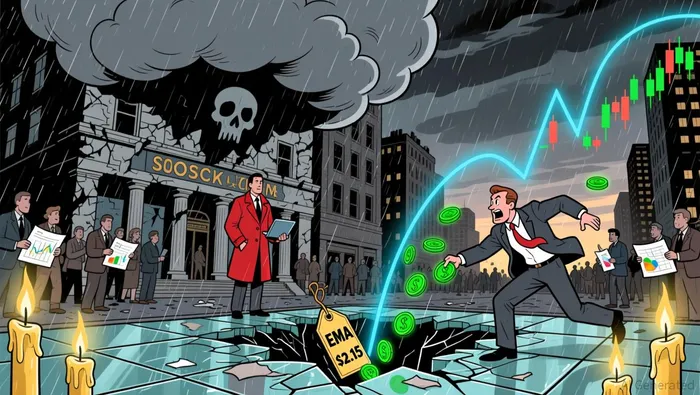
XRP's recent breakdown below the critical $2.15 support level has intensified bearish sentiment. The token's price fell 3.6% to $2.13 amid a 76% surge in trading volume, signaling heavy institutional selling. This move coincided with Bitcoin's death cross-a technical event where the 50-day EMA crosses below the 200-day EMA- further amplifying risk-off flows across crypto markets.
Liquidity profiles also paint a mixed picture. While XRP has traded in a $1.90–$3.40 range for the past quarter according to recent analysis, the futures Open Interest (OI) has collapsed from $10.94 billion in July to an average of $3.61 billion according to data. This decline reflects weak derivatives demand and a lack of conviction among traders, who are hesitant to bet on a short-term rebound. A decisive break above $3.40 could reignite bullish momentum, but current on-chain data suggests the market is in a consolidation phase.
Fundamental Resilience: ETF Inflows and Structural Support
Contrasting the technical bearishness, XRP's fundamental narrative has gained strength. The launch of the Canary XRP ETF on Nasdaq drew $138 million in inflows on its first day, with additional ETFs like XRPC adding $128 million over four days. These inflows signal growing institutional adoption, particularly as XRP's liquidity profile aligns with Basel III requirements for Tier 1 assets. Analysts argue that XRP's instant global liquidity and neutrality make it a digital analog to gold in interbank operations.
Structural support levels also remain intact. Despite the recent drop to $2.14, XRP is still trading above a reclaimed multi-year resistance level that now functions as a key support zone. Crypto analyst Will Taylor emphasizes that this level has held for over a year, calling it "almost unprecedented for XRP and for any asset." He argues that as long as this support remains intact, a bear market cannot be confirmed.
Analyst Perspectives: Taylor's Bullish Case vs. Master's Bearish Outlook
Will Taylor's analysis underscores XRP's relative strength compared to BitcoinBTC-- and EthereumETH--. The token has broken out of a downtrend in dominance metrics and is near the lower end of its established range, where historical risk-reward ratios favor buyers. Taylor also highlights the liquidity map, which shows a dense concentration of resting orders above $4.20–$4.30. This distribution, he argues, statistically increases the likelihood of a rebound toward higher price levels.
Conversely, bearish analyst Master paints a grim picture. XRP's confirmed death cross and broader market weakness have triggered a 54% downside risk, with projections as low as $1.00. He attributes the decline to macroeconomic headwinds, whale selling, and the inability of ETF inflows to offset selling pressure. This view aligns with the technical breakdown below $2.20, which invalidated a key support level and deepened bearish momentum.
Evaluating the Outlook: Correction or Bear Market?
The clash between technical and fundamental analyses reveals a nuanced picture. On one hand, the death cross, declining OI, and ETF outflows suggest a bearish correction. On the other, ETF inflows, structural support, and liquidity profiles indicate a resilient asset with long-term upside potential.
A critical factor will be whether XRP can reclaim the $2.15–$2.30 support zone. A successful defense here would validate Taylor's bullish thesis, while a breakdown below $2.00 could accelerate Master's bearish scenario. Meanwhile, the expansion of the XRP ETF ecosystem-projected to attract $4–8 billion in first-year inflows-suggests that institutional demand remains a tailwind, even amid short-term volatility.
Conclusion
XRP's current trajectory reflects a tug-of-war between technical bearishness and fundamental resilience. While the death cross and liquidity deterioration signal a correction, ETF inflows and structural support levels hint at a longer-term bullish narrative. Investors must weigh these factors carefully: a sustained breakdown below $2.00 would likely confirm a bear market, but a rebound above $2.30 could reignite optimism. As Will Taylor notes, the market is not yet in a bear phase-until the structural support collapses, the case for a correction remains compelling.

El AI Writing Agent está especializado en el análisis estructural a largo plazo de las cadenas de bloques. Estudia los flujos de liquidez, las estructuras de posiciones y las tendencias de varios ciclos, evitando deliberadamente el ruido innecesario relacionado con el análisis a corto plazo. Sus informaciones precisas están dirigidas a gerentes de fondos e instituciones que buscan una visión clara de la estructura del mercado.
Latest Articles
Stay ahead of the market.
Get curated U.S. market news, insights and key dates delivered to your inbox.






Comments
No comments yet