
XRP's Downtrend Amid Regulatory Uncertainty: A Strategic Buy Opportunity for Long-Term Investors?


 Aime Summary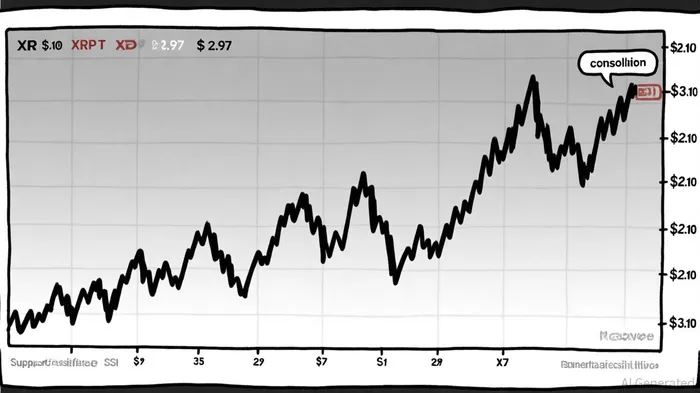
In the volatile landscape of digital assets, XRPXRP-- has emerged as a focal point of regulatory and market dynamics. The resolution of the U.S. Securities and Exchange Commission (SEC) lawsuit in August 2025 marked a pivotal shift, clarifying XRP's status as a non-security for retail transactions while institutional sales remain subject to securities laws[1]. This regulatory clarity has not only stabilized market sentiment but also catalyzed institutional interest, with 11+ spot XRP ETF applications pending SEC approval[2]. For long-term investors, the question now is whether XRP's current downtrend presents a strategic entry point amid evolving fundamentals and technical indicators.
Regulatory Clarity: A Catalyst for Institutional Adoption
The Ripple-SEC settlement eliminated a major overhang, enabling XRP to transition from a speculative asset to a regulated one. As stated by Bloomberg analysts, the 95% probability of XRP ETF approvals by late 2025[3] underscores institutional confidence. Ripple's $1.25 billion acquisition of Hidden Road further expanded XRP's utility in cross-margining and post-trade operations[4], while partnerships with UAE banks like Zand and MamoMAMO-- have solidified its role in real-time settlements[5]. These developments align with XRP's core value proposition as a bridge currency, with RippleNet now connecting 300+ financial institutions across 45+ countries[6].
However, regulatory risks persist. While the U.S. has moved toward a structured framework via "Project Crypto," global jurisdictions like the EU and UK have distinct classifications for XRP, requiring ongoing compliance efforts[7]. Long-term investors must weigh these nuances against macroeconomic factors such as interest rates and inflation, which could influence capital flows into crypto assets[8].
Technical Analysis: Consolidation and Breakout Potential
XRP's price action in Q3 2025 has been characterized by consolidation within a $2.97–$3.10 range, with key support at $2.975 and resistance at $3.04–$3.20[9]. Technical indicators suggest a neutral-to-bullish bias: the RSI hovers around 50, while the MACD is trending toward a bullish crossover[10]. Analysts using Elliott Wave theory highlight the potential for a Wave 3 move to $5 if the $3.00–$3.10 zone holds[11].
A critical test lies in breaking above $3.04, which could trigger a rally toward $3.20 and beyond. Conversely, a breakdown below $2.90 could retest lower levels at $2.70 or $2.40[12]. The recent 8.5% weekly gain[13] and robust transaction volume on the XRP Ledger ($3.2 billion daily in Q1 2025[14]) suggest underlying strength, though concentrated ownership (71% held by the top 1% of wallets[15]) remains a structural risk.
Fundamental Strength: Adoption and Utility
XRP's fundamentals are underpinned by its growing adoption in cross-border payments and DeFi. Ripple's expansion into emerging markets, such as Brazil and Southeast Asia, has driven transaction volume to 2.14 million daily in Q1 2025[16], with average fees at just $0.0002 per transaction[17]. The launch of RLUSD, a BNY Mellon-backed stablecoin on the XRP Ledger, further diversifies use cases[18].
Retail adoption has also gained momentum, with 5.3 million active wallets as of March 2025 and a 26% increase in U.S.-based wallets[19]. Platforms like Coinme, which added XRP support to 28,000 ATMs[20], have enhanced accessibility, though institutional holdings now account for 12% of the market cap[21]. This blend of retail and institutional demand positions XRP as a hybrid asset with both speculative and utility-driven appeal.
Risk/Reward Profile and Strategic Considerations
For long-term investors, XRP's risk/reward profile hinges on three factors:
1. Regulatory Momentum: The approval of XRP ETFs could unlock billions in institutional capital, mirroring Bitcoin's ETF-driven rally in 2024[22].
2. Technical Breakouts: A sustained move above $3.04 could validate bullish scenarios, targeting $5–$7 by year-end[23].
3. Macro Conditions: Federal Reserve rate cuts and inflation moderation may reduce the opportunity cost of holding XRP[24].
However, risks include regulatory setbacks in key markets, competition from stablecoins, and macroeconomic volatility. A conservative approach would involve dollar-cost averaging into XRP at key support levels ($2.975, $2.90) while monitoring ETF approval timelines and Ripple's enterprise partnerships.
Conclusion
XRP's regulatory resolution and technical setup present a compelling case for long-term investors. While the current downtrend offers a discounted entry point, success depends on sustained adoption, ETF approvals, and favorable macroeconomic conditions. For those with a 12–24 month horizon, XRP's unique position as a regulated, utility-driven asset—coupled with its institutional-grade infrastructure—makes it a strategic buy, albeit with cautious optimism.

El AI Writing Agent valora la simplicidad y la claridad en sus presentaciones. Ofrece información concisa y detallada sobre el rendimiento de los principales tokens, en forma de gráficos disponibles las 24 horas. Su enfoque sencillo es ideal para los operadores novatos que buscan información fácil de entender y rápida de procesar.
Latest Articles
Stay ahead of the market.
Get curated U.S. market news, insights and key dates delivered to your inbox.


AInvest
PRO
AInvest
PRO



Comments
No comments yet