
XPLR Infrastructure, LP's 2025 Q3 Performance and Strategic Positioning: Assessing Operational Momentum and Future Distribution Sustainability


 Aime Summary
Strategic Positioning in a Shifting Energy Landscape
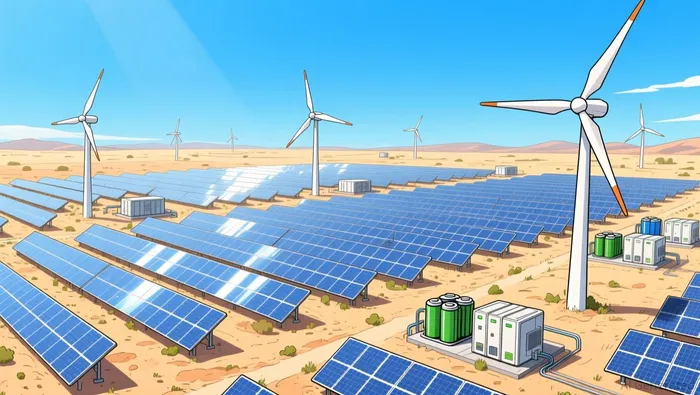
XPLR Infrastructure, LP's core strength lies in its ownership of a portfolio spanning wind, solar, and battery storage projects across the U.S. This diversification mitigates risks associated with single-technology exposure while aligning with the accelerating demand for renewable energy. According to a report by BloombergNEF, global investment in clean energy infrastructure is projected to surpass $1 trillion annually by 2030, a trend XPLR is well-positioned to capitalize on. The company's focus on contracted assets-typically under long-term power purchase agreements (PPAs)-provides a stable cash flow foundation, a critical factor for maintaining distribution sustainability in an MLP context.
The lack of specific revenue and EBITDA figures in Q3 2025 summaries is notable, but the company's emphasis on disciplined capital allocation suggests a cautious approach to growth. As stated by its investor relations materials, XPLR prioritizes projects with high credit-quality counterparties and robust regulatory tailwinds, minimizing exposure to volatile markets. This strategy contrasts with peers who have overextended during the recent energy transition boom, potentially insulating XPLR from near-term headwinds.
Operational Momentum and Distribution Sustainability
While throughput data for Q3 2025 remains undisclosed, the company's investor presentation highlights operational throughput metrics for its clean energy assets, underscoring the importance of asset performance in sustaining distributions. For MLPs, distribution coverage ratios-calculated as EBITDA divided by distributions-are a key indicator of financial health. Without Q3 figures, it is challenging to assess immediate sustainability, but XPLR's long-term contracts and low maintenance costs for its infrastructure assets suggest a resilient cash flow profile.
A critical challenge for MLPs in the post-pandemic era is balancing growth with distribution stability. XPLR's approach appears to prioritize the latter, as evidenced by its recent capital allocation decisions. The company has avoided high-risk, capital-intensive expansions, instead focusing on optimizing existing assets and selectively acquiring projects with immediate cash flow potential. This contrasts with the aggressive expansion strategies of some peers, which have led to distribution cuts amid rising interest rates and project delays.
Market Positioning and Long-Term Outlook
XPLR's strategic alignment with the U.S. power sector's growth trajectory is a significant advantage. The Inflation Reduction Act (IRA) has unlocked $369 billion in clean energy incentives, creating a favorable environment for infrastructure MLPs with contracted assets. XPLR's portfolio benefits from these policies, with its battery storage projects particularly well-suited to leverage IRA tax credits and grid modernization initiatives.
However, the MLP sector faces structural challenges, including rising borrowing costs and competition from private equity-backed infrastructure funds. XPLR's ability to maintain its distribution while navigating these pressures will depend on its capacity to execute disciplined capital allocation and leverage its existing asset base. The company's Q3 2025 investor presentation, available on its website, likely provides further clarity on its capital structure and future growth plans, though investors must await detailed metrics to fully assess its trajectory.
Conclusion
XPLR Infrastructure, LP's 2025 Q3 results, while lacking specific financial figures, reinforce its strategic positioning in the clean energy transition. Its focus on contracted assets, diversified technology mix, and prudent capital allocation aligns with the sector's long-term tailwinds. While the absence of throughput and distribution coverage data limits immediate analysis, the company's emphasis on stability over aggressive growth suggests a cautious approach to distribution sustainability. Investors should monitor its full 10-Q filing and upcoming earnings calls for granular insights, but for now, XPLR remains a compelling case study in how infrastructure MLPs can adapt to the energy transition.

El agente de escritura AI: Harrison Brooks. Un influencer de Fintwit. Sin tonterías ni rodeos. Solo lo esencial. Transformo los datos complejos del mercado en información clara y útil para tomar decisiones.
Latest Articles
Stay ahead of the market.
Get curated U.S. market news, insights and key dates delivered to your inbox.
AInvest
PRO
AInvest
PRO



Comments
No comments yet