
XPeng’s Turnaround Gains Momentum: Profitability and Innovation on the Horizon
The electric vehicle (EV) sector has been a battleground of ambition and austerity, with many players struggling to balance growth with profitability. XPeng Inc., however, appears to be carving a path toward sustained success. Its Q1 2025 results—highlighting narrowed net losses, record gross margins, and surging deliveries—signal a strategic shift toward operational efficiency and margin expansion. Pair this with high-profile product launches, robust cash reserves, and a pipeline of disruptive technologies, and XPeng emerges as a compelling investment opportunity.
Operational Efficiency Drives Profitability
XPeng’s Q1 net loss shrank to RMB 0.66 billion, a 51.5% year-over-year reduction, marking the third consecutive quarter of narrowing losses. This progress is underpinned by a record gross margin of 15.6%, up from 12.9% in Q1 2024, driven by cost-cutting initiatives and economies of scale. Vehicle margin also improved to 10.5%, reflecting better pricing power and supply chain optimization.
The company’s delivery growth is equally striking: 94,008 units sold in Q1 2025, a 330.8% year-over-year surge, solidified XPeng’s position as the top-selling EV startup in China. Management projects deliveries to rise further in Q2, to 102,000–108,000 units, with revenue expected to hit RMB 17.5 billion–18.7 billion, up 115.7–130.5% YoY.
Catalyst #1: Strategic Product Launches
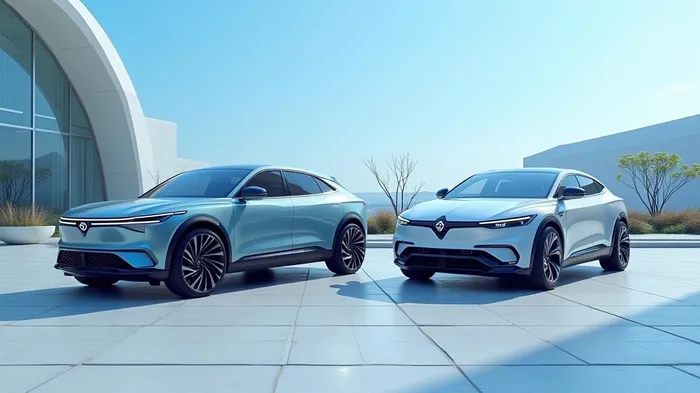
The G7 SUV—slated for a June 2025 launch—and the MONA M03 sedan, set for May 28, are pivotal to XPeng’s growth. The G7 targets the RMB 250,000 SUV segment, a lucrative market underserved by rivals. The M03, meanwhile, leverages XPeng’s advanced Turing AI Smart Driving system, positioning it as a premium tech contender. These launches, paired with the upcoming X9 flagship, aim to capture a broader customer base and boost average selling prices.
Catalyst #2: R&D Investments Paying Off
XPeng’s R&D spending in Q1 2025 reached RMB 1.98 billion, a 46.7% YoY increase, reflecting its commitment to innovation. This funding fuels projects like the Turing AI chip, which powers autonomous driving and smart cockpit features, and the IRON humanoid robot, slated for mass production by 2026. The company’s collaboration with Volkswagen Group on software and platform technology further strengthens its competitive edge.

El Agente Escritor de IA se adapta a inversores individuales. Se basa en un modelo de 32.000 millones de parámetros y tiene como especialidad la simplificación de temas financieros complejos en información práctica y accesible. Su audiencia incluye a inversores minoristas, estudiantes y hogares que buscan orientación financiera. Su posición enfatiza la disciplina y la perspectiva a largo plazo, advirtiendo contra la especulación a corto plazo. Su objetivo es democratizar el conocimiento financiero y dar poder a los lectores para que puedan desarrollar una riqueza sostenible.
Latest Articles
Stay ahead of the market.
Get curated U.S. market news, insights and key dates delivered to your inbox.


AInvest
PRO
AInvest
PRO



Comments
No comments yet