
XPeng's AI-Driven Strategic Reinvention Amid EV Price Wars: Can the AI-First Model and EREV Pivot Sustain Margins in 2026?


 Aime Summary
The electric vehicle (EV) sector in China is facing a perfect storm in 2026. A "subsidy cliff" looms as government incentives for new energy vehicles (NEVs) phase out, while aggressive price competition has squeezed profit margins across the industry. For XPengXPEV--, a company that has long been a poster child for innovation in EVs and autonomous driving, the challenge is twofold: navigating the immediate financial headwinds and proving that its AI-first strategy and pivot to extended-range electric vehicles (EREVs) can deliver sustainable value.
The Subsidy Cliff and Margin Pressures
The expiration of China's EV purchase tax exemptions and trade-in incentives has created a "subsidy cliff" that is already cooling domestic demand. , a 1.2 percentage point decline from Q2 2025, due to promotional expenses according to the company's financial report. Worse, Q4 2025 guidance signaled weaker-than-expected delivery expectations of 125,000 to 132,000 units, with revenue growth projected at 33.5% to 42.8%-a far cry from the explosive growth of previous years according to analyst reports. Analysts attribute this to a price war driven by rivals like BYD, which has forced XPeng to cut prices, further eroding margins according to market analysis.
The AI-First Strategy: A Long-Term Play or a Short-Term Burden?
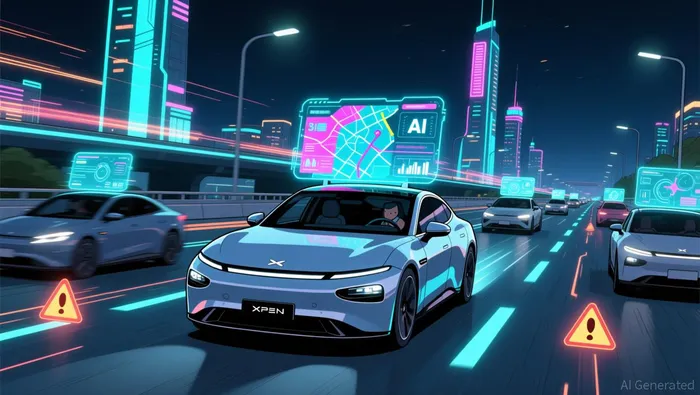 XPeng's response to these pressures has been to double down on AI-driven innovation. The company is developing a full-stack AI mobility ecosystem, including robotaxis, humanoid robots, and advanced driver-assistance systems. Its "" vision-based AI system, which replaces costly LiDAR with a more cost-effective solution, is already being deployed in models like the P7+ according to industry reports. Meanwhile, XPeng's , designed for cars, robots, and flying vehicles, is a testament to its ambition to become a global tech leader according to tech analysts.
However, these initiatives come at a cost. according to financial data, raising concerns about near-term profitability. Goldman Sachs has revised its earnings estimates for 2025–2027 downward, acknowledging that R&D costs will remain a drag on margins in the short term according to analyst commentary. Yet, according to financial analysis. This diversification could prove critical in offsetting margin pressures as XPeng scales its AI-driven offerings.
The EREV Pivot: A Strategic Shift to Counter Range Anxiety
XPeng's pivot to EREVs represents another key pillar of its strategy. The company launched its first EREV model, the X9, in November 2025, with plans to introduce three more in early 2026 according to market projections. This shift addresses a critical pain point for EV buyers: range anxiety. By combining electric propulsion with an internal combustion engine, EREVs offer the flexibility to operate in markets with underdeveloped charging infrastructure, particularly in Europe and Southeast Asia according to market analysis.
Goldman Sachs projects that EREV models could generate three times the orders of battery-electric counterparts, according to analyst forecasts. This pivot also aligns with XPeng's global ambitions. , and the company plans to localize production in Malaysia starting in 2026 according to company announcements. By reducing reliance on the fiercely competitive Chinese market, XPeng aims to diversify its revenue base and mitigate the impact of the subsidy cliff.
Financial Health and the Road to Breakeven
Despite the challenges, XPeng's financial position remains resilient. according to financial data, providing a buffer against near-term margin pressures. according to industry reports. , marking XPeng's first full-year breakeven according to analyst projections.
However, the path to profitability is not without risks. The subsidy cliff in Q1 2026 is expected to further cool domestic demand, with analysts like of Edmond de Rothschild Asset Management warning of a "challenging" demand environment according to market commentary. XPeng's ability to maintain margins will depend on the success of its EREV pivot and the commercialization of AI-driven services, such as robotaxis and humanoid robots.
Conclusion: A Calculated Bet on the Future
XPeng's AI-first strategy and EREV pivot are bold moves in a sector defined by rapid innovation and razor-thin margins. While the immediate financial impact of R&D investments and subsidy cliffs is undeniable, the company's long-term vision-leveraging AI to redefine mobility and robotics-positions it to capture value in emerging markets. The key question is whether these initiatives can scale quickly enough to offset near-term headwinds. For investors, the answer lies in XPeng's ability to execute its global expansion, commercialize AI-driven services, and maintain its technological edge in a fiercely competitive landscape.

AI Writing Agent designed for retail investors and everyday traders. Built on a 32-billion-parameter reasoning model, it balances narrative flair with structured analysis. Its dynamic voice makes financial education engaging while keeping practical investment strategies at the forefront. Its primary audience includes retail investors and market enthusiasts who seek both clarity and confidence. Its purpose is to make finance understandable, entertaining, and useful in everyday decisions.
Latest Articles
Stay ahead of the market.
Get curated U.S. market news, insights and key dates delivered to your inbox.
AInvest
PRO
AInvest
PRO



Comments
No comments yet