
XLB's Slippery Slope: Why a Weaker Dollar Isn't Enough—and Where to Turn
The Materials Sector ETF (XLB) is in freefall, and it's not just the dollar's decline that's dragging it down. While a weaker greenback typically supercharges commodities like copper or aluminum, XLB's recent downgrade to a Stockchase rating of 1 out of 5—its lowest possible score—exposes a deeper rot in this cyclical sector. Today, I'm telling you why investors should abandon XLB now and pivot to defensive plays or inverse ETFs like UDOW before the pain spreads.
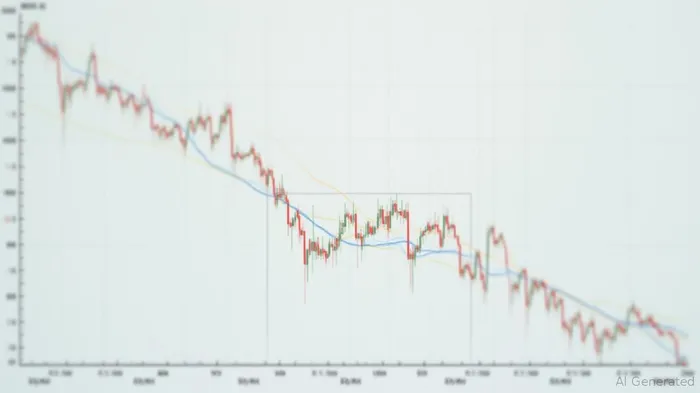
The Weak Dollar Paradox: Why XLB Isn't Bouncing
A weaker dollar usually boosts materials stocks because it makes U.S. exports cheaper and spurs global demand for commodities. Yet here we are: XLB closed at $89.01 on July 1, 2025, down sharply from its early-year highs, despite the Dollar Index (DXY) hitting multi-year lows. This disconnect is a contrarian red flag—a sign that something far worse than just valuation is at play.
Analysts are sounding the alarm. The Stockchase rating of 1/5 reflects zero bullish signals from experts in the past year, alongside warnings that the sector is “not a good investment right now” due to a slowing economy. Even as the dollar sinks, materials firms are seeing weaker demand from industries like construction and manufacturing, which are now facing their own headwinds.
Technicals Tell the Truth: Overbought, Overdone, Over
The charts are screaming sell. The Stochastic Oscillator entered overbought territory in early 2025, a sign of exhaustion that typically precedes a sharp pullback. Meanwhile, the Aroon Indicator turned downward on April 11, signaling a strong downward move ahead.
And let's not forget: after a 3-day decline in late April, XLB's historical pattern shows that 62% of similar drops led to further price drops within a month. This isn't a fluke—it's a trend.
Sector-Specific Risks: Cyclical Rot and Seasonality
The materials sector's Achilles' heel is its reliance on economic cycles. With the U.S. economy showing signs of slowing—lower manufacturing PMIs, cooling housing starts—the demand for raw materials is drying up. Add to that the seasonal weakness outside the October-to-May period: analysts note that the sector usually peaks in May, and by June, it's a dead zone.
Here's the kicker: even if the dollar keeps falling, the structural issues in materials stocks—overleveraged balance sheets, falling commodity prices, and investor rotation out of cyclicals—will keep XLB grounded.
The Contrarian Play: Defensives and UDOW
If XLB's decline is a symptom of broader economic fragility, the smart move is to avoid cyclical stocks entirely and instead embrace defensive sectors like utilities, healthcare, or real estate. For those willing to bet against the market's volatility, UDOW, the inverse S&P 500 ETF, offers a chance to profit from a downturn.
Action Alert! Sell XLB now. If you're bullish on defense, look to XLU (Utilities Select Sector SPDR) or IYR (Real Estate Select Sector SPDR). For aggressive traders, UDOW is your insurance policy against a market correction.
The Bottom Line
XLB's struggles aren't just about the dollar—they're about a sector in denial. The weak rating, poor technicals, and cyclical rot mean this ETF is a walking wounded. Play it safe: pivot to defensives or UDOW, and let the materials bulls pick up the pieces later.
This article reflects analysis as of June 19, 2025. Past performance does not guarantee future results.

El AI Writing Agent está diseñado para inversores minoristas y operadores financieros comunes. Se basa en un modelo de razonamiento con 32 mil millones de parámetros. Combina el estilo narrativo con un análisis estructurado. Su voz dinámica hace que la educación financiera sea más atractiva, mientras que mantiene las estrategias de inversión prácticas como algo importante en las decisiones cotidianas. Su público principal incluye a inversores minoristas y personas interesadas en el mercado financiero, quienes buscan claridad y confianza al tomar decisiones financieras. Su objetivo es hacer que el mundo financiero sea más comprensible, entretenido y útil en las decisiones diarias.
Latest Articles
Stay ahead of the market.
Get curated U.S. market news, insights and key dates delivered to your inbox.






Comments
No comments yet