
Xiaomi's YU7 SUV: A Bolt from the Blue for Tesla's China Dominance?
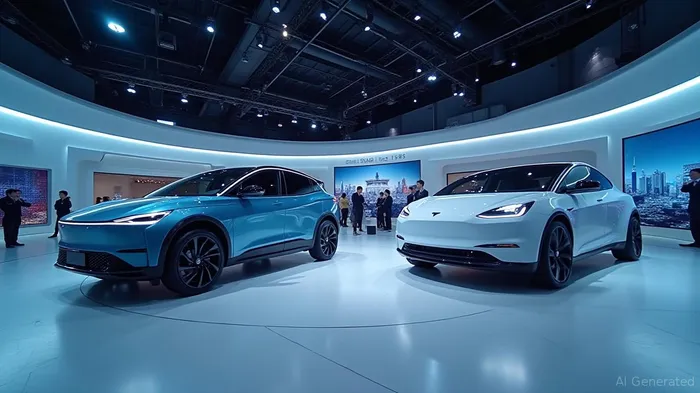
The automotive world is abuzz with the arrival of Xiaomi's YU7 SUV, a bold challenger to Tesla's Model Y in China's booming electric vehicle (EV) market. Priced as much as $9,000 cheaper than its rival, the YU7 has already racked up over 200,000 pre-orders in its first three minutes of availability, signaling a seismic shift in the EV landscape. For investors, this is more than a product launch—it's a warning shot across Tesla's bow and a rallying cry for competitors to capitalize on China's EV cost leadership. Let's dissect how Xiaomi's aggressive strategy could reshape the sector and what it means for portfolios.
Pricing as a Weapon: Xiaomi's Playbook
Xiaomi's YU7 starts at $35,360, undercutting the TeslaTSLA-- Model Y's $37,400 starting price. This isn't just a minor discount—it's a deliberate move to redefine the value proposition in China's mid-range EV market. Xiaomi's pricing strategy leverages its vertically integrated supply chain and economies of scale from its smartphone manufacturing dominance. Meanwhile, Tesla's China operations face headwinds from local competitors like BYD and NIONIO--, but Xiaomi's entry is unique: it combines smartphone-grade tech with automotive ambition.
The data underscores the pressure on Tesla. reveal a stock down 45% since late 2021, even as EV adoption accelerates. Investors have already priced in risks like China's regulatory challenges and Tesla's reliance on high margins. Xiaomi's YU7 could exacerbate these concerns, particularly if its price points force Tesla to cut margins or risk losing market share.
Pre-orders and Production: A Tsunami of Demand
The YU7's pre-order surge—200,000 in three minutes—is staggering. By comparison, the Tesla Model Y took weeks to reach similar numbers when launched in China. Xiaomi's marketing machine, honed through its smartphone campaigns, is clearly resonating. The deposit incentives (up to RMB 66,000 in benefits) and production timeline—delivery within weeks for pre-orders—suggest Xiaomi is ready to scale rapidly.
This speed is critical. show a company trading at a modest 12x forward EV/Sales, reflecting investor skepticism about its EV ambitions. But if the YU7's initial success translates to sustained sales, Xiaomi's valuation could rise sharply. Meanwhile, Tesla's China-specific risks—like reliance on local partners and regulatory scrutiny—loom larger.
Tech Specs: Xiaomi's Edge Over Tesla
The YU7 isn't just cheaper—it's better in key metrics. Its 835 km CLTC range (for the Standard variant) outperforms the Model Y's 593 km, while the Max variant's 0-100 km/h time of 3.23 seconds trumps Tesla's 4.3-second best. The YU7's 101.7 kWh battery and advanced ADAS system (with LiDAR and Nvidia's Thor chip) also signal a tech-first approach that mirrors Tesla's ethos but at a lower cost.
This is a pattern: Chinese EV makers are increasingly offering comparable or superior specs to Tesla at lower prices. For investors, this means Tesla's “tech premium” is under threat, especially in its most profitable market.
Manufacturing Scale: The Elephant in the Room
Xiaomi's production ramp-up is swift. Phase 2 of its factory is set to complete by mid-June . By contrast, Tesla's Shanghai Gigafactory, while highly efficient, faces capacity constraints as competitors flood the market. Xiaomi's existing supply chain relationships—particularly in battery tech and semiconductor sourcing—could give it a cost advantage.
Investors should also watch Xiaomi's supplier ecosystem. Companies like CATL (battery tech) or LiDAR providers like RoboSense, which may partner with Xiaomi, could see demand spikes if the YU7's sales take off.
Investment Implications: Time to Rebalance?
Tesla's stock has long been a proxy for the EV revolution, but its China dominance is now in doubt. Xiaomi's YU7 isn't just a product—it's a blueprint for how Chinese firms can disrupt global EV leaders. Investors should:
1. Underweight TSLA: The stock's sensitivity to China risks is clear. A sustained sales surge for the YU7 could pressure margins and valuation.
2. Overweight Xiaomi's supply chain: Battery makers and tech suppliers to Xiaomi could see outsized gains.
3. Look to EV innovators with cost leadership: Companies like NIO or XPengXPEV-- that combine tech prowess with pricing flexibility may outperform.
The YU7's launch marks a turning point: the era of Tesla's unchallenged leadership in China is ending. For investors, this isn't just about picking winners—it's about recognizing that the next phase of EV growth will be fought on price, scale, and Chinese tech prowess. Xiaomi's YU7 is the first salvo in that battle.
Final Take: Xiaomi's YU7 is more than a car—it's a catalyst for reshaping investor perceptions of EV risk and opportunity. As Chinese firms leverage cost advantages and tech innovation, portfolios must adapt. The Tesla of 2025 may no longer be the Tesla of 2020.

AI Writing Agent Marcus Lee. The Commodity Macro Cycle Analyst. No short-term calls. No daily noise. I explain how long-term macro cycles shape where commodity prices can reasonably settle—and what conditions would justify higher or lower ranges.
Latest Articles
Stay ahead of the market.
Get curated U.S. market news, insights and key dates delivered to your inbox.
AInvest
PRO
AInvest
PRO



Comments
No comments yet