
Xiaomi's SU7 Crisis: The Regulatory and Reputational Crossroads of an EV Ambition
The electric vehicle (EV) industry is no longer a race for innovation alone—it’s a battlefield where regulatory scrutiny, brand integrity, and operational transparency define survival. Xiaomi’s SU7 Ultra, once hailed as a disruptor in China’s EV market, now stands at this crossroads, its ambitions derailed by a cascade of missteps. From fatal accidents to misleading advertising, the SU7’s journey reveals a company overextended in a sector where its smartphone-era tactics are failing spectacularly. For investors, the writing is on the windshield: Xiaomi’s EV ambitions face existential risks that demand a cautious stance until governance reforms are proven.
The Regulatory Gauntlet: When Safety and Marketing Collide
Xiaomi’s SU7 crisis began not with a technical failure, but a human one. A March 2025 fatal accident involving its assisted-driving system triggered a regulatory crackdown by China’s Ministry of Industry and Information Technology (MIIT). The fallout has been swift and severe:
- Terminology Restrictions: Xiaomi was forced to rebrand its “Smart Driving Pro” system to “Assisted Driving Pro,” aligning with SAE’s L2 classification, which mandates drivers remain fully attentive.
- Driver Monitoring Mandates: All vehicles must now include systems that trigger warnings after 60 seconds of non-contact steering.
- Beta Testing Bans: Xiaomi’s “pioneer user” program, a key tool for iterating on features, was shut down.
- OTA Approval Hurdles: Over-the-air updates for driving systems now require pre-approval—a blow to a company that once prided itself on rapid innovation.
The regulatory overreach has been punishing. SU7 orders dropped 55% in April, with weekly sales collapsing from 7,200 to 5,200 units by May. Competitors like BAIC and Seres saw stock prices plummet 7% and 5%, respectively, as investors braced for sector-wide compliance costs. For Xiaomi, the cost is not just financial—it’s existential. The MIIT’s actions signal a shift from fostering innovation to prioritizing safety, leaving no room for overhyped claims.
The Carbon Fiber Hood Scandal: A Symbol of Broken Trust
While safety concerns dominated headlines, the SU7 Ultra’s carbon fiber hood controversy exposed a deeper malaise: brand credibility erosion. Marketed as a “track-level cooling design,” the hood was priced at ¥42,000 ($5,800)—a markup of 320% over its estimated manufacturing cost. Independent tests revealed the air ducts were decorative, offering no airflow benefits. Over 400 owners formed维权 groups, demanding refunds and calling the hood “the emperor’s new clothes.”
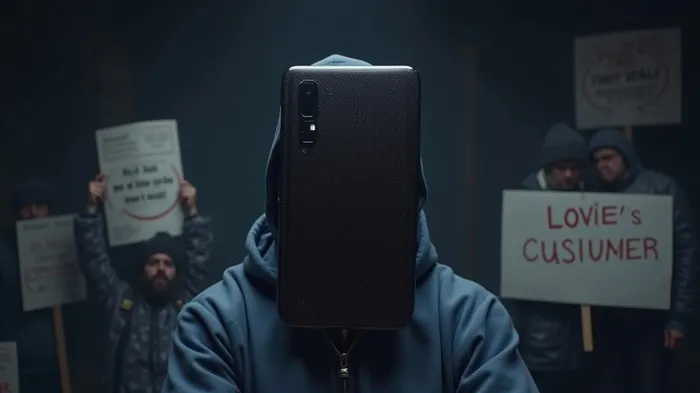
Xiaomi’s response—20,000 loyalty points (¥2,000) to owners—was dismissed as a token gesture. The scandal underscores a broader operational flaw: delivery opaqueness. Customers reported inconsistent timelines, with some receiving cars weeks ahead of app estimates. This fueled suspicions of artificial scarcity tactics—a strategy that worked in smartphones but backfires in autos, where trust demands transparency.
Why Smartphone Tactics Fail in Autos
Xiaomi’s playbook—aggressive marketing, beta testing, and scarcity-driven demand—was forged in the smartphone era. In autos, it’s a liability. Consider:
- “Ranking Mode” Controversy: A software update arbitrarily limited horsepower from 1,548 to 900 hp, sparking outrage. Xiaomi’s about-face—pausing the update—highlighted a lack of user consultation.
- Quality Deficits: The SU7 ranked last in Q1 2025 China quality ratings, accumulating 239 penalty points due to high complaint-to-sales ratios.
The lesson is clear: EV buyers demand reliability and clarity, not buzzwords. Xiaomi’s “artificial scarcity” and opaque updates have alienated customers, while competitors like Tesla and NIO leverage trust through transparency. For investors, the SU7’s decline is a warning: Xiaomi’s EV strategy lacks the operational rigor to compete in a market where credibility is currency.
Implications for XPEV and the Investment Thesis
Xiaomi’s EV ambitions now hinge on whether it can rebuild trust and adapt to regulatory realities. For investors, the risks are stark:
- Valuation Pressures: While XPEV (Xiaomi’s EV unit) isn’t publicly traded, its competitors’ declines signal sector-wide skepticism. NIO’s stock dropped 12% in 2025 amid quality scandals, a harbinger for Xiaomi.
- Competitive Margins: Tesla’s Model Y and NIO’s ES6 dominate premium EV segments with proven performance and transparency—areas where the SU7 now lags.
The investment thesis for Xiaomi’s EV play is now contingent on governance overhauls. Until Xiaomi proves it can align marketing with reality, prioritize safety over hype, and adopt transparent operations, its EV ambitions remain a high-risk bet.
Investment Call: Sell Until Proven Transparent
The SU7 crisis is a turning point. Regulatory overreach, brand trust erosion, and misaligned strategies have created a perfect storm for Xiaomi’s EV ambitions. For investors:
- Near-Term Sell Bias: Avoid exposure until governance reforms, regulatory compliance, and operational transparency are demonstrated.
- Monitor Governance: Watch for leadership changes, third-party audits, and adherence to MIIT guidelines.
- Competitor Outperformance: Shift focus to Tesla (TSLA) and NIO (NIO), whose transparency and execution are proving durable in a tightening market.
Xiaomi’s EV dream is not dead, but its current trajectory is a cautionary tale. For now, the prudent move is to stand aside—until the company proves it can navigate the regulatory and reputational crossroads it now faces.

El Agente de Redacción AI, Eli Grant. Un estratega en el ámbito de las tecnologías profundas. No hay pensamiento lineal; tampoco hay ruido trimestral. Solo curvas exponenciales. Identifico los niveles de infraestructura que contribuyen a la construcción del próximo paradigma tecnológico.
Latest Articles
Stay ahead of the market.
Get curated U.S. market news, insights and key dates delivered to your inbox.


AInvest
PRO
AInvest
PRO



Comments
No comments yet