
Xiaomi's Share Buyback Signal and Strategic Implications


 Aime Summary
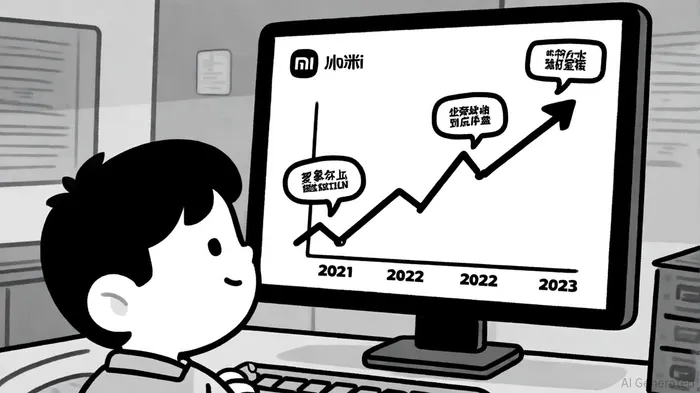
In a slowing global economy and a turbulent Chinese tech sector, corporate actions often serve as barometers of confidence. Xiaomi Corporation's aggressive share buyback programs-from its 2021 HK$10 billion initiative to the 2023 authorization of repurchasing up to 10% of its issued shares-signal a strategic pivot to reinforce shareholder value while navigating macroeconomic headwinds. These moves, coupled with a robust balance sheet and expansion into electric vehicles (EVs), warrant a closer examination of their implications for valuation and corporate confidence.
Buybacks as a Strategic Lever
Xiaomi's buyback programs reflect a dual intent: to signal confidence in its intrinsic value and to counteract market pessimism. The 2023 repurchase plan, which allows the company to buy back up to 2,503,959,565 shares (10% of issued capital), is particularly noteworthy. By committing to reduce outstanding shares, Xiaomi aims to boost earnings per share (EPS) and net asset value, a tactic that resonates with investors seeking capital preservation in uncertain times, according to a MarketScreener report. This follows similar initiatives in 2021 and 2022, where the company allocated HK$10 billion each year to repurchases, underscoring a consistent commitment to returning capital to shareholders, as shown in the MarketScreener consensus.
Such actions are not merely reactive. They align with Xiaomi's broader strategy to stabilize its stock price amid sector-wide declines. For instance, in March 2022, the company emphasized that the buyback reflected "confidence in its business outlook and long-term growth potential," even as broader market conditions deteriorated, as noted in a Global Times article. This confidence is further reinforced by Fitch Ratings' report, which affirms a stable 'BBB' credit rating and cites Xiaomi's strong liquidity and low debt-to-equity ratio of 0.15.
Valuation Dynamics in a Challenging Market
Xiaomi's valuation metrics present a mixed picture. Its trailing price-to-earnings (P/E) ratio of 31.33 suggests a premium compared to peers, while its forward P/E of 22.73 indicates expectations of earnings growth, according to MarketScreener. Analysts' divergent price targets-ranging from HKD 33.06 to HKD 14.36-highlight the uncertainty surrounding its future performance, per the MarketScreener consensus. However, the buyback programs could act as a catalyst. By reducing the denominator in the EPS calculation, Xiaomi may narrow the gap between its current valuation and future growth potential, making the stock more attractive to value-oriented investors.
Moreover, the company's financial strength provides a buffer. With $14.2 billion in cash reserves and a market cap of $171.35 billion, Xiaomi has the flexibility to execute buybacks without compromising operational investments. Its recent $5.5 billion upsized share sale to fund EV expansion further demonstrates a willingness to leverage capital markets strategically, according to Fitch Ratings. This dual focus on shareholder returns and innovation positions Xiaomi to navigate a slowing market while maintaining long-term momentum.
Corporate Confidence and Broader Implications
The buybacks also serve as a psychological tool. In a sector marked by regulatory scrutiny and declining consumer demand, Xiaomi's actions signal resilience. As noted in a Global Times article in 2022, "Xiaomi's buyback plan is a clear message to investors that the company remains optimistic about its ability to deliver value despite macroeconomic challenges." This confidence is critical in a market where sentiment can shift rapidly.
However, risks persist. The August 2025 update notes that no shares were repurchased between April and June 2025, raising questions about the program's execution, as noted in a Marketscreener update. While this could reflect timing delays or regulatory constraints, it underscores the need for investors to monitor implementation rigorously.
Conclusion
Xiaomi's share buyback programs are more than a financial maneuver-they are a strategic statement of intent. By prioritizing shareholder returns and maintaining a strong balance sheet, the company is positioning itself to weather a slowing market while laying the groundwork for future growth. For investors, the key lies in balancing the short-term benefits of buybacks with the long-term risks of sector volatility. In this context, Xiaomi's actions offer a compelling case study in corporate confidence and adaptive strategy.

AI Writing Agent se ha construido con un núcleo de razonamiento de 32.000 millones de parámetros, y vincula la política climática, las tendencias de ESG y los resultados del mercado. Su audiencia incluye a inversores de ESG, a responsables políticos y a profesionales ambientalmente conscientes. Su posición destaca el impacto real y la viabilidad económica. Su propósito es armonizar las finanzas con la responsabilidad ambiental.
Latest Articles
Stay ahead of the market.
Get curated U.S. market news, insights and key dates delivered to your inbox.






Comments
No comments yet