
Xiaomi's EV Profit Turnaround Can't Offset Production Doubts as Shares Slide


 Aime Summary
Xiaomi Corp. (1810.HK) reported a 22.3% year-over-year revenue increase to 113.1 billion yuan ($15.9 billion) in the third quarter, driven by its expanding electric vehicle (EV) and Internet of Things (IoT) businesses, though the figure fell short of analyst expectations of 116.5 billion yuan. Adjusted net profit surged 80.9% to 11.3 billion yuan, exceeding forecasts of 10.3 billion yuan. Despite the profit beat, shares dropped 2.81% to 41 Hong Kong dollars, reflecting investor concerns over the revenue miss and broader market skepticism about the EV segment's scalability.
The EV division, launched in 2024, posted its first profit of 700 million yuan in the quarter, a stark turnaround from a 300 million yuan loss in the prior period. Xiaomi sold 108,796 EVs in the third quarter, a record, with revenue from the segment nearly tripling to 28.3 billion yuan. CEO Lei Jun has projected 350,000 EV deliveries by year-end, positioning the company to compete with Tesla Inc.TSLA-- and BYD Co. in global markets. However, analysts remain cautious about production bottlenecks and long delivery times, with some buyers waiting up to nine months for models.
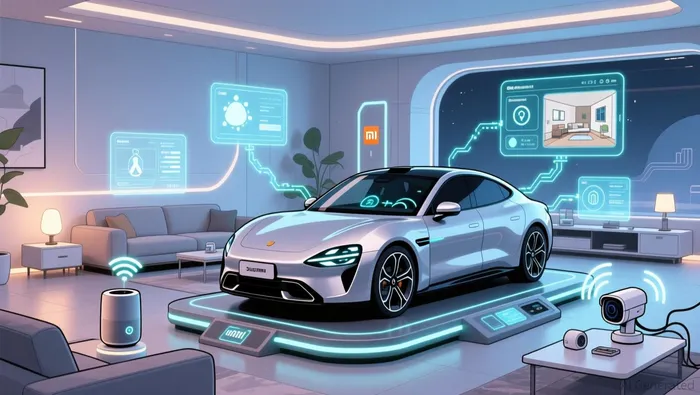
Smartphone revenue, Xiaomi's core business, grew modestly by 1.6% to 84.1 billion yuan, hampered by lower selling prices amid rising memory-chip costs. The IoT segment, including wearables and smart home devices, saw a 5.6% revenue increase to 27.6 billion yuan, though growth slowed from government subsidies that waned in 2024.
The stock's decline reflects broader market dynamics. While shares have gained 18.2% year-to-date, they have fallen 23% since September amid worries about EV capacity and smartphone margins. HSBC Global Research analysts noted that memory chips account for over 20% of materials costs for Xiaomi's entry-level phones, a concern as global demand for AI hardware drives up prices.
Xiaomi's gross margin expanded to 22.9% from 20.4% a year earlier, aided by lower EV component costs and manufacturing efficiencies. The company's ambitions to become a top-five global automaker hinge on scaling production and navigating China's competitive EV landscape, where rivals like Huawei Technologies Co. and BYD Co. are also making aggressive inroads.

Stay ahead of the market.
Get curated U.S. market news, insights and key dates delivered to your inbox.
AInvest
PRO
AInvest
PRO



Comments
No comments yet