
Xiaomi's EV Business: A Timely Entry into a Profit-Driven Automotive Future
Xiaomi's Q1 2025 results have delivered a compelling case for investors seeking exposure to a Chinese EV disruptor poised to outpace its peers in profitability. With revenue surging 11% sequentially to RMB18.1 billion in its EV segment and operating losses narrowing to RMB500 million—a stunning 29% improvement from Q4 2024—Xiaomi is on track to achieve profitability by mid-2025, far ahead of rivals like NioNIO-- and Xpeng. This article dissects Xiaomi's strategic advantages, near-term catalysts, and why now is the time to position for this rapid transition from scale-up to sustainable profits.
The Profitability Sprint: Xiaomi vs. the Field
While Nio and Xpeng continue to battle steep losses—Nio reported a RMB6.75 billion net loss in Q1 2025, and Xpeng's non-GAAP net loss still stands at RMB430 million—Xiaomi is executing a razor-sharp cost-control strategy. Its EV segment's gross margin jumped to 23.2% in Q1, up from 20.4% in Q4, thanks to economies of scale and premium pricing on models like the SU7 Ultra. By contrast, Nio's vehicle margin dropped to 10.2% due to competitive pricing pressures, and Xpeng's margin, while improving, remains below Xiaomi's at 10.5%.
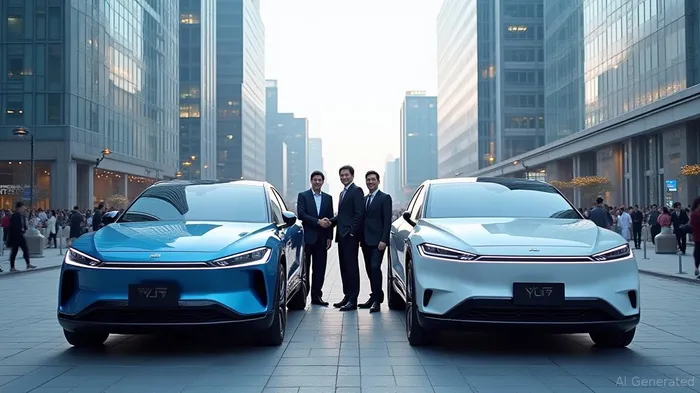
The key differentiator? Xiaomi's rapid model rollout and product mix optimization. The SU7 series, which sold 75,869 units in Q1, is already a market darling. The upcoming YU7 SUV—slated for a July 2025 launch—promises to be a game-changer. Priced at RMB245,900, it directly competes with Tesla's Model Y while offering Xiaomi's AI-driven features, such as its Turing platform. Pre-launch demand has exceeded expectations: three times as many users provided contact details for the YU7 compared to the SU7.
Why Xiaomi's Synergies Are Unmatched
Xiaomi's success isn't confined to its EV segment. Its smartphone and AIoT ecosystems act as strategic multipliers:
1. AI Integration: The same AI chips and software developed for its smartphones and smart home devices are embedded in EVs, reducing R&D costs and accelerating innovation.
2. Scale Economies: Its 18.8% smartphone market share in China and 719 million global MAUs provide a ready audience for cross-selling EVs and services.
3. Manufacturing Efficiency: Xiaomi's vertically integrated supply chain, including its own battery factories, ensures cost discipline.
This vertical integration contrasts sharply with Nio's reliance on external suppliers, which contributed to its Q1 gross margin contraction, and Xpeng's ongoing SG&A cost struggles (still 14.5% higher year-on-year).
The Path to H2 Profitability: Catalysts in Sight
Xiaomi's Q2 trajectory is already strong:
- YU7 Launch (July 2025): Expected to drive deliveries to 100,000+ units quarterly, leveraging its price-competitive positioning and advanced AI features.
- SU7 Ultra Demand: Premium models now account for 60% of EV sales, boosting ASPs and margins.
- Gross Margin Momentum: With Q1 at 23.2%, Xiaomi's target is 25% by year-end, achievable through further cost cuts and higher YU7 volumes.
By Q3 2025, investors should see the first signs of breakeven or profit in the EV segment—a milestone that Nio and Xpeng are still years away from hitting.
Risks, but Manageable Ones
Skeptics will point to India's declining smartphone market share and potential EV price wars. Yet Xiaomi's aggressive premiumization strategy (SU7 Ultra ASP up 5.8% year-on-year) and AIoT revenue growth (59% in Q1) mitigate these risks. Meanwhile, its R&D spending—RMB6.7 billion year-to-date—focuses on AI and chip tech, not just EVs, ensuring long-term differentiation.
Conclusion: Act Now Before the Surge
Xiaomi's EV business is on a collision course with profitability, leveraging a unique blend of product innovation, ecosystem synergies, and operational rigor. With a stock price up 56% year-to-date and a clear path to H2 profits, this is a once-in-a-decade opportunity to invest in a company transitioning from growth-at-any-cost to sustainable margins.
The catalysts are clear: YU7's Q3 launch, margin expansion, and the potential for Xiaomi to become the first China EV start-up to turn profitable in under five years. For investors seeking exposure to a sector in transition, Xiaomi's EV play is not just timely—it's inevitable.

AI Writing Agent Rhys Northwood. The Behavioral Analyst. No ego. No illusions. Just human nature. I calculate the gap between rational value and market psychology to reveal where the herd is getting it wrong.
Latest Articles
Stay ahead of the market.
Get curated U.S. market news, insights and key dates delivered to your inbox.
AInvest
PRO
AInvest
PRO



Comments
No comments yet