
Xiaomi's EV Breakthrough and Profitability: Redefining the Market Through IoT and Cost Efficiency


 Aime Summary
Strategic Entry: From Consumer Electronics to Smart Mobility
Xiaomi's foray into EVs was never a standalone venture but an extension of its "hardware + software + internet" business model. The company's first EV, the SU7 sedan, launched in late 2023, was designed to integrate seamlessly with its existing IoT ecosystem. According to a report by , , . This rapid ascent underscores Xiaomi's ability to repurpose its strengths in consumer electronics and software to reduce customer acquisition costs and accelerate demand.
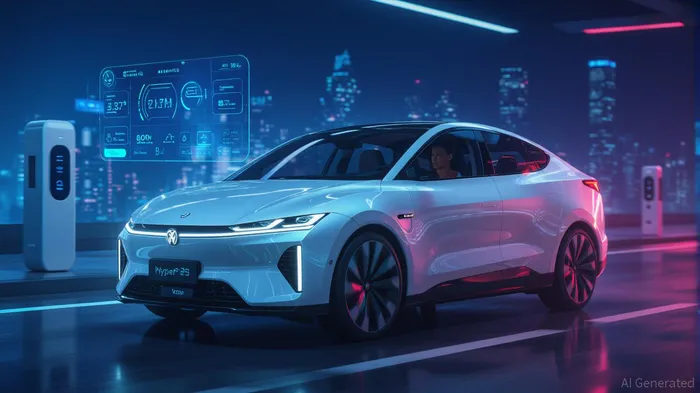
The SU7's technical specifications highlight Xiaomi's IoT-driven innovation. Powered by the HyperOS platform, , (AR) navigation, and AI-assisted driving features. A Qualcomm Snapdragon 8295 chip , ensuring real-time connectivity and seamless interaction with Xiaomi's ecosystem. These features not only enhance user experience but also create a flywheel effect: the more devices a user owns, the more value the EV delivers.
Ecosystem-Driven Cost Efficiency: Beating Tesla's Timeline
Xiaomi's profitability timeline is a testament to its ecosystem advantages. While Tesla's vertical integration model-controlling everything from battery production to software-has been a key to its success, Xiaomi's approach is fundamentally different. By treating EVs as an extension of its existing product lines, Xiaomi minimized R&D and marketing costs. For instance, the company's high-frequency livestreams and phased product reveals mirrored its smartphone launch strategies, converting existing users into car buyers.
In contrast, Tesla's recent challenges, including lawsuits over vehicle safety issues and regulatory hurdles for its (FSD) system, highlight the risks of a pure-play automotive strategy. Xiaomi, meanwhile, has avoided such pitfalls by embedding its EVs into a broader ecosystem. Data from , .
Profitability and Scalability: A New Benchmark
Xiaomi's financial performance in 2025 sets a new benchmark for EV startups. The company not only met its initial target of 350,000 annual deliveries but also . This scalability is underpinned by tight supply chain management and a focus on a single model (the SU7) to optimize production efficiency. By avoiding the "alphabet soup" of multiple models, Xiaomi has minimized cash burn while maintaining market focus.
Moreover, Xiaomi's ecosystem allows for cross-subsidization. For example, creates a recurring revenue stream through cloud services and app subscriptions. This contrasts with Tesla's reliance on vehicle sales and energy solutions, which face margin pressures from global chip shortages and the phaseout of Chinese EV tax incentives.
Challenges and Long-Term Implications
Despite its success, Xiaomi faces headwinds. Shrinking gross margins in 2026 due to reduced government subsidies and intensified competition from rivals like BYD and NIONIO-- could test its profitability. Additionally, scaling IoT integration across a growing vehicle fleet requires robust cybersecurity and data management. However, Xiaomi's track record in managing large-scale ecosystems.
For investors, the long-term value lies in the EV-IoT convergence. Xiaomi's ability to monetize its ecosystem beyond hardware-through services like premium infotainment, , and -positions it to capture a larger share of the value chain. As the automotive industry shifts toward software-defined vehicles, Xiaomi's first-mover advantage in integrating IoT and AI could translate into sustained competitive differentiation.
Conclusion
Xiaomi's EV breakthrough is not just a financial milestone but a strategic redefinition of the automotive industry. By leveraging its IoT ecosystem, the company has achieved profitability at an unprecedented pace, outpacing even Tesla's historic timeline. For investors, the key takeaway is clear: Xiaomi's ability to transform vehicles into smart mobility platforms-while maintaining cost efficiency and scalability-positions it as a leader in the next phase of the EV revolution. As the company expands its model lineup (including the YU7 SUV, which ), its ecosystem-driven approach will likely redefine how consumers interact with transportation, creating long-term value for stakeholders.

Delivering real-time insights and analysis on emerging financial trends and market movements.
Latest Articles
Stay ahead of the market.
Get curated U.S. market news, insights and key dates delivered to your inbox.




Comments
No comments yet