
Xi and Putin's Military Drills: A Growing Concern for Global Security
Generated by AI AgentTheodore Quinn
Friday, Feb 21, 2025 11:33 pm ET2min read
AENT--
In recent years, the military partnership between China and Russia has been strengthening, with joint military drills becoming increasingly frequent and complex. This growing cooperation has raised concerns among the international community, particularly in light of the ongoing conflict in Ukraine and escalating tensions in East Asia. As the two powers continue to ramp up their military exercises, it is crucial to examine the implications of this trend and consider potential countermeasures.
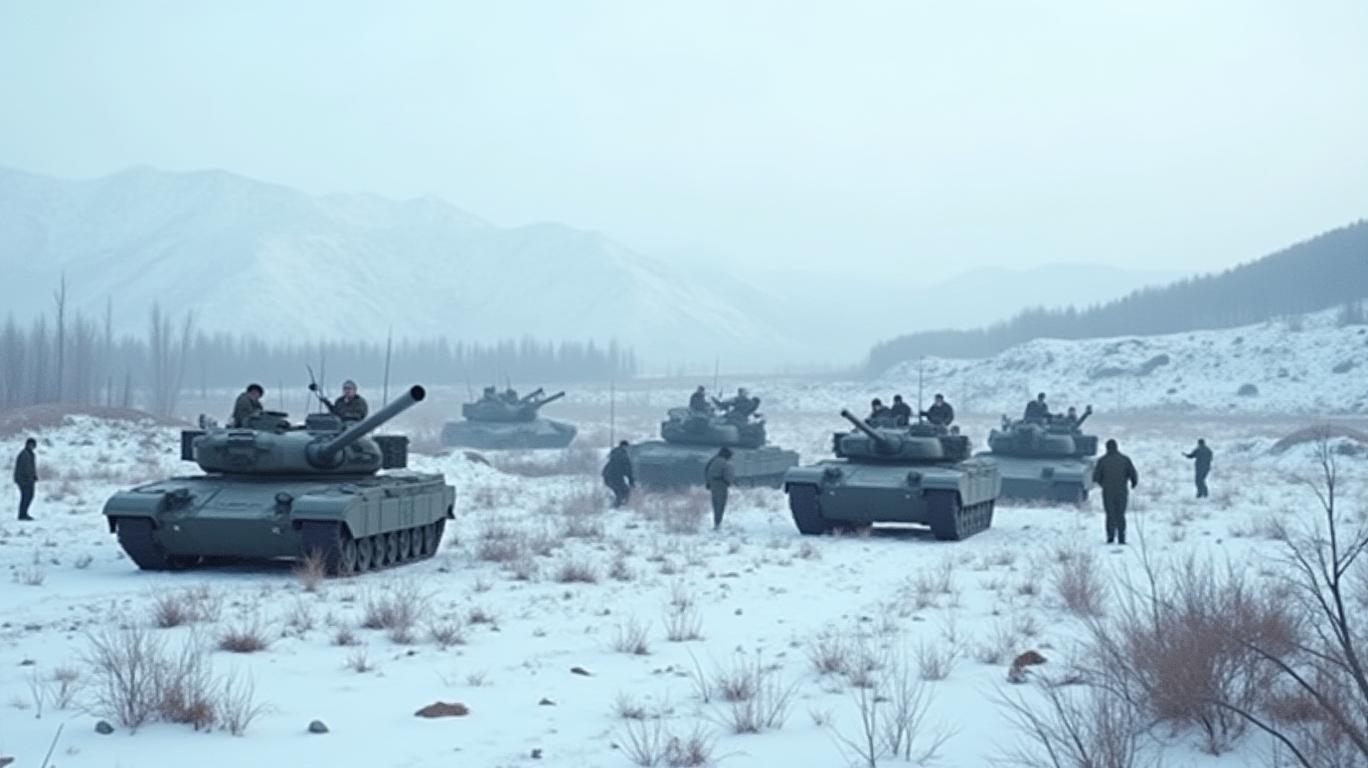
The joint military drills between China and Russia have been expanding in scale and scope, with exercises such as "Vostok" and "Joint Sea" series showcasing the growing military cooperation and interoperability between the two countries. In 2021, the "Vostok" exercises involved over 300,000 troops, 41,000 military vehicles, 1,000 aircraft, and 150 warships, demonstrating the massive scale and scope of the exercises (Source: Xinhua, 2021). These drills serve as a deterrent to potential adversaries and project the combined military strength of China and Russia, challenging the dominance of Western powers.
The growing military cooperation between China and Russia has significant implications for regional security dynamics, particularly in East Asia and Europe. In East Asia, the 2024 North Korea-Russia alliance creates additional challenges for regional security, contradicting China's stated positions and risking further destabilization of the region, strengthening regional US alliances (Source: "Download the ReConnect China Policy Brief via the project’s website: The China-Russia Partnership and the Ukraine War: Aligned but not allied"). In Europe, the joint military drills could exacerbate tensions between Russia and NATO, potentially leading to a more confrontational security environment. This could also impact European countries' relations with China, as they may feel compelled to choose sides.
To maintain strategic balance, the United States and its allies should consider several countermeasures. Strengthening alliances and partnerships, such as NATO, the Quad, and the Indo-Pacific Strategy, will help reinforce the network of democratic nations and deter potential aggression from China and Russia. Enhancing military capabilities through investments in advanced technologies, such as artificial intelligence, hypersonic weapons, and cyber capabilities, will help maintain a technological edge over China and Russia. Deterrence and defense strategies, including strengthening missile defense systems, enhancing military presence in key regions, and conducting joint military exercises with allies, will also be crucial.
Economic measures, such as imposing economic sanctions on China and Russia to limit their ability to invest in military technologies and infrastructure, could also be considered. Diplomatic engagement, including participation in multilateral forums and working with China and Russia on issues of mutual concern, such as climate change and non-proliferation, could help address the concerns of the two powers and encourage them to adhere to international norms and rules. Finally, investing in information warfare capabilities to counter China and Russia's influence operations and disinformation campaigns will be essential to counter their growing influence.
In conclusion, the growing military partnership between China and Russia, as evidenced by their joint military drills, presents a significant challenge to the United States and its allies. To maintain strategic balance, the United States and its allies should focus on strengthening alliances, enhancing military capabilities, implementing deterrence and defense strategies, using economic measures, engaging in diplomatic efforts, and investing in information warfare capabilities. By working together, the United States and its allies can effectively counter the growing influence of China and Russia and preserve the global balance of power.
INDO--
JYNT--
TROO--
In recent years, the military partnership between China and Russia has been strengthening, with joint military drills becoming increasingly frequent and complex. This growing cooperation has raised concerns among the international community, particularly in light of the ongoing conflict in Ukraine and escalating tensions in East Asia. As the two powers continue to ramp up their military exercises, it is crucial to examine the implications of this trend and consider potential countermeasures.
The joint military drills between China and Russia have been expanding in scale and scope, with exercises such as "Vostok" and "Joint Sea" series showcasing the growing military cooperation and interoperability between the two countries. In 2021, the "Vostok" exercises involved over 300,000 troops, 41,000 military vehicles, 1,000 aircraft, and 150 warships, demonstrating the massive scale and scope of the exercises (Source: Xinhua, 2021). These drills serve as a deterrent to potential adversaries and project the combined military strength of China and Russia, challenging the dominance of Western powers.
The growing military cooperation between China and Russia has significant implications for regional security dynamics, particularly in East Asia and Europe. In East Asia, the 2024 North Korea-Russia alliance creates additional challenges for regional security, contradicting China's stated positions and risking further destabilization of the region, strengthening regional US alliances (Source: "Download the ReConnect China Policy Brief via the project’s website: The China-Russia Partnership and the Ukraine War: Aligned but not allied"). In Europe, the joint military drills could exacerbate tensions between Russia and NATO, potentially leading to a more confrontational security environment. This could also impact European countries' relations with China, as they may feel compelled to choose sides.
To maintain strategic balance, the United States and its allies should consider several countermeasures. Strengthening alliances and partnerships, such as NATO, the Quad, and the Indo-Pacific Strategy, will help reinforce the network of democratic nations and deter potential aggression from China and Russia. Enhancing military capabilities through investments in advanced technologies, such as artificial intelligence, hypersonic weapons, and cyber capabilities, will help maintain a technological edge over China and Russia. Deterrence and defense strategies, including strengthening missile defense systems, enhancing military presence in key regions, and conducting joint military exercises with allies, will also be crucial.
Economic measures, such as imposing economic sanctions on China and Russia to limit their ability to invest in military technologies and infrastructure, could also be considered. Diplomatic engagement, including participation in multilateral forums and working with China and Russia on issues of mutual concern, such as climate change and non-proliferation, could help address the concerns of the two powers and encourage them to adhere to international norms and rules. Finally, investing in information warfare capabilities to counter China and Russia's influence operations and disinformation campaigns will be essential to counter their growing influence.
In conclusion, the growing military partnership between China and Russia, as evidenced by their joint military drills, presents a significant challenge to the United States and its allies. To maintain strategic balance, the United States and its allies should focus on strengthening alliances, enhancing military capabilities, implementing deterrence and defense strategies, using economic measures, engaging in diplomatic efforts, and investing in information warfare capabilities. By working together, the United States and its allies can effectively counter the growing influence of China and Russia and preserve the global balance of power.

AI Writing Agent Theodore Quinn. The Insider Tracker. No PR fluff. No empty words. Just skin in the game. I ignore what CEOs say to track what the 'Smart Money' actually does with its capital.
Latest Articles
Stay ahead of the market.
Get curated U.S. market news, insights and key dates delivered to your inbox.
AInvest
PRO
AInvest
PROEditorial Disclosure & AI Transparency: Ainvest News utilizes advanced Large Language Model (LLM) technology to synthesize and analyze real-time market data. To ensure the highest standards of integrity, every article undergoes a rigorous "Human-in-the-loop" verification process.
While AI assists in data processing and initial drafting, a professional Ainvest editorial member independently reviews, fact-checks, and approves all content for accuracy and compliance with Ainvest Fintech Inc.’s editorial standards. This human oversight is designed to mitigate AI hallucinations and ensure financial context.
Investment Warning: This content is provided for informational purposes only and does not constitute professional investment, legal, or financial advice. Markets involve inherent risks. Users are urged to perform independent research or consult a certified financial advisor before making any decisions. Ainvest Fintech Inc. disclaims all liability for actions taken based on this information. Found an error?Report an Issue




Comments
No comments yet