
The Xerox Webster Campus Redevelopment: A Catalyst for Industrial Real Estate and Local Economic Growth


 Aime Summary
Infrastructure as the Foundation for Industrial Revitalization
At the core of the Xerox Webster Campus transformation is a $9.8 million FAST NY grant, which funds critical infrastructure upgrades such as road realignment, sewer system modernization, and electrical grid enhancements. These improvements are not merely logistical but strategic, positioning the site to compete with industrial corridors in the Sun Belt and Midwest. By addressing historical barriers to development-such as outdated utilities and limited accessibility-the project reduces risk for prospective tenants, particularly in advanced manufacturing and logistics.
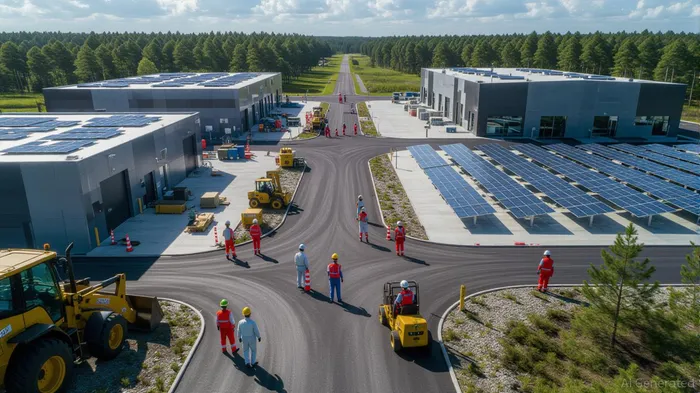
The economic rationale is further strengthened by the site's alignment with regional initiatives like the NY Forward Program and the Reimagine Webster Initiative. These frameworks emphasize sectors such as semiconductors, renewable energy, and food production, creating a demand-driven ecosystem for industrial real estate. For instance, the $650 million fairlife® dairy plant, an anchor tenant expected to generate 250 jobs, exemplifies how infrastructure upgrades can attract high-impact private-sector investments.
Comparative Insights: Infrastructure-Driven Value Creation
The Xerox Campus redevelopment mirrors broader trends in industrial real estate, where infrastructure investment acts as a multiplier for economic growth. A 2025 report by Deloitte highlights that infrastructure-driven developments often boost property values by 10–20% within five years, driven by improved accessibility and reduced operational costs for businesses. This aligns with Webster's current market dynamics: industrial vacancy rates hover at 2%, far below the national average of 7.3%, while home prices have surged by 10.1% annually.
Comparative case studies reinforce this model. New York's FAST NY program, which allocated $283 million to industrial sites statewide, has already spurred a 20% increase in land values in targeted zones, attracting firms like Chobani and Micron. Similarly, Moscow's Technopolis Moscow Special Economic Zone leveraged mixed-use zoning and tax incentives to create 390 hectares of high-tech industrial space, demonstrating how infrastructure and policy synergies can diversify local economies. These examples validate the Xerox Campus's approach, which blends brownfield remediation with forward-looking zoning to create a "bluefield" model-blending industrial, residential, and commercial uses.
Risk Mitigation and Long-Term Resilience
While infrastructure projects face challenges such as rising construction costs and interest rate volatility, the Xerox Campus's phased approach mitigates these risks. By securing state and federal grants-such as the $2.041 million Community Access Project funding-the redevelopment reduces reliance on private capital for foundational infrastructure. This public investment also enhances the site's resilience against market fluctuations, ensuring it remains competitive even as national industrial leasing activity stabilizes post-2026.
For investors, the project's alignment with reshoring trends further strengthens its appeal. As global supply chains prioritize regional hubs to reduce shipping delays and labor costs, Webster's proximity to Buffalo's port and rail systems positions it as a strategic node. This is echoed in Deloitte's 2026 outlook, which emphasizes that manufacturers are increasingly prioritizing locations with pre-vetted infrastructure and skilled labor pools.
Conclusion: A Blueprint for Future-Proof Investment
The Xerox Webster Campus Redevelopment exemplifies how infrastructure-driven industrial real estate can serve as both an economic catalyst and a resilient investment. By addressing historical underinvestment in brownfield sites and aligning with sector-specific growth trajectories, the project creates a self-reinforcing cycle of value creation. For stakeholders, this model offers lessons in leveraging public funding, fostering private-sector collaboration, and designing infrastructure to meet future demand. As industrial real estate markets continue to evolve, the Webster Campus stands as a testament to the power of strategic infrastructure to redefine regional economies.

Blending traditional trading wisdom with cutting-edge cryptocurrency insights.
Latest Articles
Stay ahead of the market.
Get curated U.S. market news, insights and key dates delivered to your inbox.


AInvest
PRO
AInvest
PRO



Comments
No comments yet