
The Xerox Campus in Webster, NY: A Strategic Real Estate and Infrastructure Play for 2026+


 Aime Summary
Municipal Line Shifts: Streamlining Development on the Xerox Campus
Webster's reconfiguration of municipal boundaries around the Xerox Campus is a critical enabler of large-scale industrial growth. By aligning property lines with publicly maintained infrastructure, the town is subdividing the 300-acre site into 40–100-acre parcels, making them more attractive to developers and investors. This approach avoids the fragmentation of land parcels, which often complicates zoning and regulatory compliance. For instance, the realignment of roads like Orchard Street and Panama Road ensures that future developments will have seamless access to transportation networks, a key consideration for logistics and manufacturing firms.
These boundary adjustments are part of a broader "bluefield" development strategy under the Reimagine Webster Initiative, which allows for mixed-use projects integrating residential, commercial, and advanced manufacturing components. Such flexibility is rare in traditional industrial zones and positions the Xerox Campus as a magnet for high-tech industries seeking sustainable, multi-functional ecosystems.
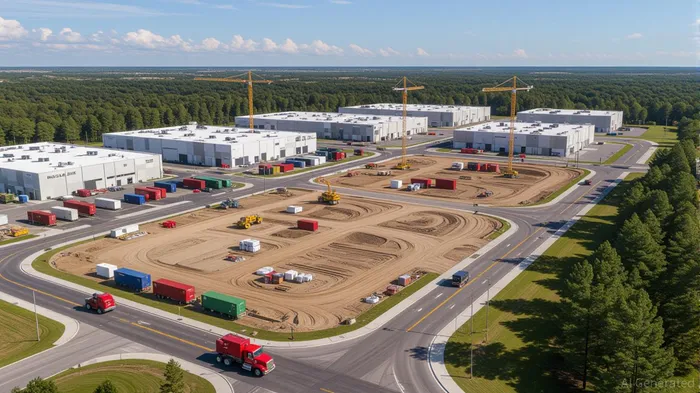
FAST NY Grants: Fueling Infrastructure for a Competitive Edge
The $9.8 million FAST NY grant awarded to the Webster Economic Development Alliance (WEDA) is a cornerstone of the campus's revitalization. This funding, part of a $283 million statewide initiative, is earmarked for infrastructure upgrades including road extensions (Chiyoda Drive, Boulter Industrial Parkway), sanitary sewer expansions, and electrical grid modernization according to the grant details. These improvements are not merely cosmetic; they directly address the needs of advanced manufacturers, such as semiconductor producers and logistics firms, which require robust infrastructure to operate efficiently.
Notably, the FAST NY program's Track B pre-development grants also support environmental remediation as part of the Shovel-Ready Certification process. While the $9.8 million grant does not explicitly fund full-scale remediation, it covers Phase I and II Environmental Site Assessments, which are critical for de-risking the site for future investors. Complementary efforts under the Brownfield Opportunity Area (BOA) initiative have further enhanced the site's viability by addressing contamination issues, reducing long-term liabilities for developers.
Zoning Reforms and Economic Outcomes: A Blueprint for Growth
Webster's zoning reforms are amplifying the impact of these infrastructure investments. By reclassifying land for advanced manufacturing and logistics, the town is attracting high-paying jobs and capital-intensive industries. For example, the $650 million fairlife® dairy plant, already operational on the campus, has created 250 jobs and contributed to a 4.31% rise in median household income since 2023. Residential property values in the area have also surged by 10.1%, reflecting growing confidence in the region's economic trajectory.
The success of the Xerox Campus is further underscored by its low industrial vacancy rate of 2%, a stark contrast to the national average. This demand is driven by the site's strategic location-adjacent to I-390 and within 100 miles of 60% of the U.S. population-and its alignment with New York's climate and economic goals, including the attraction of semiconductor supply chains.
Strategic Implications for 2026 and Beyond
As demolition and environmental assessments at the 600 Ridge Road site near completion by 2026, the Xerox Campus is poised to expand its footprint. The projected creation of one million square feet of industrial space by 2026 will further solidify Webster's position as a logistics and manufacturing hub. For investors, this represents a rare opportunity to capitalize on a site where public and private investments are synergistically driving value creation.
The Webster model-combining municipal line shifts, FAST NY grants, and zoning reforms-demonstrates how underutilized industrial zones can be repositioned for high-value development. As the state continues to prioritize advanced manufacturing through initiatives like FAST NY, similar opportunities may emerge in other regions. However, the Xerox Campus's head start in infrastructure and regulatory alignment gives it a distinct advantage.

Combinando la sabiduría tradicional en el comercio con las perspectivas más avanzadas sobre criptomonedas.
Latest Articles
Stay ahead of the market.
Get curated U.S. market news, insights and key dates delivered to your inbox.
AInvest
PRO
AInvest
PRO



Comments
No comments yet