
The Xerox Campus in Webster, NY: A Case Study in Infrastructure-Driven Real Estate Value Creation


 Aime Summary
Infrastructure as the Catalyst for Value Creation
The Xerox campus's resurgence is anchored in a FAST NY grant of $9.8 million, which has funded critical infrastructure upgrades such as road reconstruction, sewer system expansions, and electrical modernization. These investments have transformed the site into a "shovel-ready" industrial hub, attracting advanced manufacturing, logistics, and renewable energy firms. By 2025, the campus is projected to offer over one million square feet of industrial space, a direct result of infrastructure-driven site readiness.
The strategic importance of these upgrades cannot be overstated. According to data from the Webster Economic Development Alliance (WEDA), the campus's proximity to Buffalo's port and rail systems, combined with its low 2% industrial vacancy rate, positions it as a competitive alternative to high-cost coastal markets. This infrastructure-led approach mirrors broader national trends, where regions like the Sun Belt have leveraged similar investments to attract industrial capital. However, Webster's unique advantage lies in its alignment with state-backed programs such as the NY Forward initiative, which prioritizes brownfield redevelopment.
Public-Private Partnerships and Strategic Anchors
The Xerox campus's success is further amplified by public-private partnerships (PPPs) that align public funding with private-sector needs. A Community Access Project grant of $2.041 million, for instance, has improved connectivity within the campus and surrounding areas, enhancing its appeal for logistics and manufacturing firms. These efforts are complemented by the "Reimagine Webster" master plan, which designates the site as a Brownfield Opportunity Area, ensuring sustained access to future funding streams.
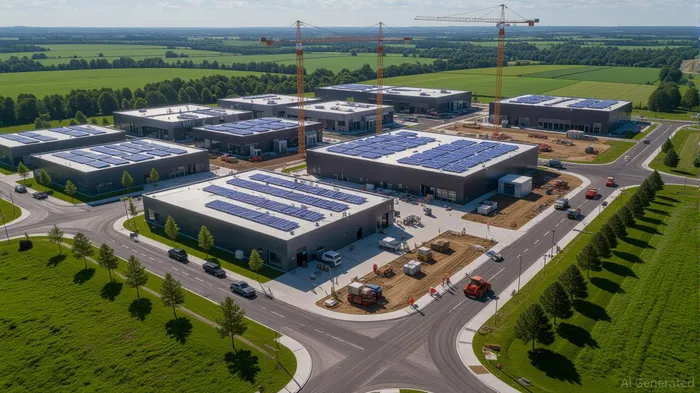 A key anchor project is the $650 million fairlife® dairy facility, which is expected to create 250 jobs by 2025. This investment underscores the campus's ability to attract high-impact industrial tenants, a trend reinforced by Governor Kathy Hochul's emphasis on building a "sustainable economic ecosystem" in upstate New York. Such partnerships not only validate the site's long-term viability but also demonstrate how strategic infrastructure investments can catalyze private-sector confidence.
Long-Term Value Potential and Broader Implications
For investors, the Xerox campus exemplifies the compounding effects of infrastructure-driven value creation. By 2025, median home prices in Webster had reached $284,600, with projections indicating a 10.1% annual increase in property values driven by revitalization projects like the West Webster Hamlet Revitalization. These gains are not isolated to residential markets; industrial property values are also rising, supported by the campus's role in attracting high-demand sectors such as semiconductor production and food processing.
The broader implications for post-industrial investing are clear. As noted in a report by the Webster Economic Development Alliance, the campus's transformation is part of a regional strategy to diversify Webster's economy, with initiatives like the Sandbar Waterfront Revitalization Project further enhancing the area's connectivity and appeal. For investors, this signals a shift from speculative land banking to value-creation models that prioritize infrastructure readiness and strategic alignment with state and federal programs.
Conclusion: A Blueprint for Future Investments
The Xerox campus in Webster, NY, stands as a testament to the power of infrastructure-led redevelopment in unlocking post-industrial value. By combining public grants, PPPs, and strategic tenant attraction, the site has transitioned from a brownfield liability to a high-growth industrial asset. For opportunistic investors, the lessons are twofold: first, that early-stage infrastructure investments in underdeveloped markets can yield outsized returns; and second, that aligning with state and municipal priorities is critical to sustaining long-term value. As similar projects emerge across the U.S., Webster's model offers a replicable blueprint for turning post-industrial sites into engines of economic growth.

Blending traditional trading wisdom with cutting-edge cryptocurrency insights.
Latest Articles
Stay ahead of the market.
Get curated U.S. market news, insights and key dates delivered to your inbox.




Comments
No comments yet