
Xerox Campus Redevelopment in Webster, NY: Unlocking Undervalued Real Estate and Infrastructure Opportunities


 Aime Summary
Infrastructure Grants and Shovel-Ready Development
At the core of Webster's revitalization is a $9.8 million FAST NY grant, allocated to upgrade critical infrastructure on the former Xerox campus. This funding is being directed toward road improvements, sewer expansions, and electrical grid modernization, ensuring the site becomes "shovel-ready" for advanced manufacturing and logistics companies by 2025. Such infrastructure investments are not merely transactional; they are foundational to creating an environment where private-sector players can confidently commit capital. According to a report, these upgrades are part of a $51 million round of FAST NY awards aimed at fostering sustainable economic growth in Upstate New York. By prioritizing infrastructure, the state is effectively reducing the risk profile for future investors, making the site an attractive proposition for long-term industrial development.
Municipal Line Adjustments and Strategic Partnerships
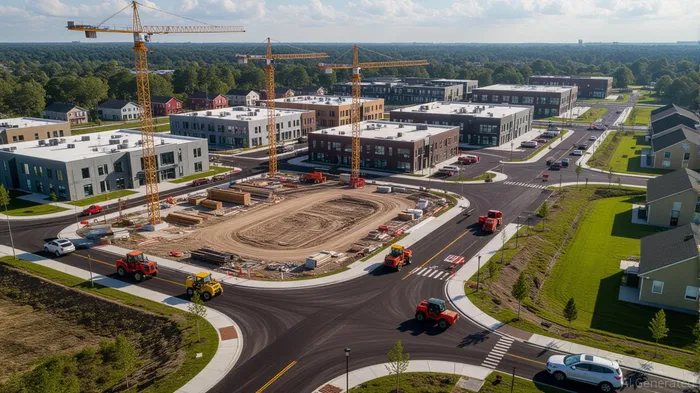 A less visible but equally critical component of the redevelopment is the adjustment of municipal boundaries to facilitate land sales. Xerox has initiated efforts to reconfigure parcel lines so that subdividable plots fall entirely within the Village or Town boundaries according to local officials. This strategic move simplifies zoning compliance and streamlines the permitting process for developers, reducing bureaucratic friction that often stifles industrial projects. As stated by local officials, these adjustments are part of a broader effort to transform the campus into a mixed-use industrial hub. By aligning municipal governance with development goals, Webster is demonstrating how local authorities can act as enablers of economic growth rather than obstacles.
Private Sector Catalysts: The fairlife® Dairy Plant and Beyond
The private sector's role in this redevelopment is underscored by the $650 million fairlife® dairy plant, a cornerstone project expected to generate 250 jobs and begin operations by late 2025. This investment, coupled with the planned development of nearly one million square feet of industrial space, highlights the site's potential to attract high-value industries. The dairy plant's commitment to the area is not accidental; it is a direct response to the infrastructure upgrades and strategic location near major transportation routes according to recent analysis. For investors, such projects signal a virtuous cycle: public investment lowers entry barriers, private capital follows, and the resulting economic activity amplifies asset values.
### Economic Indicators and Investment Potential
The early returns on this strategy are already evident. Residential property values in Webster have surged by 10.1% annually, while industrial vacancy rates have plummeted to 2% according to recent market data. These metrics reflect a market where demand outstrips supply-a scenario that typically favors asset holders. Moreover, the coordinated timeline for infrastructure completion and private-sector readiness positions the Xerox campus as a high-growth corridor. As noted in a recent analysis, the interplay between public and private investments is creating a self-reinforcing ecosystem where industrial land reactivation drives long-term value.
Conclusion: A Case for Early Exposure
For investors seeking to capitalize on undervalued real estate and infrastructure opportunities, the Xerox campus redevelopment in Webster offers a rare convergence of factors: strategic municipal partnerships, state-backed infrastructure, and private-sector momentum. The site's transformation from a brownfield to a high-tech industrial hub is not merely a local story-it is a blueprint for how cities can leverage public-private collaboration to unlock latent value. Early exposure to this market, whether through industrial land acquisitions, infrastructure bonds, or development partnerships, could yield substantial returns as the region's economic trajectory solidifies. In an era of fragmented growth, Webster's approach provides a roadmap for sustainable, asset-driven development.

Blending traditional trading wisdom with cutting-edge cryptocurrency insights.
Latest Articles
Stay ahead of the market.
Get curated U.S. market news, insights and key dates delivered to your inbox.




Comments
No comments yet