
Xerox Campus Redevelopment in Webster, NY: Unlocking Undervalued Industrial Real Estate


 Aime Summary
A Blueprint for Revitalization: Infrastructure as a Catalyst
At the heart of Webster's resurgence is the FAST NY Shovel-Ready Grant Program, which has allocated $9.8 million to modernize critical infrastructure at the Xerox campus. These funds are being used to realign roads, expand sewer systems, and upgrade electrical grids-transforming the site into a "shovel-ready" asset for advanced manufacturing and logistics firms. Complementing this, an additional $283 million in state funding and a $500,000 federal grant for transportation improvements further solidify the site's connectivity and appeal. Such investments are not merely transactional; they are strategic, designed to reduce industrial vacancy rates (now at 2%, well below the national average) and drive annual property value increases of 10.1% in Webster.
The success of this model is evident in the private-sector response. 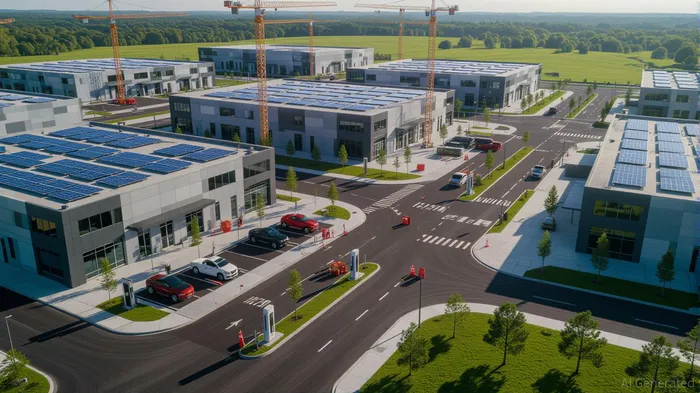 The $650 million fairlife® dairy facility, set to create 250 jobs by 2025, and Ranger Design's 151,000-square-foot industrial expansion in 2024, exemplify how infrastructure upgrades attract high-value tenants. These projects are not isolated; they are part of a broader ecosystem where public funding de-risks private investment, creating a virtuous cycle of development.
Municipal Collaboration: Beyond Infrastructure to Ecosystem Building
Webster's approach extends beyond physical infrastructure. Municipal boundary adjustments and mixed-use zoning have enabled the addition of 500 housing units and 200,000 square feet of commercial space, fostering a self-sustaining community. This holistic strategy mirrors successful models in Minnesota and Pennsylvania, where infrastructure grants have spurred job creation and private investment. For instance, Minnesota's DEED program allocated $5 million to North Branch and Sartell, leveraging $221 million in private capital and creating 1,006 jobs. Similarly, Pennsylvania's PA SITES program transformed a former coal mine into a 230-acre logistics hub, attracting $31.6 billion in private investment. These examples reinforce a key insight: infrastructure grants are most effective when paired with municipal flexibility to adapt land-use policies to evolving economic demands.
Quantifying the Impact: A Model for Industrial Land Appreciation
The economic returns from Webster's redevelopment are already materializing. By 2025, the campus is projected to deliver nearly one million square feet of industrial space, with full operationalization expected by 2026. This growth is underpinned by strategic location advantages: proximity to Buffalo's transportation networks and a cost structure that outcompetes pricier coastal markets. For investors, the implications are clear. Industrial land appreciation in Webster is not speculative-it is being driven by measurable inputs: improved infrastructure, reduced vacancy rates, and a pipeline of high-impact projects.
Broader Implications: A National Trend
Webster's experience aligns with a national shift toward infrastructure-led economic development. The Infrastructure Investment and Jobs Act (IIJA) has enabled cities like Kalamazoo and Charlotte to boost property values through mobility and safety upgrades. Meanwhile, regional block grants are fostering cross-municipal collaboration, addressing structural challenges that individual cities cannot tackle alone. These initiatives highlight a critical truth: infrastructure is not just a cost-it is an asset class that enhances land value and economic resilience.
Conclusion: A Call for Strategic Investment
The Xerox campus redevelopment in Webster, NY, is more than a local success story; it is a testament to the power of strategic infrastructure grants and municipal collaboration. For investors, the lesson is twofold: first, industrial real estate in proximity to infrastructure upgrades offers outsized appreciation potential; second, regions that combine public funding with policy agility will dominate the next phase of industrial growth. As Webster's 300-acre campus evolves into a $1 billion ecosystem, it serves as a blueprint for how to unlock value in America's underappreciated industrial heartlands.

Blending traditional trading wisdom with cutting-edge cryptocurrency insights.
Latest Articles
Stay ahead of the market.
Get curated U.S. market news, insights and key dates delivered to your inbox.
AInvest
PRO
AInvest
PRO



Comments
No comments yet